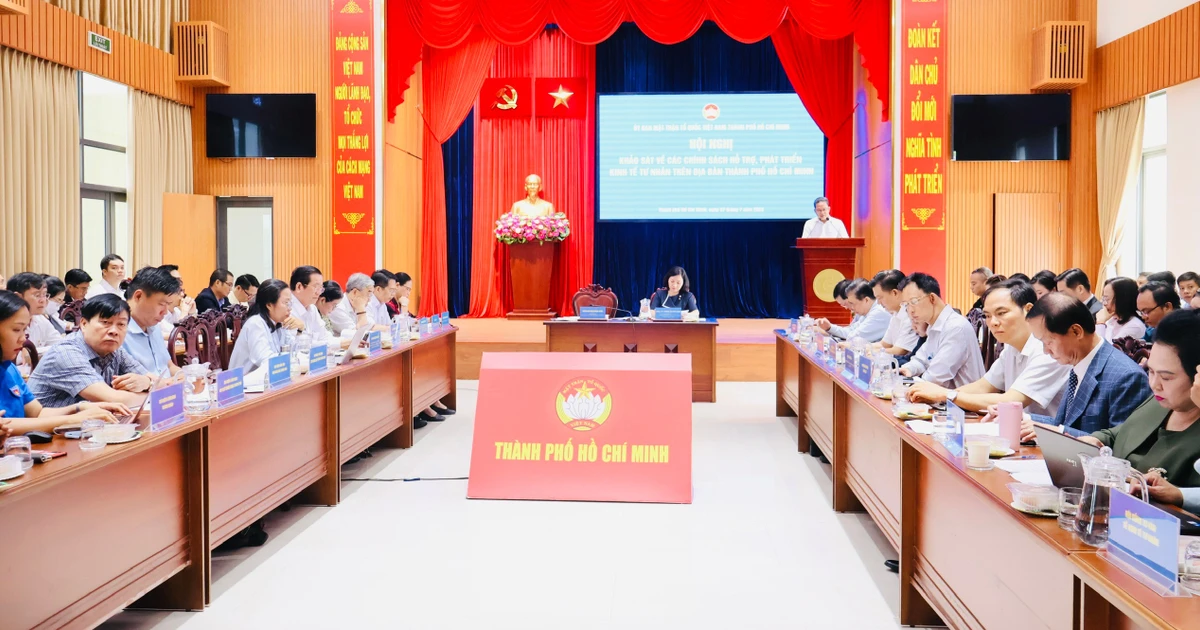
Ho Chi Minh City reviews implementation of private sector support policies
Technology
2026年7月7日
4
Nhan Dan

Ho Chi Minh City reviews implementation of private sector support policies

AI サマリー

The Ho Chi Minh City Fatherland Front Committee convened a meeting to assess the implementation of policies supporting the private sector. Based on feedback from businesses, the committee plans to propose solutions to issues in legal regulations, capital access, and administrative procedures to city authorities.

On July 7, the Ho Chi Minh City Fatherland Front Committee organized a survey meeting to assess the implementation of policies supporting the private sector within the city. Mr. Pham Minh Tuan, Vice Chairman of the committee, stated that the Standing Board of the Ho Chi Minh City Fatherland Front Committee had established a supervisory delegation to evaluate the implementation of central and city policies and to assess the effectiveness of mechanisms and policies supporting private economic development in the city. The delegation's work involves reviewing documents and directly engaging with relevant agencies, while also placing significant importance on listening to the feedback from businesses, cooperatives, household businesses, and business associations, as these entities are the direct beneficiaries and are impacted by the policies. At the meeting, business representatives expressed their agreement and satisfaction with the Politburo's Resolution No. 68-NQ/TW on developing the private sector and the City Party Committee's Action Program No. 02-CTrHĐ/TU to implement it. They affirmed that this is a correct, important, and necessary guiding principle. Some issued policies have begun to create positive changes, contributing to supporting production and business activities and reinforcing the business community's confidence in the city's investment environment. However, based on practical experience, delegates also proposed the need to continue reviewing, supplementing, and perfecting suitable policies, and to implement more thorough reforms. Feedback also highlighted several specific difficulties and obstacles related to legal regulations, business support, particularly in accessing credit capital, administrative procedures, land, human resources, production costs, digital transformation, and the process of accessing and benefiting from certain support policies. Improvements in administrative procedures, enhanced coordination among agencies, increased policy transparency and stability, and more favorable conditions for business development were also called for. In her concluding remarks, Ms. Truong Thi Bich Hanh, a member of the City Party Committee Standing Board and Permanent Vice Chairwoman of the Ho Chi Minh City Fatherland Front Committee, stated that the success of Resolution No. 68-NQ/TW should not be measured by the number of documents issued but by the level of business satisfaction, the growth of private enterprises, and their increasing contributions to the city's development. She emphasized that business confidence is the driving force for private economic development. Ms. Hanh acknowledged and highly valued the dedicated input from the business community, recognizing it as practical, objective, and valuable information that will help the supervisory delegation comprehensively assess the implementation of the City Party Committee's Action Program No. 02-CTrHĐ/TU to carry out Politburo Resolution No. 68-NQ/TW. Following this meeting, the supervisory delegation will continue to study and synthesize all speeches, survey responses, and business recommendations. This will be combined with the results of direct working sessions with the supervised agencies and units to produce an objective and comprehensive supervisory report. Based on this, the Standing Board of the Ho Chi Minh City Fatherland Front Committee will propose recommendations to the City Party Committee, the City People's Committee, and competent authorities regarding administrative procedure reforms, improving the investment and business environment, removing obstacles, and creating favorable conditions for the private sector to develop strongly and become a truly important driver of the city's economy. Ms. Hanh also mentioned that the outcomes of this supervisory activity will be synthesized to contribute to the process of building a special urban law and perfecting legal frameworks. Regarding specific opinions raised at the meeting about non-compliance with legal regulations, Ms. Truong Thi Bich Hanh stressed that when necessary, the Fatherland Front will issue separate written opinions to the competent authorities. She also suggested that in the coming period, thematic voter outreach meetings involving the business community should be organized. The Fatherland Front is actively innovating its operational methods, with a particular focus on promoting digital transformation. It will monitor and promptly provide opinions to functional agencies in the city regarding the resolution of constituents' and the business community's petitions. Ms. Hanh noted that Resolution 68 is a major policy, and its implementation has been underway for just over a year amidst national efforts to merge administrative units and implement a two-tier local government system. Therefore, she expressed hope for continued cooperation and partnership from the business community, agencies, and experts. The partnership of the business community will significantly contribute to the Ho Chi Minh City Fatherland Front's effective role in representing and protecting the legitimate rights and interests of businesses, as well as in promoting its function of social supervision and phản biện (critical feedback). Source: Nhan Dan

多角的分析

経済的影響

ベトナム政府は民間経済の成長を経済発展の重要な柱と位置づけており、特にホーチミン市のような経済の中心地では、その育成が喫緊の課題である。決議第68号や行動計画第02号は、民間企業が直面する資金調達、行政手続き、規制などの障壁を取り除くことを目的としている。しかし、本記事が示すように、政策の理想と現場の現実の間には依然として乖離が存在する。特に、法規制の不備や行政手続きの煩雑さは、中小企業や新規事業者の成長を阻害する要因となりうる。これらの課題を克服するためには、政策の具体化と実効性の確保、そして官民間の継続的な対話と協力が不可欠である。デジタルトランスフォーメーションの推進は、効率化と透明性向上に寄与する可能性があるが、その導入にはさらなる投資と人材育成が必要となる。

投資家心理

ホーチミン市における民間経済支援策の進捗状況に関する調査は、投資家にとって重要なシグナルとなる。政策の実施状況を評価し、課題を特定するプロセスは、投資環境の改善に向けた政府のコミットメントを示す。特に、資金調達へのアクセス改善や行政手続きの簡素化といった点は、直接的な投資リスクの低減につながる。しかし、法規制の不備や行政機関間の連携不足といった指摘は、依然として潜在的なボトルネックとなりうる。投資家は、これらの課題がどの程度、かつ迅速に解決されるかを注視する必要がある。政策の透明性と安定性の向上は、長期的な投資判断において極めて重要である。

社会的影響

ホーチミン市における民間経済支援策の実施状況に関する調査は、地域経済の活性化と雇用創出に直接関わる社会的な側面を持つ。企業からの意見表明は、経済主体が抱える具体的な困難、例えば資金繰りの悪化や事業継続への不安を反映している。行政手続きの煩雑さや法規制の不備は、特に中小企業や個人事業主の生活に直結し、彼らの事業継続や生活水準に影響を与える。また、デジタルトランスフォーメーションの推進は、新たなビジネスチャンスを生む一方で、デジタルデバイドの拡大という社会的な課題も提起する可能性がある。企業の声を行政に届ける仕組みの強化は、社会全体の包摂的な発展に不可欠である。

市民の声

ホーチミン市民、特に民間企業を営む人々にとって、このニュースは自らの事業環境に直接関わる重要な情報である。決議第68号や関連行動計画は、彼らが抱える資金調達の困難さや煩雑な行政手続きといった長年の課題解決への期待を抱かせている。会議で表明された企業側の意見は、これらの期待が現実の政策実施において、まだ十分に満たされていない現状を示唆している。法規制の不備、行政手続きの遅延、そしてデジタルトランスフォーメーションへのアクセス格差は、日々の事業運営における大きなストレス要因となる。市民は、これらの課題が具体的にどのように改善され、自身のビジネスや生活にどのような影響を与えるのかを注視している。

背景・歴史的文脈

ベトナムはドイモイ(刷新)政策以降、計画経済から市場経済への移行を進め、民間経済の役割を次第に拡大してきた。特に2017年の党中央委員会決議第10号は、民間経済を「社会主義的市場経済の重要な原動力」と位置づけ、その発展を奨励している。本記事で言及されている決議第68号は、この流れを汲み、民間企業の成長をさらに促進するための具体的な政策を打ち出したものである。ホーチミン市はベトナム経済の中心であり、中央政府の政策をいち早く、かつ効果的に実施することが期待される都市である。しかし、中央の方針を地方レベルで具体化し、実行する過程では、しばしば官僚主義や法規制の不備、関係部署間の連携不足といった課題が顕在化する。これらの課題は、ベトナムの経済成長の持続可能性と、より包括的な社会発展を阻む要因となりうる。

原文ソース

Nhan Dan

原文を読む