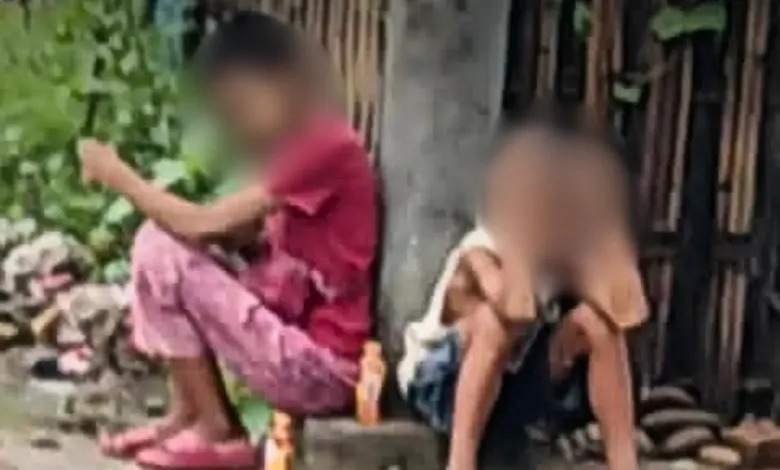
School-Age Children Reportedly Dealing Drugs in Myanmar’s Kachin State Capital
School-age children are openly trafficking illicit drugs in Myitkyina, the capital of northern Myanmar’s Kachin State, amid a collapse in child protection under military rule, according to residents and rights advocates.
School-age children are openly trafficking illicit drugs in Myitkyina, the capital of northern Myanmar’s Kachin State, amid a collapse in child protection under military rule, according to residents and rights advocates. Witnesses in the city's Rampu Ward recently observed three minors—a 12-year-old boy, his 16-year-old sister, and another teenage girl of similar age—selling drugs in a local alleyway. Residents suspect the children are operating under their parents' direction. "This should never be happening. They should be in school," a resident told the Kachin News Group, speaking on the condition of anonymity. "If this continues, these children will end up using drugs themselves. Young people are the country’s future, but under military rule, Myanmar’s youth have already lost their future." According to the community, underage children have been visible in the local drug trade for roughly three years. Despite minors openly buying and selling illicit substances, authorities have taken no meaningful action, allowing the trade to operate with near-total impunity. Daw San Htoi, spokesperson for the Kachin Women's Association Thailand (KWAT), stated that Myanmar's child protection framework has effectively disintegrated since the military seized power, leaving children vulnerable across the country. "Myanmar is a signatory to the UN Convention on the Rights of the Child," Daw San Htoi said. "Although the country has committed to this international legal framework, there is a severe failure in implementation. Similarly, labor rights have plummeted to historic lows. It has become extremely difficult to monitor the situation on the ground, and Myanmar has reached a point where rights protections are virtually non-existent." Distressed residents are calling on authorities and aid organizations to intervene, urging them to provide protection, rehabilitation, and social support for the children trapped in the trade rather than criminalizing or abandoning them.
多角的分析
直接の経済ニュースではありませんが、治安と司法の信頼は地域経済の土台です。職場での暴力や未成年者保護への不安が強まると、夜間営業、観光、雇用、地域サービス業のリスク認識が高まります。
投資家目線では、個別事件よりも法執行の予見可能性が焦点です。加害者への対応が曖昧になれば、ローカルビジネスの統治リスクや従業員保護の弱さとして評価されやすくなります。
ミャンマー北部のカチン州都ミッチーナーで、軍事政権下での児童保護の崩壊の中、学齢期の子供たちが公然と違法薬物を密売していると、住民や権利擁護者…という事実は、地域の人々にとって抽象的な人権論ではなく、働く場所や夜間の移動をどこまで信用できるかという問題です。BNI (Burma News International)の報道は、軍と当局の対応を継続して見せる必要があります。
市民にとっては、自分や家族が被害に遭った時に公正な手続きへアクセスできるのかが最大の関心です。地域団体が声を上げることで、事件の風化を防ぎ、被害者側の孤立を和らげる意味があります。
背景・歴史的文脈
このニュースは、ミャンマーの地域社会で法の支配と弱者保護がどこまで機能しているかを映す事案です。暴力事件そのものに加え、女性団体や市民社会が司法手続きを求めて声を上げている点が重要です。軍政下では警察・司法への信頼が揺らぎやすく、個別事件が地域の不安や統治への不信に直結します。
原文ソース
BNI (Burma News International)