General articles are free for 24 hours after publish.
APEC Energy Ministers Reach Consensus on Energy Cooperation
The APEC Energy Ministers' Meeting established outcomes based on a '1+3+5' model for energy cooperation. Emphasis was placed on ensuring the progress of infrastructure development for the 2027 APEC meeting and strategic cooperation on food security.
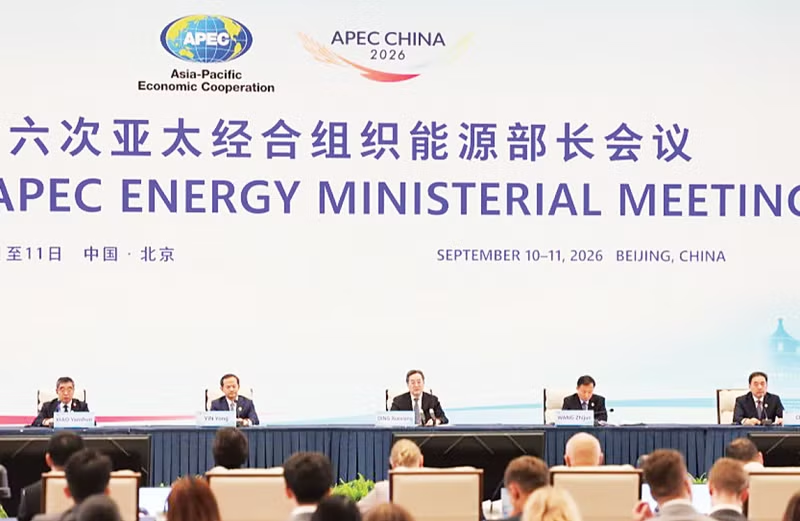
At the 16th Asia-Pacific Economic Cooperation (APEC) Energy Ministers' Meeting, a comprehensive agreement was reached on energy cooperation. Wang Hongzhi, Director of China's National Energy Administration (NEA) and Chair of the meeting, announced at a press conference that outcomes based on a '1+3+5' model were achieved. This agreement outlines the direction of cooperation in the APEC energy sector. In particular, ensuring the progress of infrastructure development for the APEC-related events to be held in 2027 was confirmed as an urgent task. Specifically, adjustments to the Phu Quoc International Airport plan and the completion of three key power projects supporting the APEC meeting in the region were highlighted. These projects are essential for revitalizing the regional economy and ensuring the successful hosting of APEC. Furthermore, Vietnam proposed four strategic directions for cooperation in food security. This aligns with global efforts to build sustainable and resilient food supply chains amidst increasing climate change and geopolitical instability. Concurrently, environmental regulatory issues within Vietnam have emerged. In Lam Dong province, the APEC Mandala Wyndham Mui Né resort was reported to have exceeded emission standards for ammonia. This highlights the ongoing challenge Vietnam faces in balancing economic growth with environmental protection. The consensus reached at this Energy Ministers' Meeting is expected to be a step forward in strengthening energy security in the APEC region, promoting the transition to renewable energy, and achieving sustainable development goals. For Vietnam, as the host of APEC in 2027, this presents an opportunity to accelerate infrastructure development and enhance international cooperation.
Original source
Nhan Dan