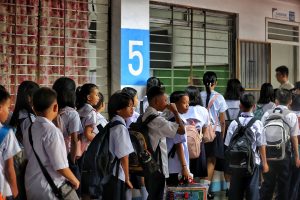
Philippines Public Schools Prohibit Gadget Use During Class Hours
The Philippines' Department of Education has reiterated its prohibition on the use of electronic gadgets during class hours in public schools, citing concerns for student online safety and a rise in school-related violence. The ban, with exceptions for educational use and emergencies, covers social media and gaming. The department also plans to hire 10,000 new school counselors.
The Department of Education (DepEd) on Wednesday reiterated that the use of electronic gadgets during class hours is prohibited in all public schools to ensure learners’ online safety amid a series of school-related violence. “This office reiterates the strict implementation of and compliance with existing policies and guidelines concerning the promotion of safe and responsible use of the internet and other related devices,” the agency said in a memorandum. Under DepEd Order No. 006, s. 2026, or the Guidelines on Ensuring a Safe and Motivating Learning Environment (ESMLE), learners and school personnel are prohibited from using portable electronic devices during instructional hours. The scope of prohibition includes the usage of social media platforms, online games, content creation, and vlogging during class hours. Meanwhile, the policy exempts the use of gadgets for educational purposes, such as accessing educational platforms and digital resources, participating in online activities, and in emergencies, such as disasters, medical crises, and other safety concerns. The agency also called upon parents, local government units (LGUs), law enforcement agencies, non-government organizations, and other stakeholders to guide learners in developing empathy towards others. “A whole-of-society approach is necessary in order to properly guide learners,” DepEd said. “All field offices and schools are hereby directed to ensure the widest dissemination of these policies to all stakeholders.” Senate President Sherwin T. Gatchalian earlier renewed his proposal to ban the use of smartphones and other electronic devices in both public and private schools, as well as to impose a social media ban for minors, following the rise in school incidents. Under Senate Bill 627, or the Electronic Gadget-Free Schools Act, Kindergarten to Senior High School students are not allowed to use their smartphones during school hours. Authorities have reported numerous school-related threats and violence since June 16, including a shooting attack in Tacloban City that killed three students. 10,000 NEW SCHOOL COUNSELOR POSTS As part of its initiative to safeguard students’ mental health and well-being, DepEd aims to deploy 10,000 new school counselor positions for School Year 2026-2027. “By rolling out this dedicated workforce of counselors and counselor associates, we are taking a concrete step… to transform our schools into centers of genuine care, protection, and well-being,” Education Secretary Juan Edgardo “Sonny” M. Angara said in a news release on Wednesday. The Civil Service Commission (CSC) approved the positions for Schools Division Counselor (SDC), School Counselor I–IV, and School Counselor Associate (SCA) I–V, following criticisms raised during a House committee hearing on Monday regarding delays in the review and approval of SCAs. According to DepEd Undersecretary for Human Resource and Organizational Development Willie Cabral, the agency has submitted its proposed Qualification Standards for SCAs since November 2025. However, no SCAs have been hired because plantilla positions remain contingent on the CSC’s approval of the Qualification Standards. The Education chief noted that the commission’s approval for the posts under Republic Act (RA) No. 12080, or the Basic Education Mental Health and Well-Being Promotion Act, helps push mental health and psychosocial support services across public schools. “The approval of the Qualification Standards is a major milestone in the implementation of RA 12080,” Mr. Angara said. “It establishes the professional standards for our school counseling workforce and brings us closer to ensuring that learners across the country have greater access to quality mental health and psychosocial support services in our schools,” he added. DepEd said it is preparing implementation guidelines to begin recruitment, appointment, and deployment of qualified SCAs in accordance with civil service laws, rules, and regulations. — Almira Louise S. Martinez
多角的分析
今回の措置は、直接的な経済的影響は限定的だが、長期的には教育の質向上を通じて人的資本の蓄積に寄与する可能性がある。電子機器の使用制限は、教育関連テクノロジー産業への短期的な影響をもたらすかもしれないが、教育目的での使用が認められているため、影響は緩和されるだろう。1万人のカウンセラー増員は、公的支出の増加を意味し、雇用創ち創出効果が期待される。
投資家にとって、このニュースは直接的な投資機会やリスクを大きく変えるものではない。しかし、教育省の「社会全体の取り組み」という呼びかけは、教育分野へのCSR活動や、教育関連サービスを提供する企業への間接的な投資意欲を刺激する可能性がある。また、治安悪化の背景があるため、教育現場の安定化は長期的な社会基盤強化に繋がるという見方もできる。
今回の措置は、生徒のオンライン安全と精神的健康の保護を目的としている。学校内での暴力事件の増加は、フィリピン社会における若者のメンタルヘルス問題や、オンライン空間でのいじめ・ハラスメントといった課題の深刻さを示唆している。1万人のスクールカウンセラー増員は、これらの問題に対処するための重要な一歩であるが、その効果は配置されるカウンセラーの質と数、そして支援体制の充実にかかっている。保護者や地域社会との連携強化も、社会的な課題解決に向けた鍵となる。
フィリピンの市民、特に子供を持つ保護者にとっては、子供たちの安全が最優先事項となる。授業中のスマホ使用禁止は、子供たちが授業に集中し、オンライン上の危険から守られることへの安心感をもたらすだろう。一方で、教育目的での利用が認められているとはいえ、学校現場での具体的な運用方法や、学習機会の格差が生じないかといった懸念も生じる可能性がある。また、1万人のカウンセラー増員は、子供たちの心のケアへの期待を高める。
背景・歴史的文脈
フィリピンでは近年、学校内での暴力事件やいじめ、サイバーハラスメントが増加傾向にある。これらは、SNSの普及による情報過多、若年層のメンタルヘルス問題の深刻化、家庭環境や社会経済的要因などが複合的に影響していると考えられている。2023年には、生徒間の暴力や、教師への脅迫といった事件が複数報告され、社会的な懸念が高まっていた。こうした状況を受け、シェイン・ガッチャリアン上院議長は、2023年頃から学校での電子機器使用制限やSNS利用規制を提唱し、議論を呼んできた。教育省は、これらの社会情勢と議員の提案を踏まえ、生徒の安全確保と学習環境の改善を目的として、今回の措置に踏み切った。また、精神的健康支援の必要性から、スクールカウンセラーの拡充も同時に進められている。
原文ソース
BusinessWorld Nation