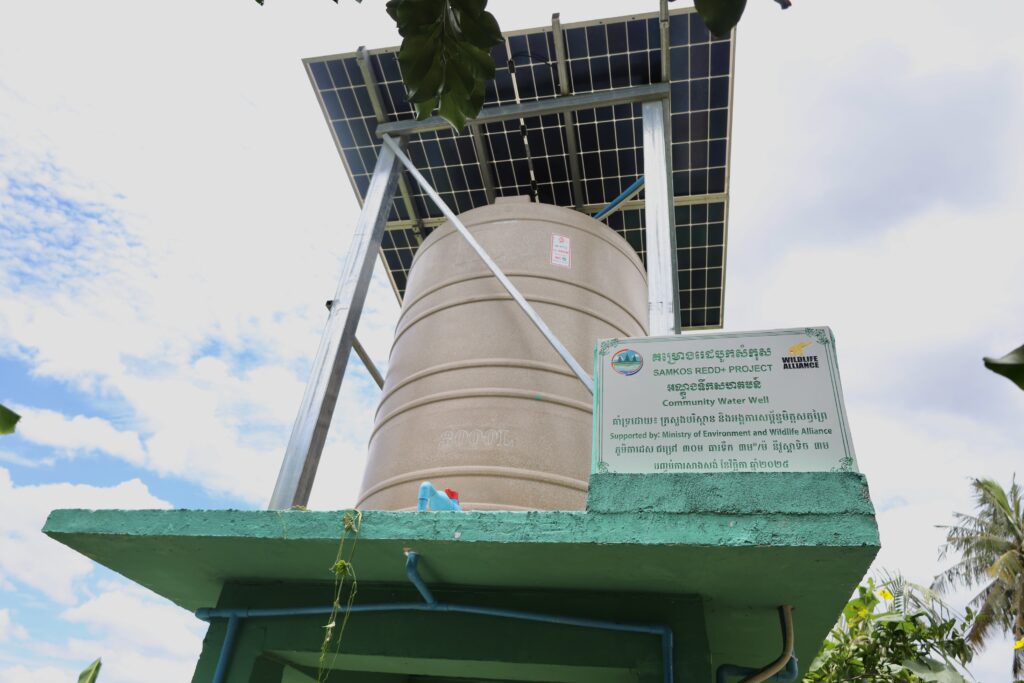
Solar-Powered Water Wells Improve Rural Lives in Cambodia
In Cambodia's Pursat province, the Wildlife Alliance has implemented solar-powered irrigation systems as part of the REDD+ project, providing free access to clean water for local communities. This initiative is boosting agriculture and livestock farming, while also contributing to forest conservation.
Two large solar-powered water wells, with a capacity of 10,000 liters each, located in Ta Des village, Samrong commune, Phnom Kravanh district, Pursat province, are providing convenient and free access to clean water for community members. This initiative is part of the REDD+ project implemented by the Wildlife Alliance in collaboration with the Ministry of Environment, aimed at improving the livelihoods of communities in natural resource conservation areas. The REDD+ project has seen the construction of clean water wells powered by automatic solar systems to enhance the living standards of communities in protected areas. Specifically, two clean water wells have been established in Ta Des village, with one built in 2023 and another in 2025. Through the REDD+ project, actively implemented by the Wildlife Alliance within the Cardamom Mountains region, a total of 94 solar-powered clean water wells have been provided to communities, with 68 located within the Phnom Samkos Wildlife Sanctuary. Mr. Heun Samet, a resident of Ta Des village, confirmed that the wells provided through the REDD+ project are playing a crucial role in the community's daily water usage. He stated that it has significantly eased the burden of accessing clean water, especially for household needs. He further explained that the availability of these wells alleviates hardships, particularly during the dry season, eliminating the need to purchase water or travel long distances to collect it. A single well is sufficient to serve multiple households. Ms. Thoun Sreiyoun also noted that the well water is not only used for daily consumption but also for irrigating small vegetable gardens near homes and for raising livestock, without incurring water usage costs as before. She added that after the support for constructing clean water wells in the locality, residents have adequate water sources, enabling the community to expand crop cultivation and increase livestock farming activities, thereby generating additional income for families. Mr. Sarou Vuth, head of the Samrong Partner Community, stated that the water wells in his community have been of great assistance for water usage, significantly reducing expenses and improving the livelihoods of the community members. Mr. Touch Sophany, Head of Local Development Programs at the Wildlife Alliance, reported that the large-capacity (10,000 liters) solar-powered water wells in the Ta Des community, within the Phnom Samkos Wildlife Sanctuary in Pursat province's Kravanh district, have brought significant positive changes to over 60 families, including indigenous Por and Chong ethnic groups in remote areas. He mentioned that residents of Ta Des village no longer need to spend money to buy water or travel kilometers to fetch water from distant streams, thanks to the clean water wells in the village. Furthermore, citizens do not incur costs for fuel or electricity as the wells are powered by solar energy. Mr. Khvay Adthiya, Undersecretary of State at the Ministry of Environment, highlighted that these wells help reduce citizens' expenses, such as fuel costs and healthcare maintenance, by ensuring a daily supply of clean water. They support agricultural planting and livestock farming. Moreover, as clean energy, they respond to climate change and contribute to the strategy of transforming communities towards carbon neutrality in the future. When residents in natural conservation areas have improved livelihoods and agricultural yields, they will reduce forest logging and hunting, which is a core goal of sustainable forest protection and aligns with Pillar 2 of the Environment Sector Strategy. It is noteworthy that REDD+ is an international mechanism established to reduce greenhouse gas emissions from deforestation and forest degradation. In Cambodia, funds obtained from the sale of carbon credits through this project are utilized to provide benefits for environmental protection and support the livelihoods of local communities. Source: Kampuchea Thmey Local
多角的分析
太陽光発電による灌漑システムの導入は、地域住民の水購入費用や燃料費を大幅に削減し、直接的な経済的負担を軽減する。これにより、削減された資金を農業生産の拡大や畜産業の振興に再投資することが可能となり、地域経済の活性化につながる。また、安定した水供給は農作物の収穫量を増加させ、食料安全保障の向上にも寄与する。REDD+プロジェクトによる炭素クレジットの収益がこれらのインフラ整備に充てられている点は、持続可能な開発モデルとしての経済的側面を強化している。
このプロジェクトは、直接的な投資機会というよりは、環境・社会・ガバナンス(ESG)投資の観点から注目されるべき事例である。REDD+プロジェクトは、炭素クレジット市場を通じて資金調達を行っており、これは環境保護活動への投資を促進するメカニズムとなっている。将来的に、同様の太陽光発電インフラや持続可能な農業プロジェクトへの民間投資を誘致する土壌となりうる。特に、気候変動対策への関心が高まる中で、このような実証された成功事例は、国際的な開発ファンドやESG投資家にとって魅力的な選択肢となりうる。
タデスの村の住民、特に少数民族であるポル族とチョン族にとって、清潔な水への無料アクセスは生活の質を劇的に向上させる。以前は水汲みに多くの時間を費やしていた女性や子供たちの負担が軽減され、教育や他の生産活動に時間を割くことが可能になる。また、農業や畜産業の発展は、食料自給率の向上と収入増加をもたらし、貧困削減に直接貢献する。さらに、これらの井戸は、地域社会の連帯感を強め、共同でのインフラ維持管理を通じて、住民のエンパワーメントを促進する可能性がある。森林への依存度を減らすことで、伝統的な生活様式と現代的な開発との調和が図られる。
タデスの村の住民は、清潔な水へのアクセスが改善されたことで、日々の生活における大きな負担から解放された。特に乾季の水の確保の苦労がなくなり、飲料水だけでなく、農業や家畜の飼育にも利用できるようになったことは、生活の安定と向上に直結している。以前は水を買ったり、遠くまで汲みに行ったりするためにかかっていた時間とお金が節約でき、その分を他の活動に充てられるようになった。これは、特に貧困層や女性にとって大きな恩恵であり、生活の質を向上させる重要な変化である。
背景・歴史的文脈
カンボジアでは、長年にわたり農村部における清潔な水へのアクセスが課題となっていた。特に乾燥地域では、飲料水や農業用水の確保が困難な場合が多く、住民の健康や生計に影響を与えてきた。REDD+(森林減少・劣化からの排出削減)は、森林保全活動を通じて温室効果ガス排出を削減し、その対価として得られる収益を地域社会の発展に還元する国際的な枠組みである。カンボジア政府は、森林資源の持続可能な管理と気候変動対策を推進しており、REDD+プロジェクトはその重要な柱の一つとなっている。野生動物同盟のようなNGOが、政府や国際機関と連携し、太陽光発電などのクリーンエネルギー技術を活用したインフラ整備を進めることで、農村部の生活水準向上と環境保全の両立を目指している。
原文ソース
Kampuchea Thmey Local