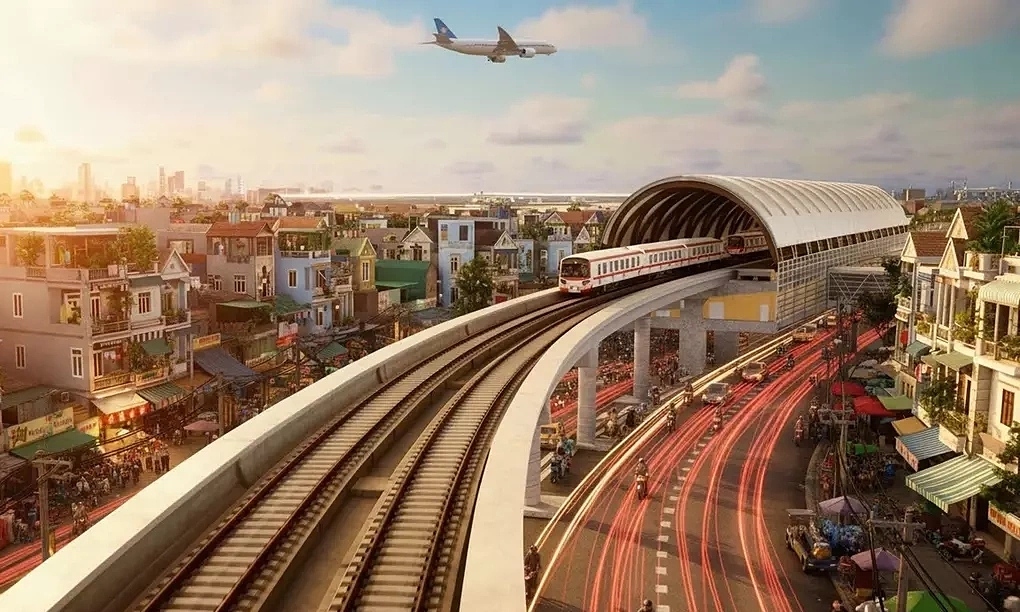
HCMC identifies areas for commercial development along metro line 2
Ho Chi Minh City has identified five areas along the under-construction Metro Line 2 (Ben Thanh-Tham Luong) for Transit-Oriented Development (TOD) planning, aiming to enhance urban development integrated with public transport hubs.
Ho Chi Minh City's People's Committee has decided to study areas for Transit-Oriented Development (TOD) planning along the under-construction Metro Line 2 (Ben Thanh-Tham Luong). This initiative aims to lay the groundwork for identifying suitable sites within approximately 940 hectares for urban development and public transport hubs. The Ben Thanh-Tham Luong metro line will span over 11 kilometers, connecting the city's downtown with its northwestern districts. The five areas identified for TOD planning are: 1. Around Ben Thanh and Tao Dan stations (over 188 hectares): Located in the city center, these areas are poised to become commercial development hubs. 2. Around Dan Chu, Hoa Hung, Le Thi Rieng, Pham Van Hai, and Bay Hien stations (over 265 hectares): This extensive zone is expected to accommodate diverse development projects. 3. Around Nguyen Hong Dao Station (nearly 44 hectares): A smaller but strategically important area for development. 4. Around Ba Queo, Pham Van Bach, and Tay Thanh stations (149 hectares): These stations represent potential new transit nodes. 5. Around Tham Luong Station and the depot (nearly 293 hectares): The largest area, located at the line's terminus. TOD is an urban planning model centered on public transport, typically featuring high-density, mixed-use developments such as high-rise housing, shopping centers, offices, and educational, healthcare, and sports facilities clustered around transport hubs like metro stations. The approach seeks to maximize land use efficiency, improve access to public infrastructure, and reduce traffic congestion and pollution. The city has tasked the Department of Planning and Architecture to collaborate with consultants on surveys to ensure the accuracy of the planning process. The plans are expected to be completed within four months. The Ben Thanh-Tham Luong line will comprise 10 underground stations and one above-ground station. Construction commenced in January 2024, with completion anticipated by 2030. This will be Ho Chi Minh City's second metro line, following the Ben Thanh-Suoi Tien route, a 20-km line connecting downtown to Thu Duc City, which began partial operation in late 2024. Source: VnExpress International
多角的分析
ホーチミン市が地下鉄2号線沿いのTOD開発エリアを特定したことは、都市の経済的ポテンシャルを最大限に引き出すための重要な一歩です。TODは、公共交通機関へのアクセスが良い地域に商業施設、住宅、オフィスなどを集約させることで、不動産価値の向上、新たな雇用創ち、そして地域経済の活性化を促進します。特に、開発エリアには商業施設やオフィスが含まれることから、サービス業や関連産業の集積が期待され、都市の経済成長に寄与するでしょう。過去の事例でも、都市鉄道網の整備とTODの推進は、沿線地域の経済生産性を高める効果が確認されています。
今回の地下鉄2号線沿いのTOD開発エリア特定は、不動産開発業者や商業施設運営者にとって大きな投資機会となります。開発エリアの広さ(合計約940ヘクタール)と、市中心部から北西部への広がりを考慮すると、多様な形態の投資が可能です。特に、交通ハブ周辺の高密度・複合用途開発は、安定した賃貸収入と資産価値の上昇が見込めます。ただし、建設期間が2030年までと長期にわたるため、投資家はプロジェクトの進捗状況や市場の変動リスクを慎重に評価する必要があります。過去のベトナムにおけるインフラ開発プロジェクトでは、用地取得や許認可プロセスに時間を要するケースがあり、それらが投資回収期間に影響を与える可能性も考慮すべきです。
地下鉄2号線沿いのTOD開発は、ホーチミン市民の生活様式に大きな変化をもたらす可能性があります。公共交通機関へのアクセスが向上することで、自家用車やバイクへの依存度が低下し、通勤時間の短縮や交通渋滞の緩和が期待されます。また、駅周辺に商業施設や文化施設が集約されれば、市民はより便利で多様なサービスにアクセスできるようになります。一方で、開発に伴う地価の上昇や家賃の高騰は、既存住民の居住環境に影響を与える可能性も指摘されています。特に、開発エリア周辺の低所得者層の移転や、生活コストの上昇といった課題への配慮が求められます。過去の都市開発プロジェクトでも、住民の生活再建やコミュニティ維持が重要な論点となってきました。
ホーチミン市が地下鉄2号線沿いの開発エリアを特定したことは、市民にとって交通利便性の向上と生活環境の改善に繋がる可能性があります。特に、これまで交通の便が悪かった北西部地域に住む市民は、市中心部へのアクセスが容易になることで、通勤や通学の負担が軽減されると期待しています。また、駅周辺に商業施設やエンターテイメント施設が整備されれば、生活の質が向上するでしょう。しかし、開発に伴う騒音や建設期間中の交通規制、そして将来的な家賃や物価の上昇を懸念する声も聞かれます。市民は、開発の恩恵を享受する一方で、生活コストの増加やコミュニティの変化といった影響も注視しています。
背景・歴史的文脈
ベトナムは、1986年のドイモイ政策以降、市場経済化と国際化を推進し、急速な経済成長を遂げてきました。特にホーチミン市は、ベトナム経済の中心地として、インフラ整備が喫緊の課題となっています。都市化の進展に伴う交通渋滞や大気汚染は深刻化しており、公共交通網の拡充は国家的な優先事項です。2010年代から都市鉄道網の整備が本格化し、地下鉄2号線(ベンタイン~タムルオン線)はその主要プロジェクトの一つとして位置づけられています。TOD計画は、こうしたインフラ投資の効果を最大化し、持続可能な都市開発を目指す国際的な潮流とも合致しています。ベトナム政府は、都市開発における民間投資の活用も進めており、今回の計画もその一環と位置づけられます。
原文ソース
VnExpress International