Cambodia Halts Waste Dumping at Preah Sihanouk Landfill After Fish Kills
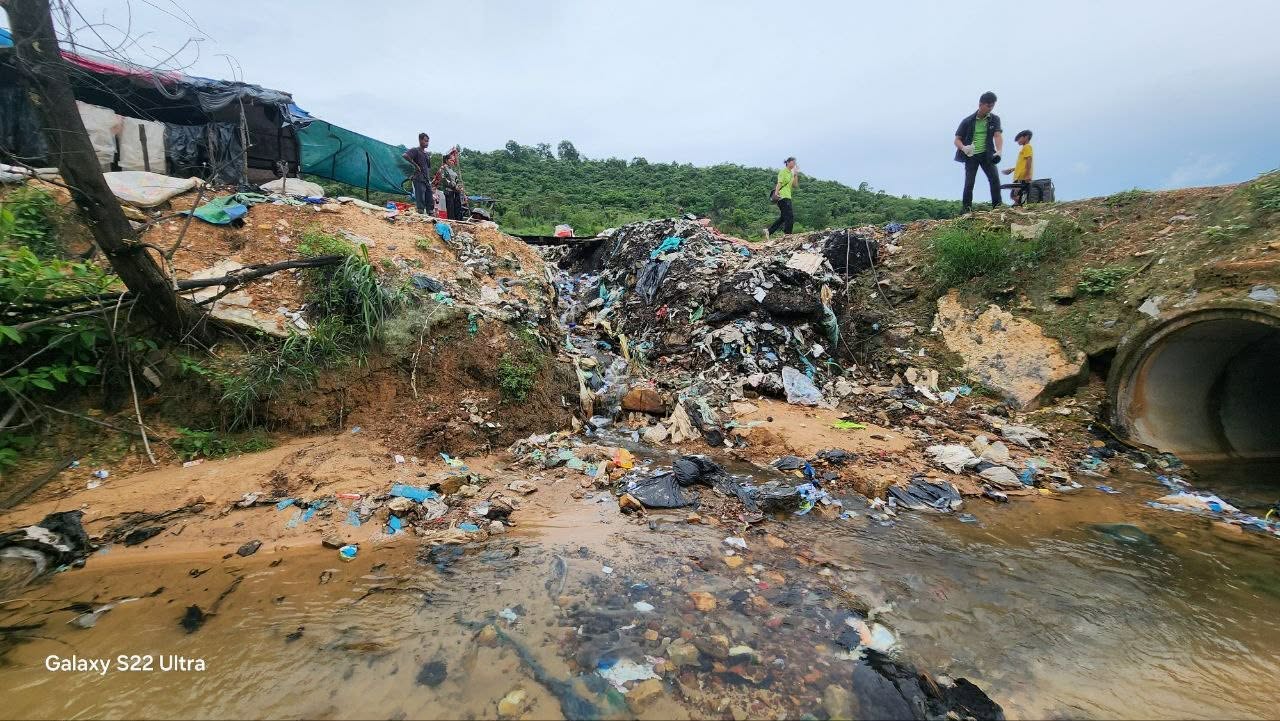
Cambodia's Ministry of Environment has ordered a halt to waste dumping at a landfill in Preah Sihanouk province after liquid waste contaminated a natural stream, leading to a mass fish kill. The responsible company faces fines and compensation for environmental restoration.
The Ministry of Environment has taken measures to stop waste dumping at a landfill in Stung Hav district, Preah Sihanouk province, after it was discovered that contaminated liquid from industrial waste had flowed into a natural stream, causing a mass death of fish raised by residents. On July 5, 2026, an inspection team from the Ministry of Environment, in cooperation with the Preah Sihanouk Provincial Department of Environment, the Stung Hav District Administration, and Kampen Village, launched an investigation into the incident of mass fish death among residents' farmed fish. During the on-site inspection, it was confirmed that industrial waste dumping was being carried out at a landfill operated by Mi Ner Va Investment Co., Ltd. However, the landfill was found not to comply with environmental technical standards, and contaminated liquid leaked out, affecting a natural stream and contributing to the mass fish kill. The Ministry of Environment's expert team collected water samples for detailed testing at the ministry's laboratory to further monitor water pollutants. Subsequently, in cooperation with the Stung Hav District Administration, they immediately ordered a halt to all types of waste dumping at the site. Waste will now be transported to another location with proper authorization. As a further measure to prevent environmental pollution, the Ministry of Environment is proceeding with legal procedures, ordering Mi Ner Va Investment Co., Ltd., which dumped industrial waste at the site causing environmental pollution and fish kills, to pay administrative fines, compensation for direct and indirect damages, and to restore the environment. Source: Koh Santepheap Khmer
多角的分析
今回の事案は、カンボジアにおける産業廃棄物管理の不備が、地域経済に直接的な打撃を与えうることを示唆している。魚の大量死は、地域住民の生計を脅かすだけでなく、漁業や関連産業にも影響を及ぼす可能性がある。環境規制の強化と、産業界に対する厳格な監視体制の構築が、持続可能な経済発展のために不可欠である。
産業廃棄物処理における環境基準の遵守は、国内外からの投資を呼び込む上で極めて重要である。今回の事例は、環境リスク管理の甘さが、企業の評判失墜や罰金、さらには事業継続の危機に繋がりうることを示している。投資家は、企業の環境・社会・ガバナンス(ESG)への取り組みを、投資判断の重要な要素として注視する必要がある。
プレアヴィヒア州ストゥン・ハヴ郡の住民は、産業廃棄物による環境汚染という直接的な被害に苦しんでいる。特に、養殖魚の大量死は、彼らの生活基盤を揺るがす深刻な問題である。環境省の迅速な対応は評価されるべきだが、今後、地域住民の健康への影響や、失われた生計の補償、そして再発防止策の確実な実施が求められる。
今回の埋立地閉鎖と企業への罰金は、環境汚染に対する市民の懸念が一部反映された結果と言える。しかし、問題の埋立地がなぜ基準を満たさずに稼働し、魚の大量死という事態に至ったのか、その背景には行政の監督責任や、規制の実効性に関する疑問も残る。市民は、より透明性の高い環境行政と、企業の責任ある行動を求めている。
背景・歴史的文脈
カンボジアでは、急速な経済発展に伴い、産業廃棄物や都市ごみの処理が大きな課題となっている。特に、沿岸部や工業地域では、増加する廃棄物に対応するためのインフラ整備が追いつかず、不法投棄や不適切な処理による環境汚染が問題視されてきた。過去にも、廃棄物処理を巡る企業と地域住民との間でトラブルが発生しており、環境規制の強化と、その実効性ある運用が求められている。今回のプレアヴィヒア州での事案は、こうした背景を踏まえ、環境保護の重要性を改めて浮き彫りにした。
原文ソース
Koh Santepheap Khmer