Philippines to lose some development aid with upper-middle income status
Economy
2026年7月6日
5
GMA Money Philippines

Philippines to lose some development aid with upper-middle income status

AI サマリー

The Philippines has been reclassified as an upper-middle-income country due to increased Gross National Income (GNI). This transition means the country will gradually lose access to concessional financing and development assistance typically provided to lower-income economies, prompting an urgent need to explore alternative funding sources.

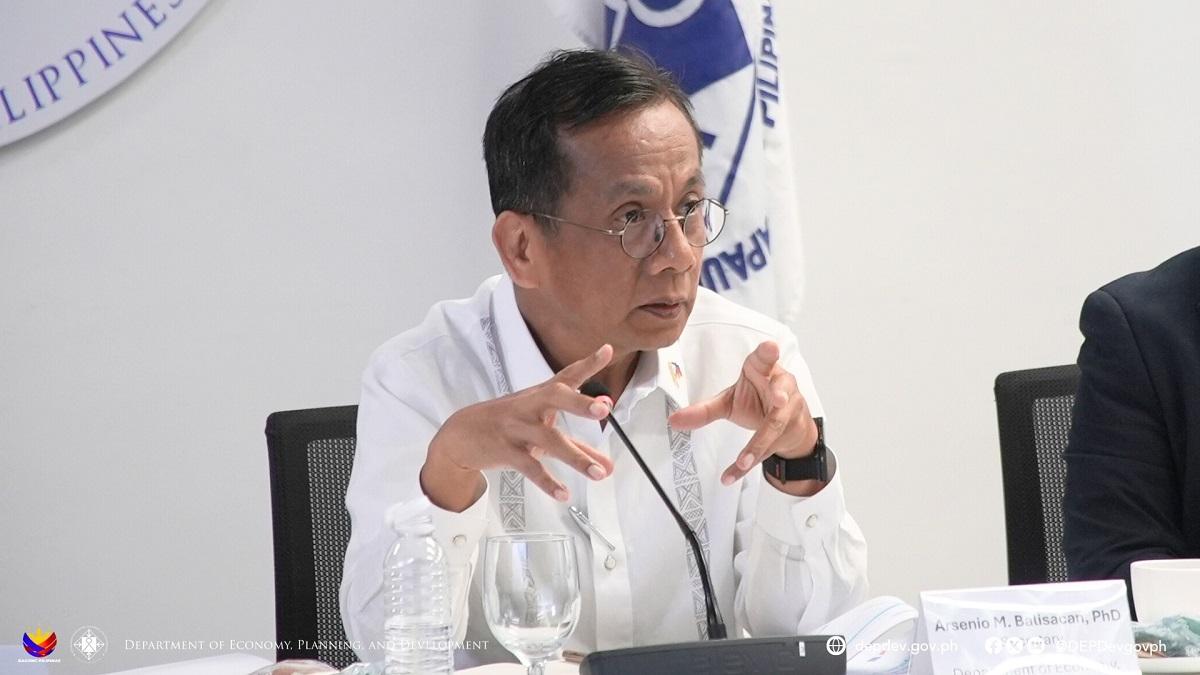
The Philippines will explore other sources of financing as it expects to lose concessional financing and development assistance given its new classification as an upper-middle-income country, a top official said Monday. According to Department of Economy, Planning, and Development (DepDev) Secretary Arsenio Balisacan, the country has a three-year window to adjust, as the loss of the preferential financial agreements will be on a gradual basis. “I think in the next three years, we will still maintain those concessional loans but gradually, as we progress, we will lose eventually those ones,” he told reporters in a briefing in Mandaluyong City. “There will be still other development partners who continue to lend to us at concessional loans, at least for those projects that they see and we see as high impact, high developmental impact. Those are the ones that we will be exploring with those agencies, development partners,” he added. The Philippines reached upper-middle income country status on July 1, as its gross national income (GNI) per capita hit $4,850 in 2025, exceeding the threshold of $4,636 for the fiscal year. With the classification, the country will gradually lose access to forms of concessional financing, development assistance, and aid programs that geneally cater to poorer economies. With this, the country may shift more toward borrowing at market-based rates. READ: What the Philippines' upper-middle-income status means for Filipinos “In the meantime, we have the time to develop our capacity to access other sources of financing, particularly those that are evolving now, like climate-related financing, for example, and ensure that not just the government, the private sector can also access those financing,” Balisacan said. “Even as we lost the concessional loans, the greater benefits are opened up from the improvements in access to financing by both government and the private sector,” he added. Balisacan said the country will also continue to work to retain the upper-middle-income country status, with the administration focusing on continuing reforms to accelerate growth even further and make it more inclusive. “Those are also pressure for us to keep driving the push for reform so that we are able to sustain the momentum, so the possibility of us going back to lower-middle-income class is, I think, quite remote, unless you know, you have certainly a very bad development in our political economy but we don’t se that,” he said. For his part, DepDev Undersecretary Joseph Capuno said the country will work with the three-year window to focus on ongoing projects and slow down a bit on new infrastructure projects. “We’re going to be very selective in approving projects for next year that would require government financing, precisely because there is very limited fiscal space but we can approve projects now if they require financing in 2028,” he said. “Basically, if they can slide government financing to 2028, we can approve more because by that time, we see the fiscal space becoming larger,” he added. According to Capuno, there are some 20 to 30 projects that may be affected, as these are done with development partners such as the Asian Development Bank (ADB), the World Bank, and the Japan International Cooperation Agency (JICA). “In the general scheme of things, grants are just a smaller part of the whole financing that we get from multilaterals and bilaterals. A big part is actually ODA [Official Development Assistance] loans,” he said. “Sometimes, many of these grants are tied to eventually taking out a loan from these development partners, so meron din tayong [we also have a] three-year window to take advantage of those grants,” he added. — BM, GMA News

多角的分析

経済的影響

フィリピンの上級中所得国への移行は、国際金融機関からの concessional financing の減少を意味する。これは、インフラ整備や開発プロジェクトの資金調達コストの上昇に繋がりうる。一方で、民間セクターの資金調達能力の向上や、気候変動関連資金などの新たな資金調達チャネルへのアクセス拡大は、経済の多様化とレジリエンス強化に寄ち貢献する可能性がある。ただし、これらの新たなチャネルへのアクセス能力開発には時間と専門知識が必要であり、短期的な資金調達のギャップが生じるリスクも考慮する必要がある。

投資家心理

フィリピンが上級中所得国となったことで、開発援助の減少は、政府主導のインフラプロジェクトへの投資機会に影響を与える可能性がある。しかし、これは同時に、より市場原理に基づいた資金調達へのシフトを示唆しており、民間セクター主導のプロジェクトや、より収益性の高い投資機会が増加する可能性もある。気候変動関連資金などの新しい資金調達メカニズムへのアクセス向上は、ESG投資に関心のある投資家にとって新たな機会となりうる。ただし、政府の財政スペースの制約は、プロジェクトの実行ペースに影響を与えるため、投資判断においては慎重なリスク評価が求められる。

社会的影響

開発援助の減少は、特に低所得層向けの社会インフラ整備や、貧困削減プログラムに影響を与える可能性がある。政府は、優遇融資の減少分を補うため、国内の税収強化や民間投資の促進を図る必要があるが、これが国民、特に低所得層への負担増に繋がらないか、社会的な議論が必要となる。また、国際機関との関係が変化する中で、フィリピンが自国の開発戦略をどのように推進していくか、国民の生活への影響を最小限に抑えつつ、持続可能な開発目標(SDGs)を達成していくかが問われる。

市民の声

フィリピン市民、特に地方や貧困層にとっては、開発援助の減少が、教育、医療、インフラ整備などの公共サービスに影響を与える懸念がある。政府は、新たな資金調達源を確保し、国民生活への影響を最小限に抑えるための透明性のある説明責任を果たす必要がある。また、民間セクターの成長が、雇用創興や所得向上に繋がるよう、政策的な支援が重要となる。上級中所得国への移行は、国家としての発展を示す一方で、国民一人ひとりの生活の質向上にどう繋がるかが、今後の重要な焦点となるだろう。

背景・歴史的文脈

フィリピンは、長年にわたり世界銀行やアジア開発銀行(ADB)などの国際開発金融機関から concessional financing を受けてきた。これは、同国が低・中所得国に分類されていたためである。国民総所得(GNI) per capita の増加は、経済成長の証である一方、国際機関が低所得国向けに提供する支援の対象から外れることを意味する。この分類変更は、フィリピンが経済的に自立し、より市場ベースの資金調達へと移行していく必要性を示唆している。過去には、他のアジア諸国も同様の経済発展段階で開発援助の縮小を経験しており、フィリピンもその道を辿ることになる。

原文ソース

GMA Money Philippines

原文を読む