India Seeks Diversified Strategy Amid Indo-Pacific Shifts
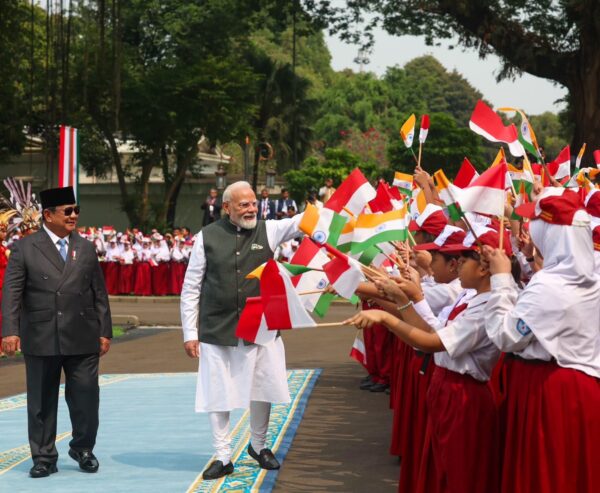
Amid China's growing military assertiveness and evolving U.S. engagement in the Indo-Pacific, India is pursuing a diversified diplomatic strategy. Prime Minister Modi's tour of Indonesia, Australia, and New Zealand aims to strengthen regional partnerships and promote the 'Free and Open Indo-Pacific' concept.
Following China's test-launch of a long-range ballistic missile, India is strengthening its multi-pronged approach to recalibrate its strategic position in the region. Indian Prime Minister Modi is undertaking a tour of Indonesia, Australia, and New Zealand to bolster partnerships with regional nations and advance the 'Free and Open Indo-Pacific' (FOIP) concept. This move is seen as a response to geopolitical shifts, including uncertainties in U.S. engagement in the Indo-Pacific and China's increasing maritime assertiveness. India faces security challenges such as border disputes with China and the growing Sino-Pakistan axis, heightening the need for an autonomous foreign policy not solely reliant on specific allies. The visit to Indonesia aims to expand India's regional influence by strengthening ties with a key ASEAN member. Furthermore, India and Japan have signed Memoranda of Understanding in areas like semiconductors, critical minerals, AI, and clean energy, deepening cooperation from an economic security perspective. These developments indicate India's intent to build broader partnerships while maintaining its relationship with the United States, aiming to preserve regional power balance. However, India's multifaceted diplomatic strategy confronts challenges, including domestic coordination capacity, economic and political resource constraints, and the economic dependence of partner nations on China. The key focus moving forward will be India's ability to effectively sustain autonomous and diverse partnerships amidst complex regional power dynamics. Information Source: The Diplomat Indonesia
多角的分析
インドの多角的な外交戦略は、経済安全保障の観点からも重要性を増している。特に、半導体や重要鉱物といった戦略物資における日本やインドネシアとの協力は、サプライチェーンの強靭化と、中国への過度な依存からの脱却を目指す動きと見られる。これにより、インドは技術革新の推進と経済成長の機会を捉えつつ、地域経済における自らの地位を強化しようとしている。しかし、パートナー国が中国経済に依存している現状は、インドの戦略実行における潜在的な制約となりうる。
インドの戦略的多角化は、投資家にとってリスク分散の機会を提供する一方、新たな投資機会の創出も期待される。米国への依存度を下げ、日本やインドネシアとの関係を強化することは、これらの国々との間で進行中の貿易交渉や、インフラ、デジタル経済、クリーンエネルギー分野における協力を加速させる可能性がある。ただし、パートナー国の中国依存度や、地域情勢の不確実性は、投資判断における慎重なリスク評価を必要とする。
インドのモディ首相によるインドネシア訪問は、両国間の人的交流や文化交流の促進にも繋がる可能性がある。特に、インドネシアのイスラム教徒人口の多さや、インドの多様な文化は、相互理解を深める上で重要な要素となる。また、Z世代を中心とした若年層がSNSを通じて情報収集や意見交換を行う中で、このような外交的動きが彼らの関心や消費行動にどのような影響を与えるかも注目される。地域における安定は、直接的に市民生活の安心感や経済活動の活性化に寄与する。
モディ首相のインドネシア訪問は、インド国民にとって、国際社会における自国のプレゼンス向上を実感する機会となるだろう。特に、中国の軍事的台頭に対する懸念が高まる中、インドが地域諸国との連携を強化する姿勢は、国民の安全保障への安心感に繋がる可能性がある。また、経済協力の深化は、将来的な雇用機会の創出や、生活水準の向上といった形で、国民生活に間接的な恩恵をもたらすことが期待される。
背景・歴史的文脈
インドの「自由で開かれたインド太平洋(FOIP)」構想は、2016年頃から日本が提唱し、インドがこれに呼応する形で両国の戦略的連携が深まった。当初は、中国の海洋進出に対抗するための枠組みとして、日本、米国、オーストラリア、インドの4カ国(Quad)が中心となった。しかし、米国のトランプ政権下での「インド太平洋」戦略の曖昧化や、Quadにおける米国の関与の揺らぎを受け、インドはQuadに依存しない、より自律的で多角的な外交戦略へとシフトしている。モディ首相の今回の東南アジア・太平洋諸国歴訪は、この戦略転換の具体的な表れである。
原文ソース
The Diplomat Indonesia