General articles are free for 24 hours after publish.
Monsoon begins to recede, extreme temperatures expected in winter and spring due to "Super El Niño"
The monsoon has begun to recede from the northern regions of Myanmar, and temperatures are expected to rise in the upcoming winter and spring seasons due to the El Niño climate phenomenon, according to the Department of
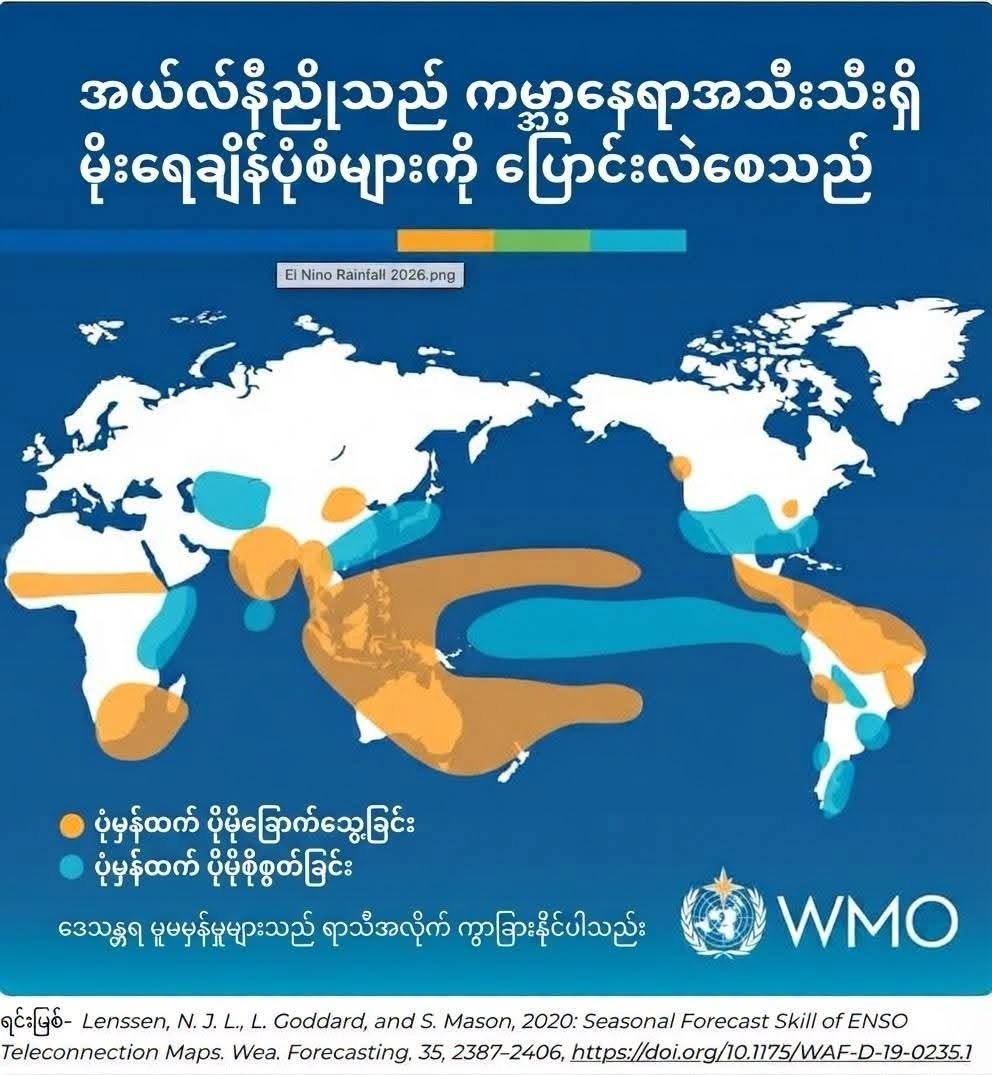
The monsoon has begun to recede from the northern regions of Myanmar, and temperatures are expected to rise in the upcoming winter and spring seasons due to the El Niño climate phenomenon, according to the Department of Meteorology and Hydrology (DMH). The Southwest Monsoon began to recede on September 15, and the world's meteorological organizations and international climate centers have stated that a very strong El Niño condition could be reached by the end of 2026. Consequently, extreme weather events such as rising daytime temperatures and droughts are predicted to occur during the upcoming spring periods. "We expect that due to El Niño events, there will be a greater impact this winter and in the summer of 2027," said Dr. Kyaw Moe Oo, Director General of the DMH. Myanmar typically experiences average temperatures ranging from 32 to 43 degrees Celsius even during normal summer months, with temperatures often being more severe in the central regions. "In Yangon, it's just hot without rain. Even if it rains every day, if it rains in the morning and stops by the afternoon, it gets hot. With El Niño, I can't even imagine next summer. It will be very hot. To withstand the heat, air conditioners need to be cleaned," a Yangon resident told the Irrawaddy Times. The World Meteorological Organization (WMO) has announced that sea surface temperatures and atmospheric conditions in the Tropical Pacific Ocean near the equator are in a strong to very strong El Niño state, which can exacerbate extreme weather patterns worldwide. According to current forecasts, some experts say the upcoming El Niño could become very strong, potentially a "Super El Niño," and its impact could lead to various consequences, including crop damage and losses in livestock farms.
Original source
Ayeyarwaddy Times