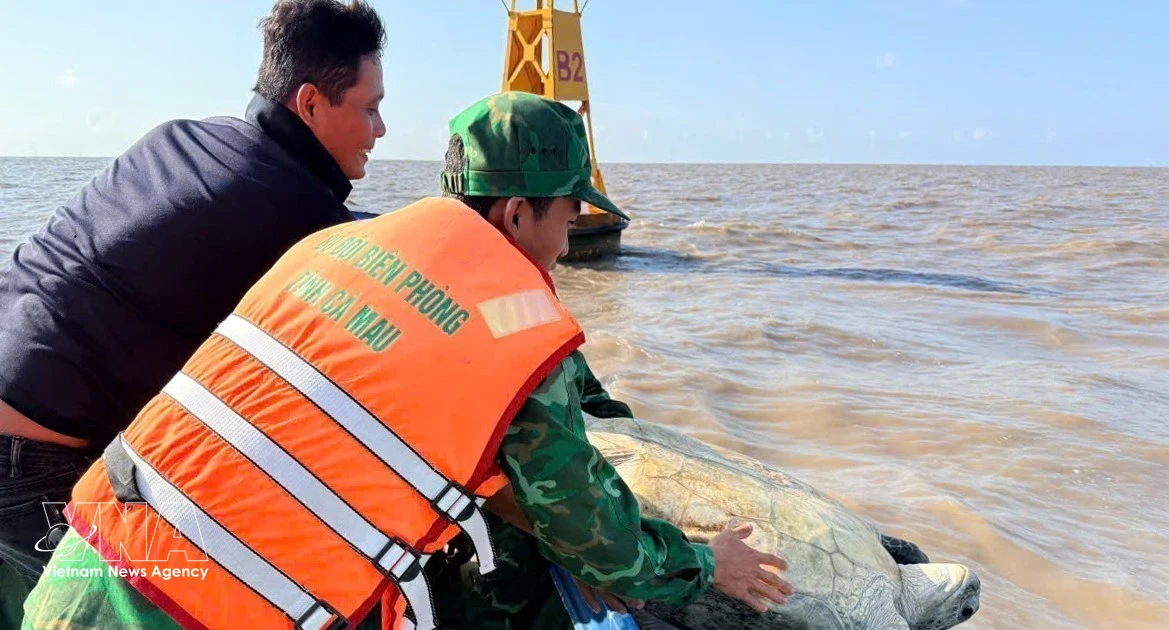
Vietnam Strengthens Efforts in Endangered Species Protection and Ecosystem Restoration
Environment
2026年7月19日
5
VietnamPlus English
Relations
🇻🇳Vietnam🇨🇳China

General articles are free for 24 hours after publish.

Vietnam Strengthens Efforts in Endangered Species Protection and Ecosystem Restoration

Share
AI Summary

Vietnam is intensifying its efforts to protect endangered species and restore natural ecosystems. Initiatives focus on rescuing and rehabilitating wildlife threatened by poaching and habitat destruction, alongside conserving forest and coastal ecosystems. These actions are crucial for maintaining Vietnam's biodiversity and meeting international environmental goals.

Vietnam is strengthening its initiatives for biodiversity conservation and ecosystem restoration. Recent reports highlight efforts in rescuing, treating, and rehabilitating endangered species, with particular focus on species listed under Group IB of Vietnam's protected wildlife, such as the Bengal slow loris (Nycticebus bengalensis) and the Sunda pangolin (Manis javanica). These animals are highly susceptible to poaching and illegal trade, and their commercial exploitation or use is prohibited under Vietnamese law. Rescued animals are receiving specialized care, and once their health and wild behavior are restored, they are slated for release back into the wild, marking a significant step in protecting Vietnam's rich natural heritage. Furthermore, Vietnam is actively engaged in ecosystem restoration. For instance, the Reduction of Emissions in the Central Highlands and South Central Coast of Vietnam (RECAF) project, running from 2026 to 2031, will be implemented across four provinces: Dak Lak, Gia Lai, Lam Dong, and Khanh Hoa, covering approximately 145,000 hectares. This initiative is supported by the International Fund for Agricultural Development (IFAD). Vietnam is also generating revenue through carbon credit trading under Decree No. 180 on forest carbon sequestration and storage services. A recent transaction involved the transfer of 11.3 million tonnes of CO2 emission reductions at a price of $5 per tonne, bringing the country's total revenue from such transfers to $56.5 million. This demonstrates Vietnam's commitment to balancing climate action with economic benefits. These efforts reflect the policy execution capabilities under Vietnam's one-party system, aimed at achieving national goals of environmental protection and sustainable development. Balancing environmental considerations with continued economic growth remains a key challenge for Vietnam. Especially in its relationship with China, there are often situations requiring cooperation on regional environmental issues and policy decisions that take economic impacts into account.

0

Original source

VietnamPlus English

原文を読む