General articles are free for 24 hours after publish.
South Sumatra's Peatlands: A Cycle of Recurrent Fires
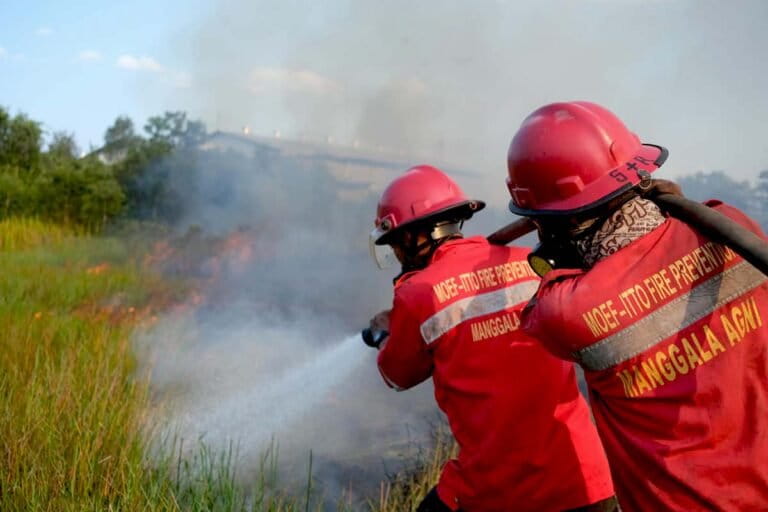
Forest and land fires, particularly in peatlands, have reignited in South Sumatra, causing severe haze in Palembang. Despite mitigation programs since the early 2000s, fires persist, attributed to a lack of understanding of peatland ecosystems and reliance on inexpensive slash-and-burn agriculture.
Forest and land fires (karhutla) have once again struck South Sumatra, with peatlands and mineral lands continuing to burn. The resulting haze has reached Palembang, impacting daily life. This recurring issue persists despite various mitigation programs implemented since the early 2000s. According to data from the South Sumatra Regional Disaster Management Agency (BPBD), approximately 1,926 hectares of land have burned between January 1 and August 23, 2026. Out of 17 regencies and cities, only Lubuklinggau and Pagaralam have not recorded any fires. The haze has enveloped Palembang for several days. On August 25, 2026, the concentration of fine particulate matter (PM2.5) at the Musi 2 Station reached 285.3 micrograms per cubic meter, categorizing it as hazardous. Yulion Zalpa, a political ecology researcher at UIN Raden Fatah Palembang, attributes the recurrent karhutla to both communities and corporations viewing peatlands as cultivable land. "First, the knowledge that peatlands can be managed into plantations is not only held by corporations but also by the community," he stated. Local residents, who were not accustomed to utilizing peatlands in the past, are now planting oil palms on lands ranging from half a hectare to tens of hectares. This knowledge is acquired from the practices of oil palm and industrial forest plantation companies. Consequently, peatlands are no longer understood as forest ecosystems that must remain wet. Land clearing and management methods also pose a problem. Burning is still considered the cheapest and fastest method due to the lack of readily accessible alternative technologies. The draining of swamps, peatlands, and mangroves through canal construction has also become a common practice. According to Yulion, it is insufficient for the government to merely prohibit and punish perpetrators of burning. The government needs to develop cheap, fast, and sustainable land management technologies. This knowledge must be applicable to both corporations and communities. The climate crisis also affects peatlands...
Original source
Mongabay Indonesia