General articles are free for 24 hours after publish.
Philippine Cities Lag in Internet Speed Across Southeast Asia
Major Philippine cities Manila and Cebu recorded the slowest mobile internet speeds among Southeast Asian urban centers, posing a significant challenge to the government's efforts to attract digital nomads.
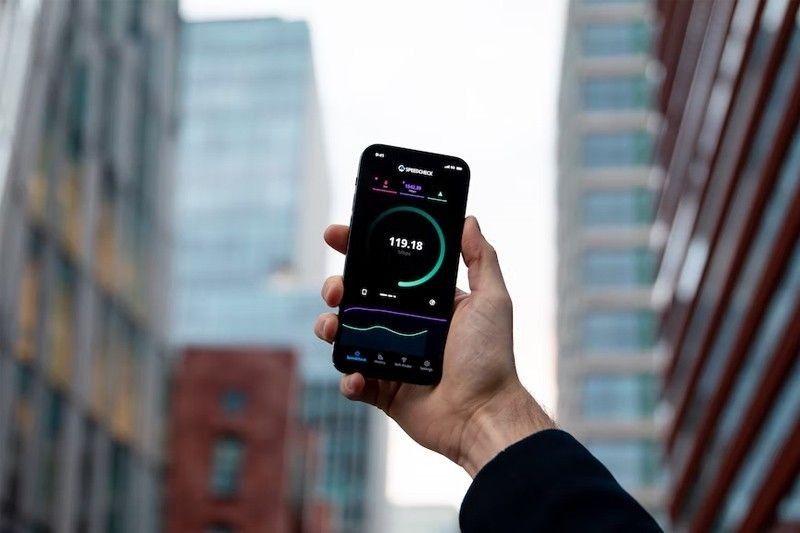
MANILA, Philippines — The Philippines may be trying to attract digital nomads to move here as their workplace, but the country’s urban districts provide the slowest internet speeds among Southeast Asian cities. Based on second quarter analytics from Ookla, Cebu’s mobile connectivity ranked as the weakest among 13 cities in the region that digital nomads tend to go to. Ookla said Cebu registered a mobile speed of 55.48 Mbps, while Manila recorded a better 75.57 Mbps, but still 10th on the list. Da Nang led the pack with 215.56 Mbps, while Phuket came second with 167.62 Mbps, almost the same as Bangkok’s 167.27 Mbps. Singapore posted 158.82 Mbps, followed by Hanoi (142.55 Mbps) and Penang (134.46 Mbps). Further, Kuala Lumpur, Ho Chi Minh City and Chiang Mai were ahead of Manila on the list. The Philippine capital city was only better against Bali and Indonesia on mobile speeds. Moreover, availability of 5G signals rose to 50.4 percent in Manila and to 44.5 percent in Cebu, but the cities placed ninth and 11th on the factor, respectively. Digital nomads in the Philippines also take the longest time for their online meetings to load, as both Cebu and Manila were at the lowest end of the list on jitter. Jitter measures the amount of time for data to arrive over networks, so a higher jitter translates to longer loading of digital functions, particularly for video chats. “Mobile jitter stayed clear of the 30 milliseconds that Microsoft Teams classifies as poor in all 13 destinations, ranging from seven ms in Da Nang to 18 ms in Cebu. It rose over the year in 11 of the 13,” Ookla said. Several Southeast Asian countries, including the Philippines, are competing to become the ideal location for digital nomads, which refer to people who depend on the internet to work remotely while traveling freely. Given this, they consider the quality of internet service before they move to a country. Last year, President Marcos issued an executive order authorizing the issuance of digital nomad visas (DNVs) with a validity period of one year. In developing the DNV policy, the government is trying to capitalize on the Philippines being the seventh fastest-growing country for remote work as studied by the World Economic Forum.
Original source
Philstar Business