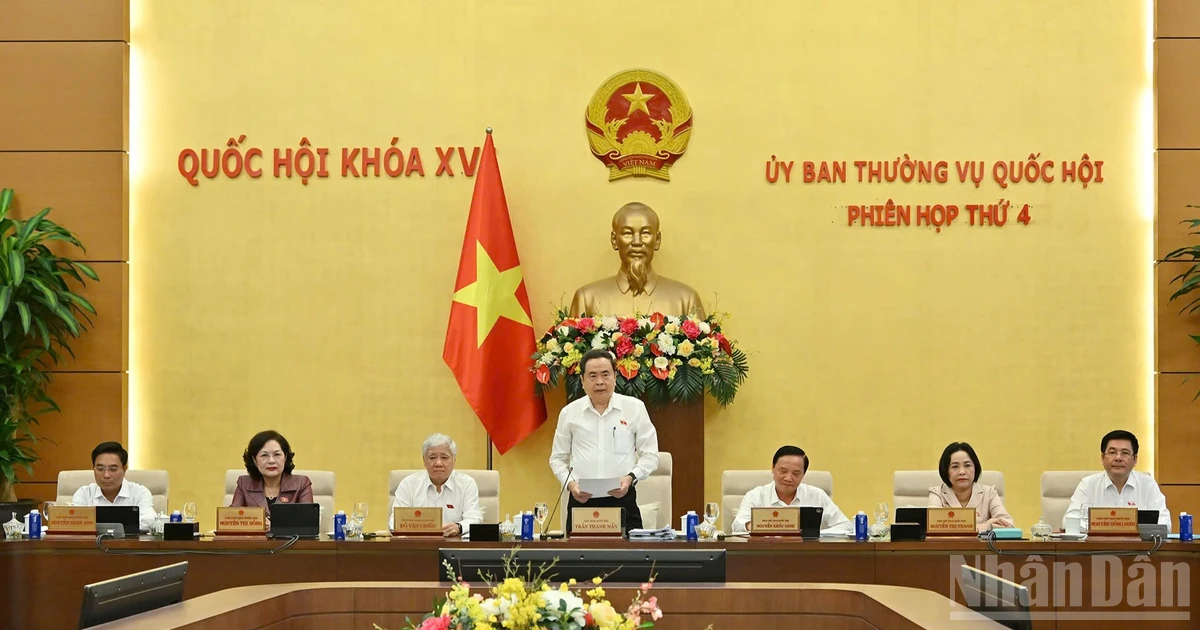
Vietnam's NA Standing Committee Opens 4th Session, Focusing on Legislation and Urgent Issues
Technology
2026年7月8日
5
Nhan Dan

Vietnam's NA Standing Committee Opens 4th Session, Focusing on Legislation and Urgent Issues

AI サマリー

Vietnam's National Assembly Standing Committee commenced its 4th session on July 8. The meeting will focus on legislative work for the upcoming 1st extraordinary session of the 16th National Assembly in August 2026, reviewing 24 draft laws and resolutions. The early approval of revised Housing and Real Estate Business Laws is also under consideration.

The Standing Committee of the National Assembly of Vietnam commenced its 4th session on July 8 at the National Assembly House in Hanoi. Presided over by Chairman Tran Thanh Man, the session is scheduled to last for six days, divided into two phases. The primary focus is legislative work in preparation for the first extraordinary session of the 16th National Assembly, slated to open in early August 2026. In his opening speech, Chairman Tran Thanh Man emphasized that the organization of the first extraordinary session of the 16th National Assembly demonstrates the high political determination of the Party, the National Assembly, and the Government to promptly institutionalize the Central Committee's guidelines and conclusions, address urgent and pressing issues without delay, and alleviate pressure on the year-end regular session. The session will review 24 draft laws and resolutions intended for submission to the National Assembly at the extraordinary session, two draft laws for the second regular session, and consider and adopt 10 ordinances and resolutions from the Standing Committee according to the 2026 legislative program. Additionally, opinions will be sought on three other matters within the committee's authority. Furthermore, the Government has proposed the inclusion of the revised Law on Housing and the revised Law on Real Estate Business for consideration and approval by the National Assembly through a shortened procedure at the first extraordinary session. Chairman Tran Thanh Man urged the Secretary-General of the National Assembly, the Director of the Office of the National Assembly, relevant committees, and Vice Chairmen overseeing specific areas to meticulously review these two draft laws to determine their eligibility for the extraordinary session's agenda. Currently, these two draft laws are not yet included in the Standing Committee's session schedule. The Government is therefore requested to finalize and submit the dossiers for review by the National Assembly's agencies. If they are to be considered by the Standing Committee alongside the revised Land Law, it is projected to take place on July 28. Given the substantial workload, Chairman Tran Thanh Man instructed the agencies to strictly adhere to discipline and the session's agenda. He stressed that any delays, postponements, withdrawals of content, or submission of dossiers close to the Standing Committee's review dates due to subjective reasons are absolutely unacceptable. The Chairman mandated that the Standing Committee must complete all contents for submission to the first extraordinary session within July. When providing opinions on draft laws and resolutions, the Chairman advised the Standing Committee to closely examine the practical implementation of the three-tier administrative model over the past year. He called for a thorough review of decentralization and delegation of authority regulations, and a comprehensive assessment of the feasibility of each policy. This ensures clear definition of responsibilities, tasks, accountabilities, and authorities, enabling local authorities to implement them immediately upon the laws' effectiveness. Simultaneously, it is crucial to prevent legal gaps, overlapping authorities, or the shirking of responsibilities in the implementation process. Following Chairman Tran Thanh Man's opening address, the Standing Committee proceeded with the first agenda item: reviewing and adopting the revised Ordinance on the Procedures for the People's Courts to Consider and Decide on Compulsory Treatment for Drug Addicts Aged 12 to Under 18. Source: Nhan Dan

多角的分析

経済的影響

ベトナム政府は、経済成長の持続と市場の安定化を目指し、法整備を急いでいる。特に住宅法と不動産事業法の改正は、不動産市場の活性化と投資環境の整備に直結する。これらの法案が迅速に成立すれば、国内投資の促進や、外国人投資家に対する透明性の向上に繋がり、経済成長を後押しする可能性がある。しかし、法案の具体的内容や施行規則によっては、予期せぬ市場の変動を引き起こすリスクも否定できない。

投資家心理

投資家にとって、法案の迅速な審議・成立は、ベトナム市場への投資判断において重要な要素となる。特に不動産分野では、法改正による規制緩和や投資機会の拡大が期待される。しかし、改正内容の詳細が不明確な段階での投資は、法的な不確実性を伴う。投資家は、法案の審議状況と内容を注視し、リスクとリターンのバランスを慎重に見極める必要がある。特に、改正土地法との関連性も考慮すべき点である。

社会的影響

法案の迅速な審議は、国民生活に直接影響を与える可能性がある。例えば、住宅法や不動産事業法の改正は、住宅購入や不動産投資の条件、賃貸市場の動向に変化をもたらす。また、麻薬中毒者の強制治療に関する法改正は、社会福祉や公衆衛生の観点から重要であり、対象となる若年層とその家族への影響が懸念される。法整備のスピードと、それが国民生活に与える影響のバランスが問われる。

市民の声

今回の国会常務委員会の会合は、国民生活に直結する法律の改正を多く含んでいる。特に、住宅法と不動産事業法の改正は、多くのベトナム国民にとって住宅の取得や資産形成に関わる重要な問題である。これらの法案がどのように改正され、施行されるかによって、将来の住居環境や経済状況が左右される可能性がある。また、未成年者の薬物中毒治療に関する法案も、社会全体で子供たちの健全な成長を支援するための重要な一歩となる。

背景・歴史的文脈

ベトナムでは、経済発展と社会の安定を両立させるため、法制度の整備が継続的に行われている。特に、市場経済移行(Đổi Mới)以降、法体系の近代化は重要な課題であり、国会常務委員会は、国会閉会中の立法活動において中心的な役割を担ってきた。近年、ベトナムは急速な経済成長を遂げる一方で、不動産市場の過熱や社会問題も顕在化しており、これらに対応するための法改正が喫緊の課題となっている。今回の臨時国会は、こうした背景から、重要かつ緊急性の高い法案を迅速に処理する意図があると考えられる。

原文ソース

Nhan Dan

原文を読む