General articles are free for 24 hours after publish.
Northern and Central Vietnam Hit by Heavy Rains, Thousands of Homes Submerged, Crops Damaged
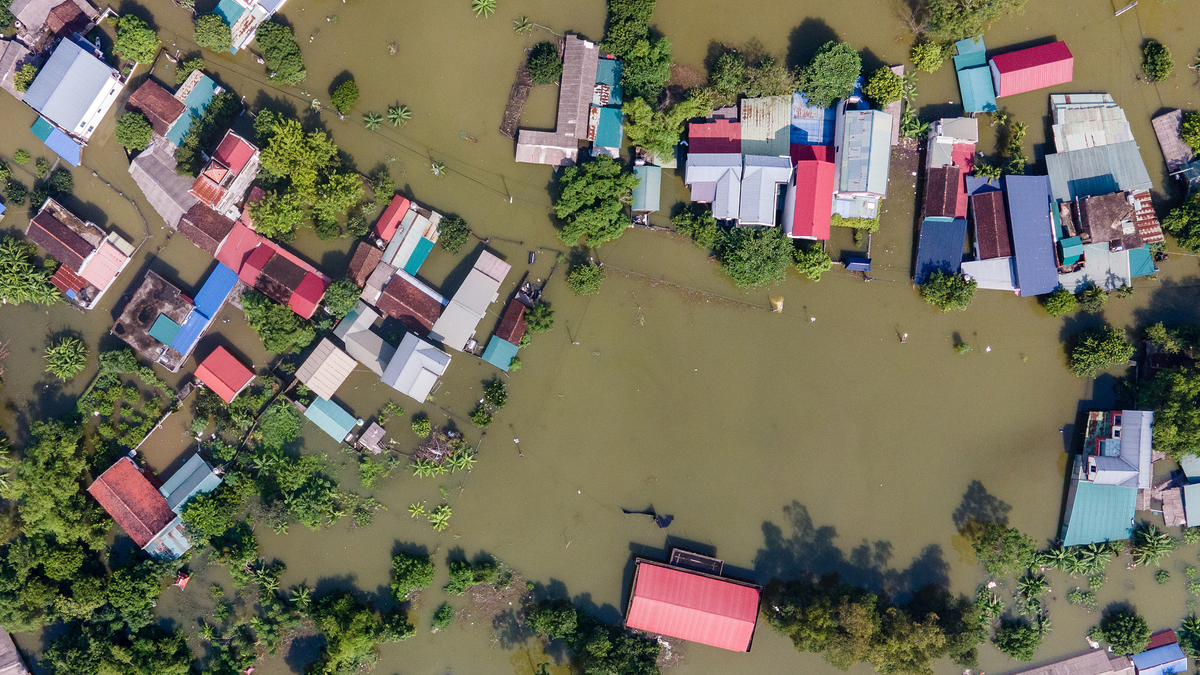
Record heavy rainfall has struck northern and central Vietnam, submerging thousands of homes and causing widespread crop damage. Flood levels in some areas have exceeded alarm level three, impacting infrastructure. Continued rainfall is forecast, with warnings issued for landslides.
Record heavy rainfall has hit northern and central Vietnam, causing thousands of households to be submerged and leading to widespread damage to agricultural crops. In some areas, river flood levels have exceeded alarm level three, impacting infrastructure. Continued rainfall is forecast, with warnings issued for landslides. As of 5 PM on September 19, approximately 15,750 households in provinces such as Thanh Hoa, Ninh Binh, and Hanoi were affected by flooding. While this represents a decrease of 4,819 houses compared to 6 AM the same day, the situation remains severe. Thanh Hoa province, in particular, saw six houses collapse, 110 damaged, and 8,400 remain submerged. Additionally, 6,500 hectares of rice fields and other crops, along with 3,451 hectares of aquaculture areas, were damaged, and many livestock were swept away. In Nghe An province, 13 houses were damaged, and approximately 1,100 hectares of crops and 659 hectares of aquaculture areas were affected. Around 36,500 poultry and livestock were lost. In the capital city of Hanoi, about 3,600 households in suburban districts like Chuong My and Thuong Tin are submerged due to river flooding. Nearly 6,900 hectares of crops and other plants were damaged, and 200 hectares of aquaculture areas were flooded. School facilities, canals, riverbanks, and streams also suffered damage. Regarding infrastructure, five dike incidents occurred in Ninh Binh and Thanh Hoa provinces, with emergency measures taken. The transportation network is affected by three landslides causing closures on National Highway 16 and provincial roads in Thanh Hoa. Twenty-eight flooded sections on national and provincial roads in Thanh Hoa and Nghe An have caused traffic disruptions, with traffic control measures in place. River flood levels are showing a downward trend in some areas but remain above alarm levels in others. For instance, the Tich River in Hanoi is 0.61 meters above alarm level three. The Hoang Long River in Ninh Binh is 0.01 meters above alarm level three, though significantly lower than its peak. In the next 12-24 hours, particularly from the evening of September 19 to the morning of September 20, rainfall of 40-80 mm is expected in areas from Nghe An to Ha Tinh, with localized amounts exceeding 200 mm in the eastern parts. Rainfall is also anticipated from Quang Tri to Hue city. After September 20th afternoon, rainfall is expected to gradually decrease. However, warnings remain for thunderstorms, lightning, hail, strong winds, and for mountainous areas, flash floods and landslides. In Vietnam's one-party system, economic growth is prioritized, but this also highlights the vulnerability to natural disasters exacerbated by climate change. The delays in infrastructure development and increased flood risks due to development in low-lying areas directly impact people's lives. While economic ties with China are strong, geopolitical tensions, such as those in the South China Sea, persist, making the balance between domestic stability and economic development a constant challenge. Source: VnExpress
Original source
VnExpress