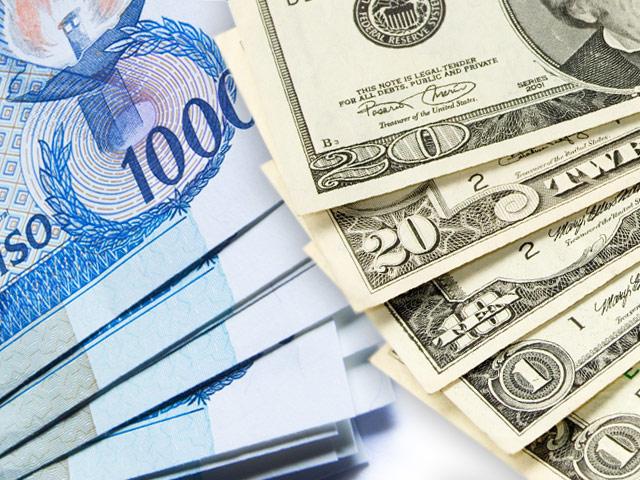
Philippine Peso Hits New Record Low Against US Dollar Amid Oil Surge and US Tariffs
Economy
2026年7月24日
4
GMA Money Philippines

General articles are free for 24 hours after publish.

Philippine Peso Hits New Record Low Against US Dollar Amid Oil Surge and US Tariffs

Share
AI Summary

The Philippine peso has weakened further against the US dollar, hitting a new record intraday low. Factors contributing to the depreciation include surging global oil prices and new tariffs imposed by the United States, with analysts also pointing to Middle East tensions and seasonal import demand.

The Philippine peso weakened further against the US dollar on Friday morning to hit a new record intraday low of P61.845:$1, following the surge in global oil prices and new tariffs imposed by President Donald Trump. The local currency opened Friday at P61.8:$1, weaker than Thursday’s finish of P61.75:$1, the previous record. It has since depreciated even further to P61.845:$1. LOOK: The Philippine peso has slid past the ₱61.8:$1 level, and hit as low as ₱61.845:$1 in intraday trading on Friday morning.This surpasses Thursday’s close of ₱61.75:$1, the previous all-time low. pic.twitter.com/iI4yJUDzZw “The dollar’s resurgence came as oil prices climbed back above $100 a barrel for the first time since May after Yemen’s Houthis struck two Saudi oil tankers in the Red Sea, extending the Middle East war to a second major shipping chokepoint,” Reuters reported. Friday’s weakness also comes as the United States slapped a 12.5% tariff on Philippine exports, citing the Philippines’ reported failure to enforce a ban on imports made with forced labor. Local exports were previously subjected to a 10% tariff, which was in place since February. Fitch Solutions unit BMI last week said the peso is expected to remain “under pressure” and trade within the P61-P63:$1 range in the near term, citing the renewed escalation in the Middle East conflict, the strength of the US dollar, and the seasonal peak in import demand. “Renewed gains in global energy prices will further weigh on the peso by pushing up the import bill and widening the trade deficit. Recent data already reflect this impact,” BMI said.—AOL, GMA News

0

Original source

GMA Money Philippines

原文を読む