General articles are free for 24 hours after publish.
Mekong's Bounty Fades: Vietnam's Traditional Fishhook Craft Struggles
The traditional fishhook manufacturing village of My Hoa in An Giang, Vietnam, is facing decline due to resource depletion and a lack of successors. Once a pillar of the local economy, the industry is struggling amidst fluctuating Mekong River levels and overfishing.
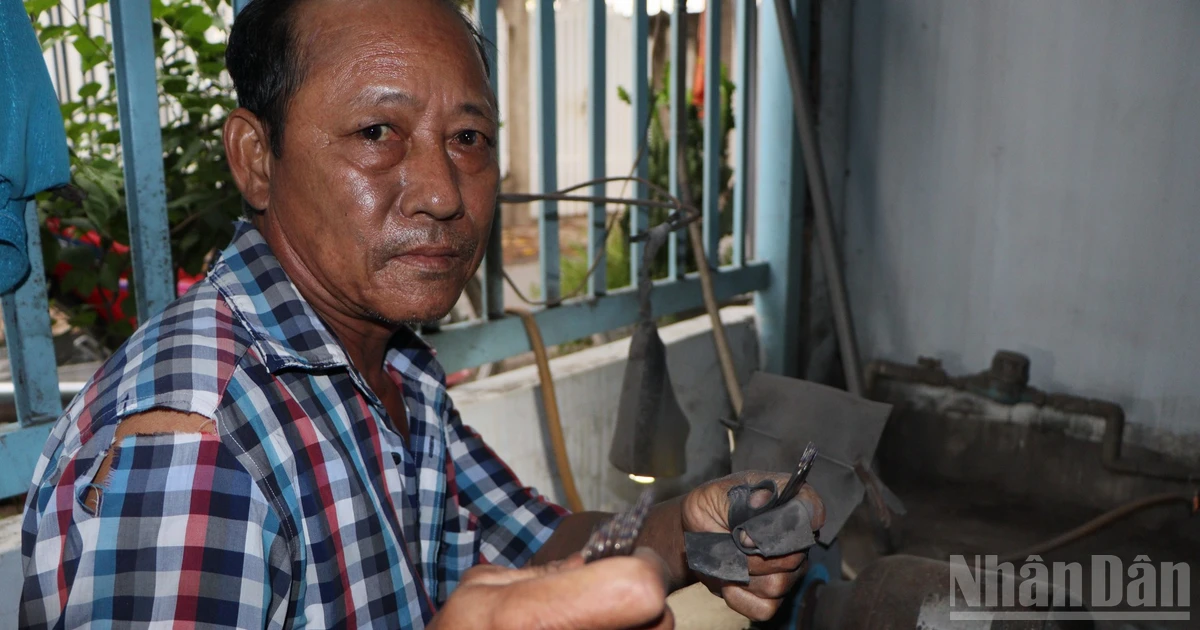
The seasonal flood season, known as the 'water-submergence period', has arrived in An Giang Province, Vietnam, bringing abundant aquatic resources that typically boost activity in the traditional fishhook manufacturing village of My Hoa. However, in recent years, this local industry has been grappling with severe challenges of resource depletion and a lack of successors. The history of fishhook production in My Hoa dates back to around 1967, with hundreds of households engaged in the craft during its peak, significantly contributing to the local economy. Skilled artisans produced high-quality fishhooks tailored for various fish species, earning a reputation across the Mekong Delta. At its height, some households could produce over 10,000 fishhooks daily. However, the situation has drastically changed since the 2000s. Fluctuations in the Mekong River's water levels, particularly low water years, have led to a substantial decrease in natural aquatic resources. Furthermore, destructive fishing practices, such as the use of electric shockers, have accelerated the depletion of fish stocks. These compounding factors have caused a sharp decline in demand for fishhooks. The number of fishhook manufacturers, once exceeding 170, has now dwindled to just a few. Many artisans have shifted to more segmented tasks, such as processing components for fishhooks. These roles are often filled by the elderly and women, but the overall production volume has significantly decreased. The fishhook craft in My Hoa is more than just a livelihood; it symbolizes generations of artisanal skill and local culture. However, with declining interest among the younger generation and a critical shortage of successors, the future of this traditional industry remains uncertain. Nevertheless, holding onto the belief that 'where there is water, there are fish,' some elderly artisans strive to preserve this fading tradition.
Original source
Nhan Dan