General articles are free for 24 hours after publish.
New Wild Cat Species Discovered in Bolivia After 100 Years
A new species of small wild cat, unofficially known as 'tilcayo' by locals, has been discovered in Bolivia's Yungas region. This marks the first new wild cat species identified in over a century, confirmed through genetic and morphological analysis.
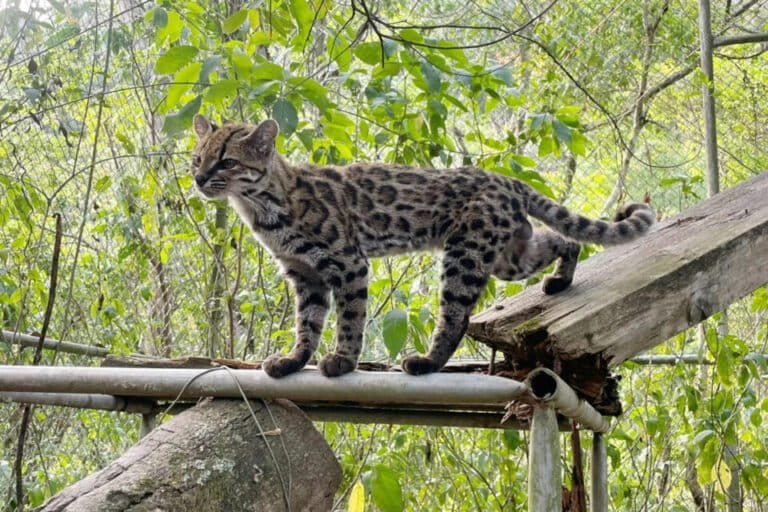
A new species of wild cat, unknown to science for over a century, has been discovered in the dense forests of Bolivia's Yungas region. This small, spotted feline, known locally as 'tilcayo', has now been formally recognized by the scientific community. The discovery traces back to 2016 when a kitten was found near a forest road. Initially believed to be a domestic cat, its unusual behavior led to its surrender to the Senda Verde Wildlife Sanctuary, located on the subtropical slopes of the Andes. Paola Nogales-Ascarrunz, a Bolivian biologist and National Geographic Explorer volunteering at the sanctuary, was intrigued by its appearance: a small, narrow face, short, rounded ears, and a body covered in leopard-like spots. While initially suspected to be a known relative, further investigation was deemed necessary. In 2023, Nogales-Ascarrunz and her team conducted genetic analysis on DNA samples from the cat, comparing them with known felids. The results revealed that the animal was genetically distinct from any previously described species. Morphological assessments also confirmed unique features in its facial structure, ear size, and distinctive spotted pattern, setting it apart from its relatives. Published on September 17, 2023, in the journal 'Current Biology', this marks the first identification and description of a new living wild cat species in more than a century, since the Pampas cat was described in 1923. The finding underscores that Earth's biodiversity still holds undiscovered wonders, and highlights the importance of conservation efforts, particularly for smaller animals in remote areas that may be overlooked due to their similarity to known species.
Original source
Mongabay Indonesia