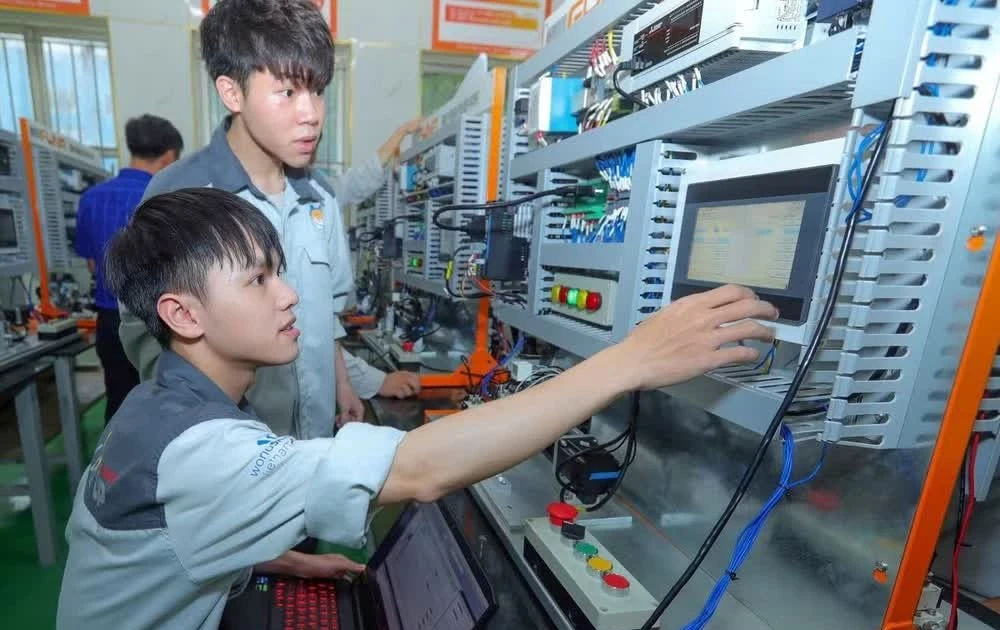
Hanoi Accelerates Digital Economy Development, Targets 22% of GRDP by End-2026
Economy
2026年7月27日
5
VietnamPlus English

General articles are free for 24 hours after publish.

Hanoi Accelerates Digital Economy Development, Targets 22% of GRDP by End-2026

Share
AI Summary

Hanoi is accelerating its digital economy development, aiming for it to account for 22% of its Gross Regional Domestic Product (GRDP) by the end of 2026. This initiative is part of a broader strategy to boost the nation's economic growth and integration into global value chains.

Hanoi is accelerating its development to achieve the ambitious goal of having the digital economy account for 22% of its Gross Regional Domestic Product (GRDP) by the end of 2026. This initiative is positioned as part of a national strategy to enhance the economic growth of Vietnam as a whole and its integration into global value chains. Hanoi is also focusing on strengthening its semiconductor ecosystem, which is expected to become a new growth driver not only for the capital but also for the entire country. This will improve Vietnam's technological capabilities and pave the way for deeper integration into the global semiconductor value chain. Meanwhile, Ho Chi Minh City is stepping up efforts to build a safer and more transparent e-commerce ecosystem by accelerating the implementation of the new E-commerce Law, aiming to strengthen consumer protection, enhance platform accountability, and support the sustainable growth of the digital economy. Infrastructure development to support economic growth is also progressing. At Phu Quoc International Airport, a new runway measuring 3,300 meters long and 45 meters wide is nearing completion. Built parallel to the existing runway, its lighting system has also undergone testing at night. This is expected to enhance the airport's passenger handling capacity. Furthermore, DHL is constructing the North Logistics Campus, directly connected to the Hanoi-Hai Phong Expressway, which will strengthen access to Noi Bai International Airport, Hanoi, and Hai Phong Port, the largest deep-sea port in northern Vietnam. The Vietnam Chamber of Commerce and Industry (VCCI) has launched the "CEO Vietnam The New Era" Vietnam business leadership development program for 2026-2030, aiming to nurture a new generation of internationally competitive CEOs. This program is expected to include over 40 discussions focusing on AI applications, sustainable development, and human resource development, as well as meetings for building international partnerships. Global connectivity of financial markets is also being enhanced. Vietnam and the United States have agreed to continue collaborating in a constructive and cooperative spirit, with Vietnam urging the US to consider the measures adopted by Vietnam and its legislative and enforcement efforts when adjusting tariffs on Vietnamese goods. Additionally, Brazil has become the fastest-growing market for Vietnamese tilapia, driving export growth against the backdrop of increasing global demand for whitefish. With a consumer market of approximately 100 million people, rising incomes, and growing demand for processed and health-oriented food products, Vietnam is also seen as a promising gateway to Southeast Asia. The development of its marine economy is also advancing, with expectations for high-value seafood harvesting, aquaculture, and processing. If marine spatial governance is effectively implemented through cross-sectoral coordination, the utilization of science and technology, and expanded international cooperation, the sea will become not only a space for resource exploitation but also a long-term development space for the nation. Source: VietnamPlus English

0

Original source

VietnamPlus English

原文を読む