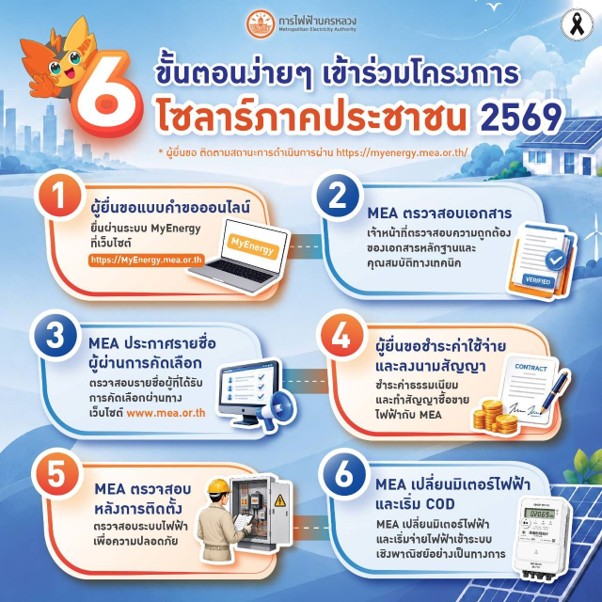
Thailand's MEA Outlines 6 Steps for Public Solar Power Sales in 2026
Infrastructure
2026年7月4日
3
MGR Online (Business)
Relations
🇹🇭Thailand🇯🇵Japan

Thailand's MEA Outlines 6 Steps for Public Solar Power Sales in 2026

AI サマリー

Metropolitan Electricity Authority (MEA) of Thailand has announced a six-step process for public participation in solar power sales, starting in 2026. This initiative aims to expand opportunities for citizens to sell surplus electricity generated from their solar panels to the utility company via the dedicated 'MyEnergy' platform.

The Metropolitan Electricity Authority (MEA) of Thailand has announced a six-step process for the sale of electricity generated from public participation in solar power generation, set to commence on July 4, 2026. This initiative aims to expand opportunities for general households and small businesses to sell their surplus electricity generated from solar power to the MEA. Applications will be processed through the dedicated digital platform 'MyEnergy' provided by the MEA, which is expected to enhance the transparency and efficiency of the procedures. The six specific steps are anticipated to include preparation of application documents, registration on the platform, submission of the application, review by the MEA, contract signing, and the commencement of electricity sales. This scheme is part of the Thai government's broader policy to expand renewable energy adoption, particularly by encouraging individual participation to build a decentralized energy system. It is expected to contribute to stabilizing power supply, reducing the economic burden on households, and further mitigating environmental impact. The MEA anticipates that this new electricity sales system will act as a catalyst in accelerating Thailand's transition to clean energy. While encouraging active participation from the public, the authority plans to release further details of the system progressively.

多角的分析

経済的影響

タイ政府は再生可能エネルギー導入拡大を国家戦略として推進しており、国民参加型太陽光発電の電力販売制度は、この目標達成に向けた重要な経済的インセンティブとなる。家庭や小規模事業者が発電した余剰電力を収益源とすることで、再生可能エネルギー投資の回収期間短縮や、電力料金負担の軽減に寄与すると考えられる。これにより、国内のエネルギー自給率向上にも繋がる可能性がある。

投資家心理

この制度は、タイ国内の太陽光発電関連機器メーカーや設置業者にとって、新たなビジネス機会をもたらす。国民の太陽光発電導入意欲を高めることで、市場全体の拡大が期待できる。また、電力購入価格の設定次第では、長期的な収益性を見込む投資家にとって、インフラ投資の一環として魅力的な選択肢となり得る。

社会的影響

国民が自ら発電した電力を販売できる機会は、エネルギーに対する意識改革を促し、持続可能な社会への貢献意識を高める可能性がある。特に都市部では、屋上スペースなどを活用した太陽光発電の導入が進むことで、地域社会におけるエネルギーの分散化とレジリエンス向上に繋がる。一方で、初期投資や制度理解のハードルが、一部の国民にとって参入障壁となる可能性も指摘される。

市民の声

タイの国民、特に都市部の住民は、MyEnergyプラットフォームを通じて、自宅の太陽光パネルで発電した余剰電力をMEPに販売する手続きが簡素化されることで、再生可能エネルギーへの参加が容易になる。これにより、電力料金の節約や、わずかながら収入を得る機会が生まれる。しかし、初期投資の負担や、制度の詳細、電力買い取り価格が、国民の参加意欲に影響を与える可能性がある。

背景・歴史的文脈

タイ政府は、2015年に策定された国家エネルギー計画において、再生可能エネルギーの導入目標を掲げ、その達成に向けた政策を段階的に実施してきた。特に、2018年以降、国民参加型太陽光発電(PV)プログラムは、家庭や小規模事業者が自家発電した電力を電力会社に販売できる仕組みとして導入が進められている。今回のMEAによる6段階の手続き公表は、2026年からの新たなフェーズに向けた具体的な準備段階であり、国民の参加をさらに促進し、タイのエネルギーミックスにおける再生可能エネルギーの比率を高めることを目指している。

原文ソース

MGR Online (Business)

原文を読む