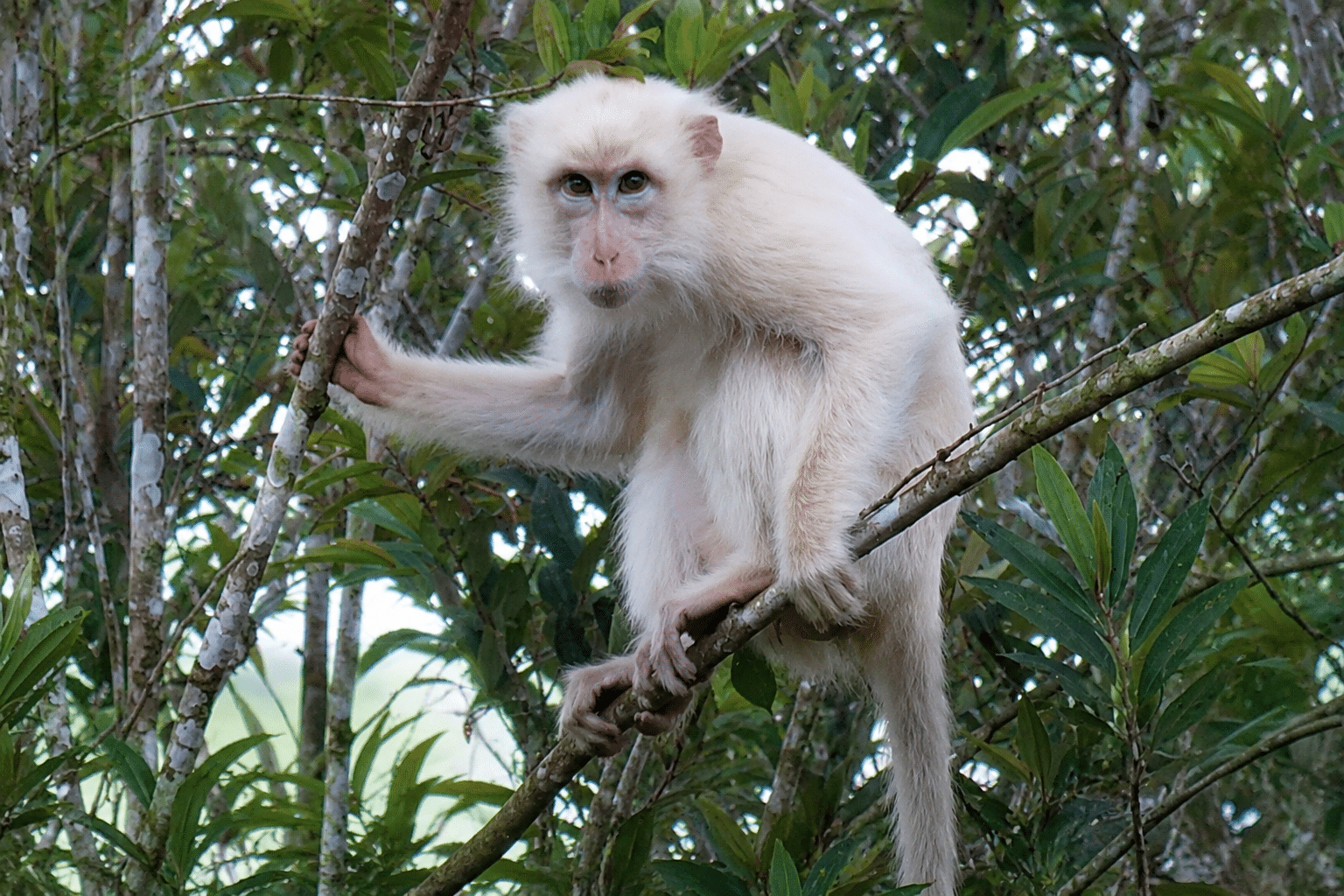
Rare White Macaque in Sultan Kudarat Becomes Focus of Protection Efforts
Environment
2026年7月11日
5
Inquirer NewsInfo

Rare White Macaque in Sultan Kudarat Becomes Focus of Protection Efforts

AI サマリー

A rare white macaque sighted in Sultan Kudarat, Philippines, has prompted heightened conservation efforts. Following its viral appearance on social media, the Department of Environment and Natural Resources (DENR) and local authorities are implementing measures to protect the animal and its habitat.

For nearly a decade, a white monkey has been moving through a forested area in Sultan Kudarat, quietly becoming a familiar sight to residents. Its unusual appearance set it apart from the other macaques in the area. But when videos and photographs of the animal began circulating widely on social media, curiosity quickly became a conservation concern. The Department of Environment and Natural Resources (DENR) Region XII, together with the local government of Senator Ninoy Aquino town, has since taken steps to protect the monkey and restrict access to the area where it is often seen. The animal is believed to be a Philippine long-tailed macaque (Macaca fascicularis philippensis) with a pigmentation anomaly. It was initially presumed to have albinism. A field validation by a DENR XII composite monitoring team, however, found that the macaque had brown to dark brown eyes, suggesting that it may instead have leucism or another pigmentation condition. DENR said wildlife experts must still conduct scientific verification before the condition can be definitively identified. A local resident identified as Armando said the macaque had been regularly seen in the area since 2016 and often roamed nearby. Its growing visibility online, however, has raised fears that the animal could be disturbed, hunted, captured or collected. DENR also warned that the attention could expose it to poaching and wildlife trafficking. During the field validation, the monitoring team found that the macaque’s habitat remained suitable. Secondary forest vegetation and natural food sources continue to support the resident monkey population. To minimize disturbance, the municipal government temporarily closed the area where the animal is frequently observed. The move is also intended to prevent illegal wildlife collection and other threats. Barangay Bugso is meanwhile preparing an ordinance that would institutionalize protection for the white macaque, its habitat and the surrounding forest ecosystem. Pending the ordinance’s enactment, unauthorized entry into the immediate vicinity of the reported sighting remains prohibited. The barangay government also plans to conduct tree-planting and habitat-restoration activities as part of efforts to strengthen biodiversity conservation and promote responsible ecotourism. DENR reminded the public that all wildlife is protected under Republic Act No. 9147, or the Wildlife Resources Conservation and Protection Act. The law prohibits hunting, capturing, collecting, possessing, transporting, trading or disturbing wildlife without the required permits. The agency also appealed to vloggers, photographers, journalists, social media users and residents not to reveal the exact location of wildlife sightings or post geotagged content that could put protected species at risk. As part of its continuing conservation efforts, DENR XII will submit documentation on the macaque to the Biodiversity Management Bureau for technical evaluation. It will also continue monitoring the habitat, strengthen coordination with local stakeholders and intensify information campaigns on wildlife protection. For now, the white macaque remains in the forest where residents have seen it for years — no longer just an unusual sight, but a species under watch and protection.

多角的分析

経済的影響

このニュース自体に直接的な経済的影響は小さいものの、野生生物保護活動やエコツーリズムの推進は、地域経済に新たな機会をもたらす可能性があります。例えば、保護活動への寄付や、地域住民によるガイドサービス、手工芸品の販売などが考えられます。しかし、これらの経済効果は、観光客の誘致やインフラ整備といった、より広範な地域開発計画と連携して初めて持続可能なものとなるでしょう。現状では、保護活動そのものが主な焦点であり、経済的側面は二次的と考えられます。

投資家心理

この特定のニュースは、直接的な投資機会を提示するものではありません。しかし、フィリピンにおける環境保護意識の高まりは、将来的にエコツーリズム関連のインフラ投資や、持続可能な事業への関心を高める可能性があります。投資家は、フィリピンの環境規制の動向や、地域社会の持続可能な開発への取り組みを注視する必要があるでしょう。現時点では、このニュース単体で投資判断に影響を与える要素は限定的です。

社会的影響

ソーシャルメディアでの拡散が、当初の静かな存在であった白いサルを、保護の必要性が問われる公的な存在へと変貌させました。これは、現代社会における情報伝達の力と、それが野生生物保護という新たな課題を生み出す様相を示しています。具体的には、写真家やユーチューバーがサルを追跡する行為は、サルへの直接的なストレスだけでなく、彼らの生息環境への無許可の立ち入りを誘発する可能性があります。また、地方自治体が条例制定に動いていることは、地域社会が野生生物との共存を模索する具体的な一歩であり、住民の意識変化と行動変容が期待されます。

市民の声

この白いサルは、フィリピンの地方都市、特に自然豊かな地域に住む人々の生活に、静かな驚きと新たな責任感をもたらしました。長年、地域住民にとって身近な存在であったサルが、SNSを通じて全国的、あるいは国際的な注目を集めることで、その存在の価値が再認識され、保護への意識が高まっています。一方で、サルを撮影しようとする外部からの訪問者によって、日常生活が乱されたり、サルに危害が及んだりすることへの懸念も生じています。住民は、サルを守りつつ、静かな生活を維持する方法を模索しています。

背景・歴史的文脈

フィリピンは、豊かな生物多様性を誇るが、生息地の破壊、密猟、違法取引などにより、多くの固有種が絶滅の危機に瀕している。特に、ニホンザル(Macaca fascicularis philippensis)は、広範囲に生息するものの、生息地の減少や人間との衝突により、その個体数や健康状態は懸念されている。2001年に制定された野生生物資源保全・保護法(Republic Act No. 9147)は、野生生物の保護を目的としているが、その執行にはしばしば課題が伴う。今回の白いサルの事例は、SNSの普及が、こうした個別の保護活動を公的な関心事へと押し上げる現代的な側面を示している。

原文ソース

Inquirer NewsInfo

原文を読む