General articles are free for 24 hours after publish.
Thanh Hoa Province Streamlines Public Education Institutions
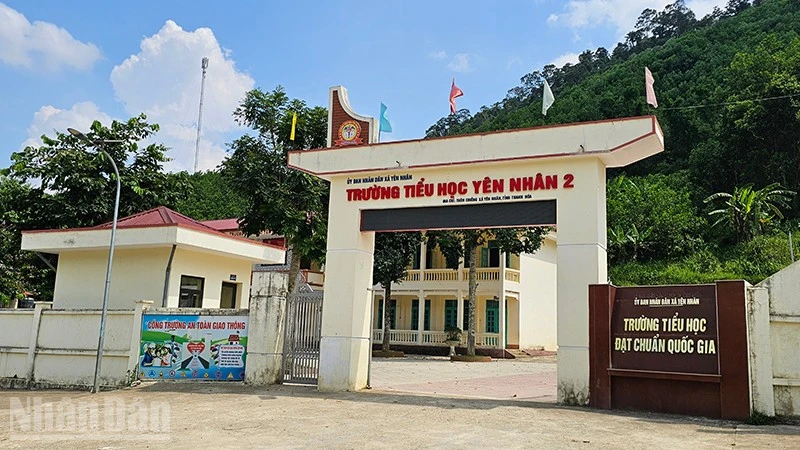
Vietnam's Thanh Hoa Province has approved a plan to reorganize its public educational institutions, including kindergartens, general education schools, and vocational training centers. The initiative aims to enhance educational efficiency and quality by consolidating smaller schools and reducing administrative units, with a goal of significantly decreasing the total number of institutions.
Thanh Hoa Province in central Vietnam has approved a comprehensive plan to reorganize its public educational institutions, including kindergartens, general education schools, and vocational training centers. This decision aims to enhance the efficiency and quality of the education system. Currently, Thanh Hoa Province has 1,908 public kindergartens and general education schools. Among these, 101 kindergartens, 12 primary schools, 34 lower secondary schools, and 2 upper secondary schools are below the mandated minimum size. Additionally, there are 24 continuing education centers and 8 intermediate vocational training schools. Under the reorganization plan, each land border xã (administrative unit) will have one kindergarten and one inter-level primary and lower secondary school. For xã with an existing kindergarten, a primary school, and a lower secondary school, the kindergarten will be maintained, and the primary and lower secondary schools will be merged into an inter-level school. For other xã, the optimal reorganization method will be chosen based on student numbers, geographical conditions, and transportation. In areas with favorable conditions, a multi-campus single-level school model will also be encouraged. Each xã will be allocated a maximum of one public upper secondary school. In densely populated urban areas, if the total number of classes in public upper secondary schools exceeds 100, the allocation of up to two public upper secondary schools per xã will be considered. The reorganization aims to reduce the total number of educational institutions by at least 30%. In particularly favorable areas, the number of public kindergartens and general education schools is expected to decrease by approximately 50%. Furthermore, continuing education centers that are small-scale and inefficient will be reorganized to improve management efficiency and facility utilization. Where conditions permit, some continuing education centers will be piloted for conversion into vocational training schools that align with local labor demands. Intermediate vocational training schools that do not meet standards or offer programs not aligned with regional needs will also be reorganized. To cater to students with disabilities and special educational needs, the 'Thanh Hoa Specialized Education School' will be established. This reorganization aligns with the province's two-tier local governance model, aiming not just for a numerical reduction but for the construction of a more rational educational network that considers population distribution and learner convenience. Consequently, it is expected to facilitate organizational restructuring, efficient utilization of teaching staff, effective use of facilities and equipment, and the efficient allocation of state budgets. Source: Nhan Dan
Original source
Nhan Dan