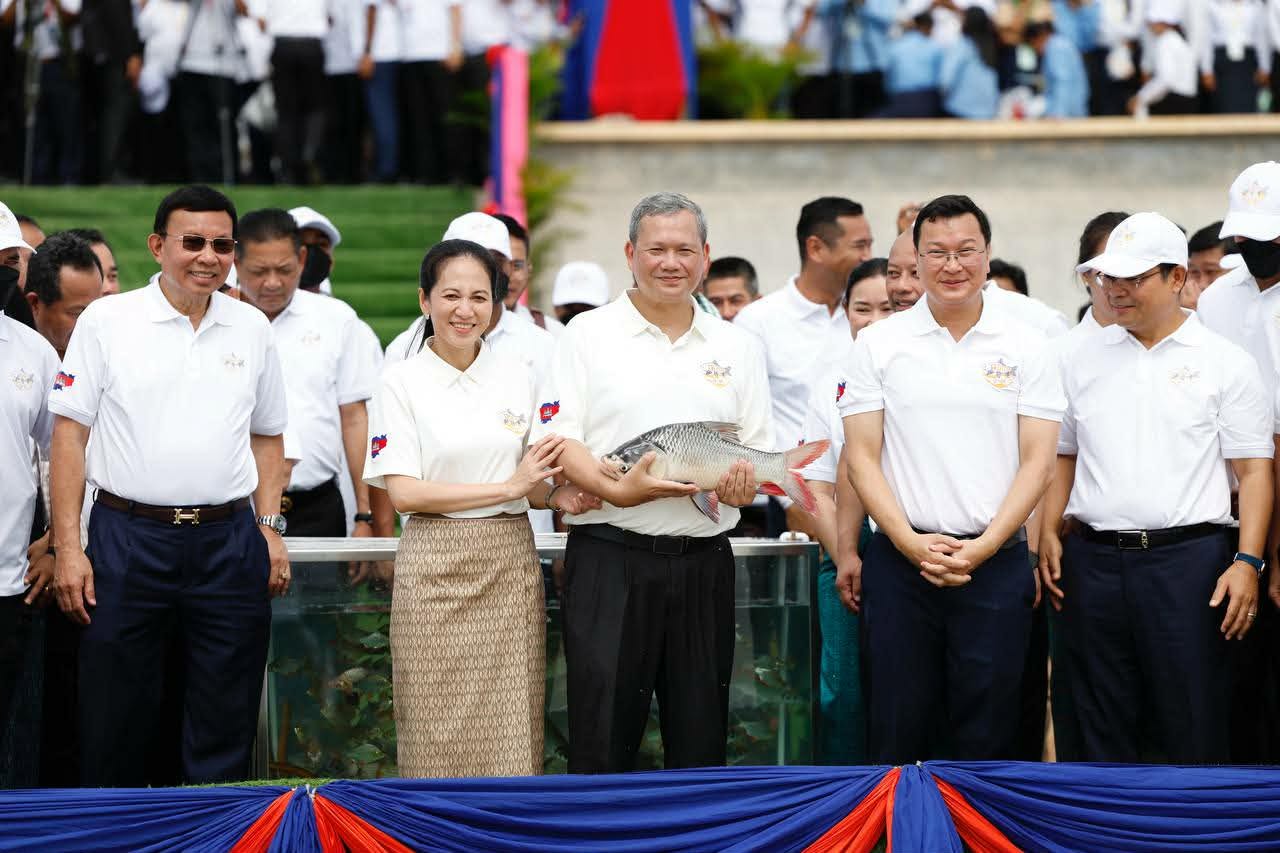
PM Hun Manet: Agriculture is the Nation's Stomach, Fishery is Protein Producer
Cambodian Prime Minister Hun Manet, speaking at the National Fish Day in Svay Rieng province, emphasized the importance of agriculture as the "nation's stomach" and fishery as the "protein producer." He highlighted sustainable resource management and stable food supply for citizens.
Cambodian Prime Minister Hun Manet, attending the "National Fish Day" event at the Vaiko River in Svay Rieng province, declared agriculture as the "nation's stomach" and fishery as the "protein producer." He underscored the importance of sustainable fishery resource management and ensuring a stable supply for the public. Speaking at the event on July 1st, Prime Minister Hun Manet stated, "Agriculture is the nation's stomach, and fishery is the protein producer." He explained that fishery provides an indispensable source of protein for the nation, ensuring a continuous supply that supports the public's diet. He also touched upon the significance of the "National Fish Day," which has been observed since 2003. The event aims to raise awareness among all stakeholders, especially local fishermen and citizens, about the protection and conservation of fishery resources, encouraging participation in sustainable management. He particularly emphasized that the setting of fishing ban periods is crucial for allowing fish to spawn and grow during the flood season, which serves as a primary food source for the public and a vital daily income for fishermen. Furthermore, Prime Minister Hun Manet highlighted that the government of the 7th legislature has set forth the development of resilience, sustainability, and inclusivity as the fourth pentagon of its pentagonal strategy. Within this strategy, the second angle focuses on the sustainable management of natural resources, heritage, and tourism, while the third angle emphasizes the promotion of agriculture and rural development. Regarding the agricultural sector, the government has implemented the "National Policy on Agricultural Development 2022-2030." This policy aims to modernize the agricultural sector, enhance its competitiveness, ensure food security, and sustainably manage land, forest, and fishery resources. Source: Koh Santepheap Khmer
多角的分析
フン・マネト首相の発言は、カンボジア経済における農業と漁業の基幹的役割を再確認するものである。特に「国家の胃袋」という比喩は、食料安全保障と国民生活の安定に直結する農業の重要性を示唆している。また、「タンパク質製造機」としての漁業は、国民の栄養改善と所得向上に貢献する可能性を秘めている。政府が掲げる「持続可能な開発」や「農業開発政策」は、これらのセクターの近代化と国際競争力強化を目指すものであり、輸出拡大や付加価値向上への期待が持てる。しかし、これらの目標達成には、気候変動への適応、灌漑施設の整備、技術革新への投資、そして小規模漁業者や農家への支援策が不可欠となる。中国との経済関係が深まる中で、これらの一次産業の発展が、経済の多角化にどう寄与するかが注目される。
カンボジアの農業・漁業セクターは、国内消費だけでなく、輸出市場への潜在的な成長機会を提供している。フン・マネト首相の農業・漁業の重要性に関する言及は、これらの分野への政府のコミットメントを示唆しており、投資家にとって安心材料となり得る。特に、持続可能な開発政策は、環境・社会・ガバナンス(ESG)投資の観点からも魅力的である。しかし、投資判断にあたっては、インフラ整備の遅れ、気候変動によるリスク、そして依然として残る小規模生産者への支援不足といった課題を慎重に評価する必要がある。中国からの直接投資は引き続き見込まれるが、欧米や日本からの投資を呼び込むには、透明性の向上や法制度の整備が求められるだろう。
フン・マネト首相の発言は、国民の食料安全保障と生活基盤を支える農業・漁業の重要性を国民に訴えかけるものである。特に、禁漁期間の設定は、漁業者の短期的な収入減につながる可能性もあるが、長期的な資源保護と安定供給のためには不可欠な措置であり、その意義を理解してもらうための丁寧な説明と、代替収入源の確保といった支援策が求められる。また、農業・漁業の近代化は、地方の雇用創ちや所得向上に繋がる可能性がある一方、技術格差や自然災害への脆弱性といった課題も存在する。国民生活に直結するこれらのセクターの持続的な発展は、貧困削減や社会全体の安定に不可欠な要素となる。
フン・マネト首相が農業を「国家の胃袋」、漁業を「タンパク質製造機」と呼んだことは、多くのカンボジア国民、特に農村部や沿岸部に住む人々にとって、自分たちの生活が国の基盤を支えているという実感につながるだろう。しかし、禁漁期間は漁業者の収入に直接影響するため、政府による支援策や代替収入の確保が、彼らの生活を維持するために極めて重要となる。また、農業・漁業の近代化は、より多くの食料を、より安定した価格で提供することに繋がる可能性があるが、その恩恵が社会全体に公平に行き渡るかどうかが問われる。地方の小規模農家や漁業者が、新しい技術や市場へのアクセスを得られるかどうかが、彼らの生活実感に大きく影響するだろう。
背景・歴史的文脈
カンボジアは伝統的に農業国であり、国民の多くが一次産業に従事している。メコン川流域の豊かな水資源は、稲作や漁業の基盤となってきた。しかし、近年の経済発展に伴い、都市部への人口集中や産業構造の変化が進み、農業・漁業の重要性は相対的に低下しつつあった。フン・セン元首相時代から、農業の近代化や農村開発は国家的な課題として位置づけられてきたが、気候変動による干ばつや洪水、そして国際市場での価格変動といった外部要因に脆弱な側面も抱えている。フン・マネト首相の今回の発言は、これらの課題を踏まえつつ、食料安全保障と国民生活の安定に不可欠な農業・漁業の基幹産業としての地位を改めて強調し、その持続的な発展への決意を示すものと考えられる。
原文ソース
Koh Santepheap Khmer