General articles are free for 24 hours after publish.
Krayan Highland's Heritage: Dayak Lundayeh Community's Traditional Adan Rice
The Dayak Lundayeh community in the Krayan Highlands of North Kalimantan, Indonesia, cultivates traditional 'Adan rice' using ancestral farming methods. This sustainable agriculture, devoid of chemical fertilizers and utilizing natural resources, is a cultural heritage with markets extending to Malaysia.
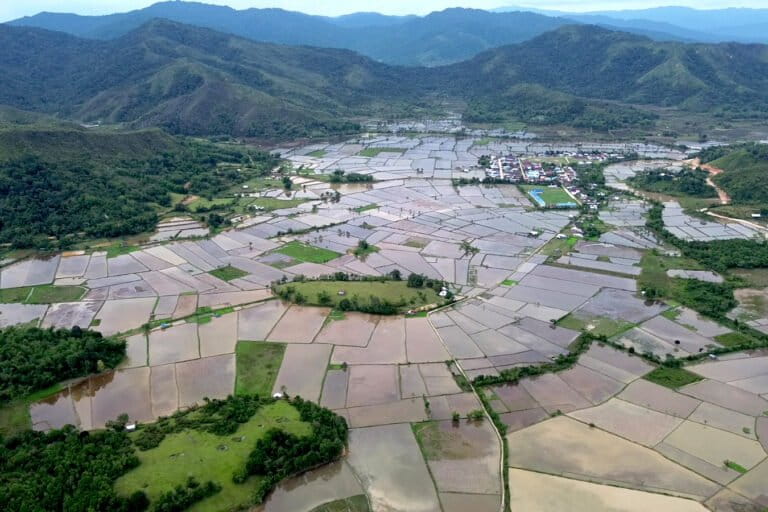
The Dayak Lundayeh community, residing in the Krayan Highlands of Krayan Barat District, Nunukan Regency, North Kalimantan, Indonesia, continues to cultivate a local rice variety known as 'Adan rice' using traditional farming methods inherited from their ancestors. Their rice fields are situated at the bottom of valleys, surrounded by extensive mountains and forests, with a portion bordering Malaysia. On approximately 3,600 hectares of land, Adan rice, characteristic of the Krayan region, is grown. This area is adjacent to the 1.27 million-hectare Kayan Mentarang National Park (TNKM), and the traditional land use area of the Dayak Lundayeh community spans about 343,000 hectares. For the Dayak Lundayeh people, Adan rice is not merely a food staple but also a cultural heritage and a crucial source of income. According to Otnel Akun, the leader of the KTH Batu Pun Bersama farming group in Long Pua village, they primarily cultivate three types of Adan rice: white, red, and black. These varieties are also sold in Sarawak, Malaysia. 'We always send them there,' he told Mongabay Indonesia on Friday (14/8/26). Adan rice is the mainstay of agriculture for the Dayak Lundayeh community in North Kalimantan. Photo: Yovanda/Mongabay Indonesia. The price of Adan rice ranges from approximately Rp350,000 to Rp400,000 per 15-kilogram tin, potentially reaching Rp450,000 under certain conditions. What makes this rice distinct is its cultivation method. The local community maintains traditional farming practices that do not involve chemical substances, having abandoned the use of chemical fertilizers. Instead, they utilize natural resources from their surroundings, such as buffalo manure and urine, to enrich the soil. This practice is a wisdom passed down through generations, with Akun stating, 'Nature provides all our needs.' Source: Mongabay Indonesia
Original source
Mongabay Indonesia