Vietnam Urged to Accelerate Growth Through Legal Reforms, Enhance NA's Advisory Role
Vietnam's Communist Party leadership is pushing for comprehensive legal and institutional reforms to drive new growth. The National Assembly (NA) is urged to enhance its advisory and implementation capabilities, focusing on tangible outcomes. This aims to strengthen the foundation for economic growth and social development.
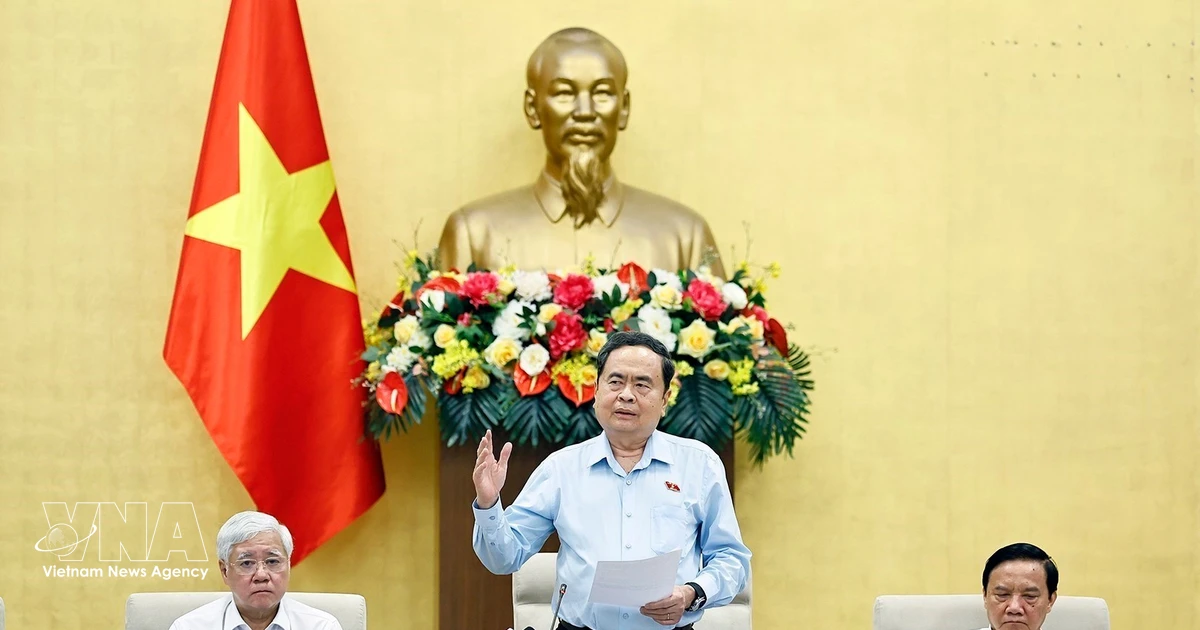
Prime Minister Le Minh Hung has reiterated Party General Secretary and State President To Lam’s view that Vietnam must create a new breakthrough in institutional framework and legislation, turning them into a growth driver. Party General Secretary and State President To Lam emphasised that assignments must not be reduced to slogans and rejected situations where agencies report that initiatives have been launched, studied or disseminated without being able to identify completed deliverables, promulgated legal documents, simplified administrative procedures, resolved legal inconsistencies, and accountability at leadership level. The legislature should continue to play the role of an active and responsible member in multilateral parliamentary forums and gradually move from active participation towards contributing, proposing initiatives and helping shape agendas on issues aligned with Vietnam’s interests and capabilities. The Standing Board approved the formation of the specialised research unit, describing it as a necessary step to implement the orientations of the Politburo and the Party Central Committee’s Secretariat while strengthening the NA Party Committee's research and advisory capacity. PM Le Minh Hung stressed that successfully implementing these focal tasks will not only determine Vietnam's growth performance in 2026 but also lay the cornerstone for strong economic restructuring and a new development model in the years ahead. However, Party General Secretary and State President To Lam stated that "implementation capacity" rather than institutional frameworks has now become the greatest obstacle to development. Vietnam is willing to support Timor-Leste through bilateral cooperation as well as mechanisms within the Association of Southeast Asian Nations (ASEAN). Vietnam also treasures its traditional friendship with France and the French Communist Party (PCF), noting that the Vietnamese Party, State, and people always remember and appreciate the valuable support that the PCF has extended to Vietnam during past struggles for national liberation, as well as the current period of national construction and development. Vietnamese leaders also congratulated the US on its achievements. Furthermore, Vietnam intends to thoroughly prepare for the 2027 APEC Economic Leaders' Week, showcasing the country as a friendly, peaceful, and stable destination while promoting the cultural features and tourist attractions of Phu Quoc and An Giang to the international community. Meanwhile, the Chinese People's Liberation Army (PLA) Navy's taskforce arrived in Ho Chi Minh City for a goodwill visit aimed at strengthening defence cooperation and mutual understanding. Economically, trade with Ghana exceeded $1 billion for the first time in 2025, making it Vietnam's fourth-largest trading partner in Africa. Proposals include broadening and diversifying traded goods, establishing information-sharing mechanisms on markets, policies, and business opportunities, and accelerating negotiations on key economic agreements. Participation in the Montreal Declaration also provides a foundation for Vietnam to explore deeper engagement with the IEA's multilateral energy efficiency initiatives, offering opportunities to access data, policy experience, technical tools, and public-private partnership models in energy conservation. Socially, search and recovery operations for martyrs' remains are underway nationwide, underscoring Vietnam’s determination to better care for those with meritorious service and fulfil the aspirations of martyrs’ families. The Pacific Partnership – Pacific Friendship programme demonstrates increasingly substantive and effective cooperation between Vietnam and the US, reaffirming Quang Tri province's active role in promoting international cooperation for community welfare and sustainable development. Copyright, VietnamPlus, Vietnam News Agency (VNA)
多角的分析
ベトナム指導部が「実行能力」を開発の最大の障害と指摘したことは、法制度や政策の策定自体よりも、それらが現場でいかに効果的に実施されるかが、経済成長の鍵を握っていることを示唆している。これは、官僚機構の非効率性、汚職、または地方と中央の間の意思疎通の断絶といった構造的な問題を示唆している可能性がある。過去、ベトナムは急速な経済成長を遂げてきたが、その持続可能性は、制度の質と実行能力の向上にかかっている。例えば、2023年の外国直接投資(FDI)の持続的な流入は、ベトナムの潜在能力を示しているが、国内経済の活性化と構造改革の遅れは、経済成長のボトルネックとなりうる。
投資家にとって、法制度の改革と実行能力の強化は、事業環境の予測可能性と安定性を高める重要な要素となる。指導部が具体的な成果と責任体制を重視する姿勢は、投資家が重視する透明性と法遵守の向上につながる可能性がある。しかし、過去の事例では、法改正が迅速に行われても、その解釈や適用が不明確な場合があり、投資リスクとなっていた。そのため、具体的な法文書の公布、行政手続きの簡素化、そしてそれらの実効性が、投資判断において極めて重要になる。特に、デジタル変革や科学技術分野への投資を促進するためには、関連法規の整備と迅速な施行が不可欠である。
ベトナム政府が、法制度改革を成長の推進力と位置づける一方で、指示がスローガンに終わることを拒否し、具体的な成果を求めている点は、国民生活への影響を考慮した政策実行の必要性を示唆している。例えば、行政手続きの簡素化は、国民がサービスを受ける際の負担を軽減し、生活の質を向上させる可能性がある。また、殉職者遺骨の捜索・回収活動は、国民の感情に寄り添い、国家としての責任を果たす姿勢を示すものであり、社会的な結束を強化する側面がある。しかし、地方と都市部での開発格差や、法制度改革が国民生活に具体的にどう貢献するのか、その浸透度合いが問われる。
ベトナム国民、特にビジネスを展開する人々にとって、法制度の抜本的な改革と、それがもたらす「実行能力」の向上は、日々の活動に直接的な影響を与える。行政手続きの簡素化や、法的不整合の解消は、ビジネスの円滑化やコスト削減につながる可能性がある。過去、多くの国民が、煩雑な手続きや不明確な法解釈に不満を抱えてきた。指導部が具体的な成果を重視する姿勢は、こうした国民の声を反映したものと考えられる。しかし、改革の恩恵が、地方や零細企業にまで公平に行き渡るかが、国民の満足度を左右する鍵となるだろう。
背景・歴史的文脈
ベトナムは、1986年のドイモイ(刷新)政策以降、市場経済化を進め、目覚ましい経済成長を遂げてきた。しかし、その成長は、しばしば法制度の遅れや実行能力の不足に直面してきた。特に、一党体制下では、政策決定は党中央の意向に強く左右されるが、それが現場レベルで具体的にどのように実施されるか、また、その過程での汚職や非効率性が課題となっている。指導部が「実行能力」を重視する背景には、過去のドイモイ政策の成功体験と、その限界を認識していることがある。例えば、2026年を成長の重要な節目と捉え、そのための法制度改革を急ぐ姿勢は、国家開発戦略と党の指導力の強化を両立させようとする試みと言える。
原文ソース
VietnamPlus English