General articles are free for 24 hours after publish.
Teesta River Water Dispute: India Deal Crucial for Bangladesh Infrastructure Project
Bangladesh's Teesta River Comprehensive Management and Restoration Project, backed by China, faces a critical hurdle: a lack of dry-season water. Resolving this requires a water-sharing agreement with India, a deal that has stalled in the past, highlighting the need for bilateral cooperation.
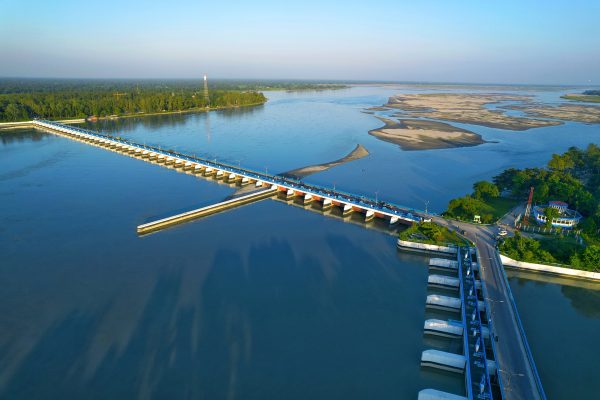
Bangladesh has agreed to deepen cooperation with China on the long-discussed Teesta River Comprehensive Management and Restoration Project. This initiative aims to address critical issues of flood control and water management for the Teesta River, which is vital for agriculture and livelihoods in the country's northern districts. China has pledged support for infrastructure development, including dredging riverbeds, constructing embankments, and creating reservoirs. However, the success of this project hinges significantly on the river's water flow during the dry season. The Teesta originates in India's Sikkim state, flows through West Bengal, and then enters Bangladesh. The amount of water reaching Bangladesh is influenced by upstream water diversions and flow regulations in India. Particularly during the dry season, the natural flow, which should be around 5,000 cusecs, has recently plummeted to approximately 400 cusecs. This shortage disrupts the production of agricultural products worth over 10 billion taka (about $81 million) annually. Experts point out that while the China-backed project may contribute to flood management and water storage within Bangladesh, it cannot artificially increase the river's flow. Data from the Bangladesh Water Development Board indicates a severe dry-season deficit, meaning domestic river improvements will have limited effect without adequate upstream supply. This underscores that the Teesta management project and a water-sharing agreement with India are not alternatives but interconnected solutions to the same crisis. There is a history of stalled progress; a water-sharing agreement between Bangladesh and India nearly materialized in 2011 but was derailed by opposition from West Bengal Chief Minister Mamata Banerjee, who cited concerns for farmers in her state. This dispute has remained unresolved, even during periods of close bilateral political ties, prompting Bangladesh to seek alternative solutions involving China. Experts suggest that future negotiations should move beyond mere water allocation to consider the agricultural systems and livelihood needs of communities on both sides of the border. While Bangladesh's concern over dry-season water scarcity is understandable, farming communities in India's West Bengal also rely heavily on the Teesta. Both countries are urged to shift from accusations and engage in discussions about their respective needs, agricultural practices, and available technologies.
Original source
The Diplomat Indonesia