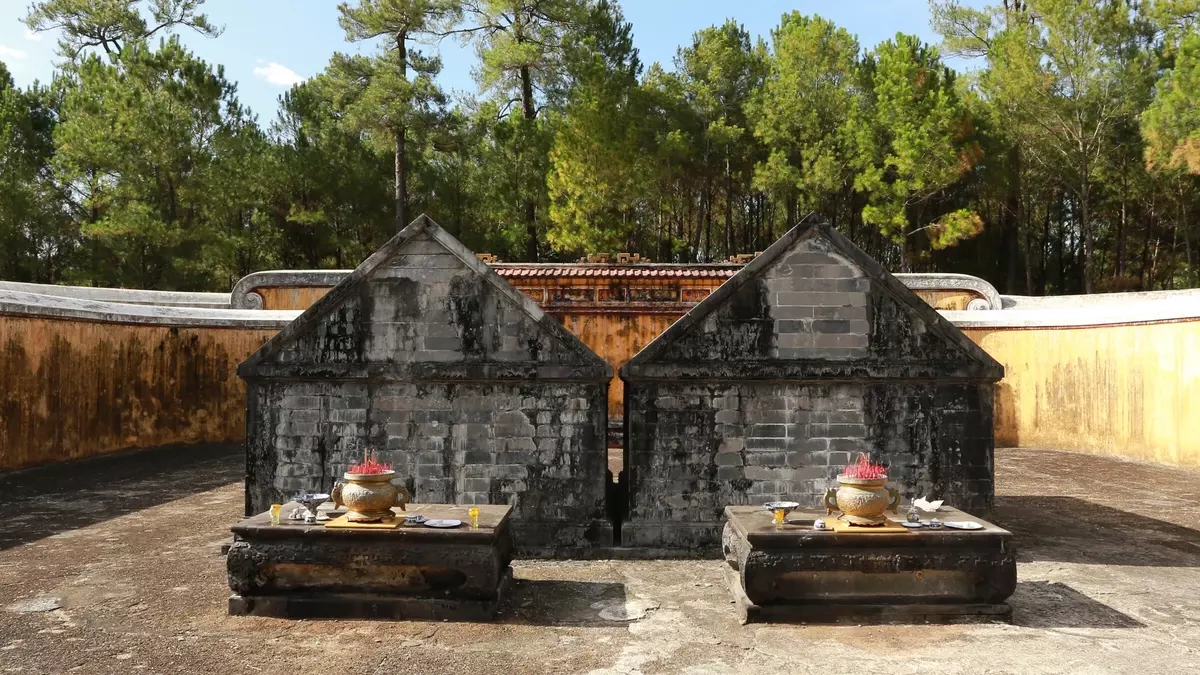
The Only Royal Mausoleum in Vietnam with Joint Burial of King and Queen
A royal mausoleum near Hue city stands out as the only joint burial site in Vietnam, symbolizing the unwavering devotion between the founding emperor of the Nguyen Dynasty and his queen.
Located approximately 20 kilometers from the center of Hue City, a unique royal mausoleum stands out as the only joint burial site in Vietnam where an emperor and his empress are interred together. This mausoleum is historically recognized as a symbol of the unwavering marital bond and affection of the founding emperor of the Nguyen Dynasty. The most distinctive feature of this mausoleum is its "song táng" (joint burial) format, where the tombs of the king and queen are placed side by side. The practice of burying a king and queen together was extremely rare in the history of Vietnam's dynasties, granting this mausoleum a special place in the annals of the Nguyen era. It is believed that the emperor's profound love and respect for his empress led to this unique form of burial. Beyond being a mere architectural structure or burial ground, this mausoleum serves as a crucial key to understanding Vietnam's history, particularly the Nguyen Dynasty's historical context, royal marital relationships of the time, and prevailing cultural values. Under the one-party system, such historical heritages are carefully preserved and managed as part of the nation's identity and the spiritual pillar of its people. As Vietnam continues its economic growth, there is a growing need to balance the preservation of historical structures with tourism development. This mausoleum, as one of Hue's significant tourist attractions, welcomes visitors from both within Vietnam and abroad. However, its preservation requires careful management, including measures against climate change and natural disasters, and preventing excessive commercialization.
多角的分析
阮朝の合葬陵墓という歴史的遺産は、フエ地域の観光産業にとって重要な資産である。ベトナム経済の成長に伴い、文化遺産を活用した観光収入の増加が期待される。しかし、その保存と観光開発のバランスは、持続可能な経済発展という観点から、常に課題となる。過度な商業化は、遺産の本来の価値を損なうリスクを孕む。
この陵墓自体への直接的な投資機会は限定的だが、フエ地域の観光インフラへの投資は魅力的となりうる。単なる史跡訪問に留まらず、周辺の文化体験や宿泊施設への投資が、ベトナムの観光市場の成長と共に期待される。ただし、文化遺産保護の規制や、地域社会との調和が投資リスクとなりうる。
この陵墓は、ベトナムにおける夫婦愛や忠誠といった伝統的な価値観の象徴として、国民の精神的な支柱となりうる。一方で、歴史的建造物の保存と、地域住民の生活環境や経済活動との調和が問われている。特に、観光客の増加によるインフラへの負荷や、地域文化への影響は、社会的な議論の対象となりうる。
フエ市民にとって、この陵墓は地域の誇りであり、歴史遺産として大切にされている。観光客の増加は、地域経済の活性化に繋がる可能性がある一方、交通渋滞や生活環境への影響も懸念される。地元住民の生活実感と、文化遺産保護・観光開発のバランスが、今後の地域社会の課題となる。
背景・歴史的文脈
阮朝(1802年-1945年)は、ベトナム最後の王朝であり、その首都がフエに置かれていた。皇帝は絶大な権力を持ち、その陵墓は権威の象徴として壮大に建設された。しかし、王と后の合葬という形式は、当時の他の王朝や、中国の皇帝陵の慣習とは異なり、阮朝創始者である嘉隆帝(Gia Long)とその后、順天皇后(Thuan Thien)の特別な関係性を示唆している。この形式は、ベトナムにおける夫婦愛や忠誠といった伝統的価値観を現代に伝えるものとして、歴史的・文化的に注目されている。
原文ソース
VnExpress