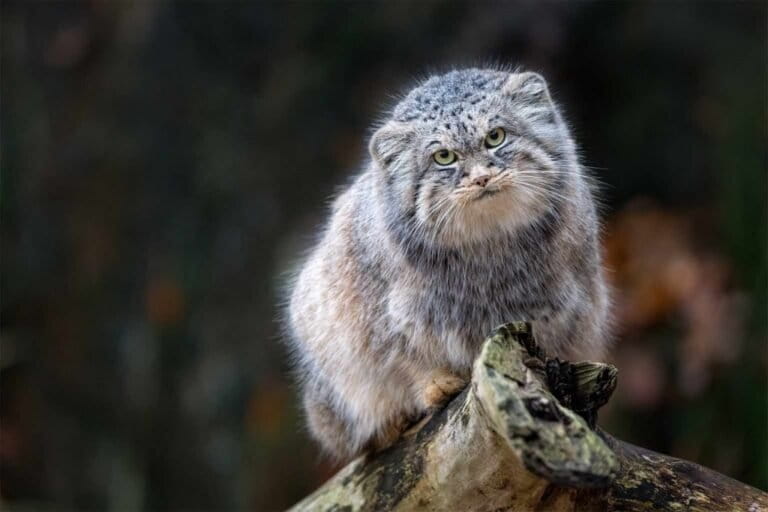
Pallas's Cat: The Grumpy-Faced Feline of Earth's Harshest Ecosystems
Environment
2026年8月3日
3
Mongabay Indonesia

General articles are free for 24 hours after publish.

Pallas's Cat: The Grumpy-Faced Feline of Earth's Harshest Ecosystems

Share
AI Summary

The Pallas's cat, popularly known as the world's grumpiest feline, inhabits harsh steppe and rocky mountain regions of Central Asia. Its unique facial expression is due to anatomical features like short ears and round pupils, with thick fur adapted to extreme cold. Recent genetic evidence has confirmed its presence in Nepal's Everest region, shedding new light on its ecology.

The Pallas's cat (Otocolobus manul), popularly known as the world's grumpiest feline, inhabits one of Earth's harshest ecosystems. Its unique facial expression, giving the impression of perpetual anger or dissatisfaction, stems from anatomical features like short ears, low-set cheeks, and round pupils, differing from the vertical pupils of domestic cats. This appearance is an adaptation to its environment. Native to the steppe grasslands and rocky mountainous regions of Central Asia, Pallas's cats possess thick fur that allows them to withstand extreme freezing temperatures, making their bodies appear larger and stockier than they are. Their actual body size is not much different from that of an ordinary house cat, weighing around two to five kilograms. Recent research has shed new light on the Pallas's cat's distribution. In 2022, a study published in the journal Cat News reported genetic evidence of their presence in Sagarmatha National Park, the Everest region of Nepal. Environmental DNA (eDNA) samples collected during a 2019 expedition by researchers from the Wildlife Conservation Society detected the cat's DNA, scientifically confirming its existence in this high-altitude area for the first time. This discovery is significant for expanding our understanding of the Pallas's cat's range and its ecology in alpine environments. The harsh habitats they occupy are characterized by extreme temperature fluctuations and limited prey, primarily small mammals and birds, which they hunt by ambushing from hidden spots or burrows. Much about their behavior remains to be studied. Source: Mongabay Indonesia

0

Original source

Mongabay Indonesia

原文を読む