General articles are free for 24 hours after publish.
ADB Raises Vietnam's 2026 Growth Forecast to 7.8%
The Asian Development Bank (ADB) has raised Vietnam's economic growth forecast for 2026 to 7.8%, citing robust performance in manufacturing, domestic consumption, and stable FDI. Continued prudent macroeconomic management to control inflation and structural reforms are highlighted as key for sustained high-quality growth.
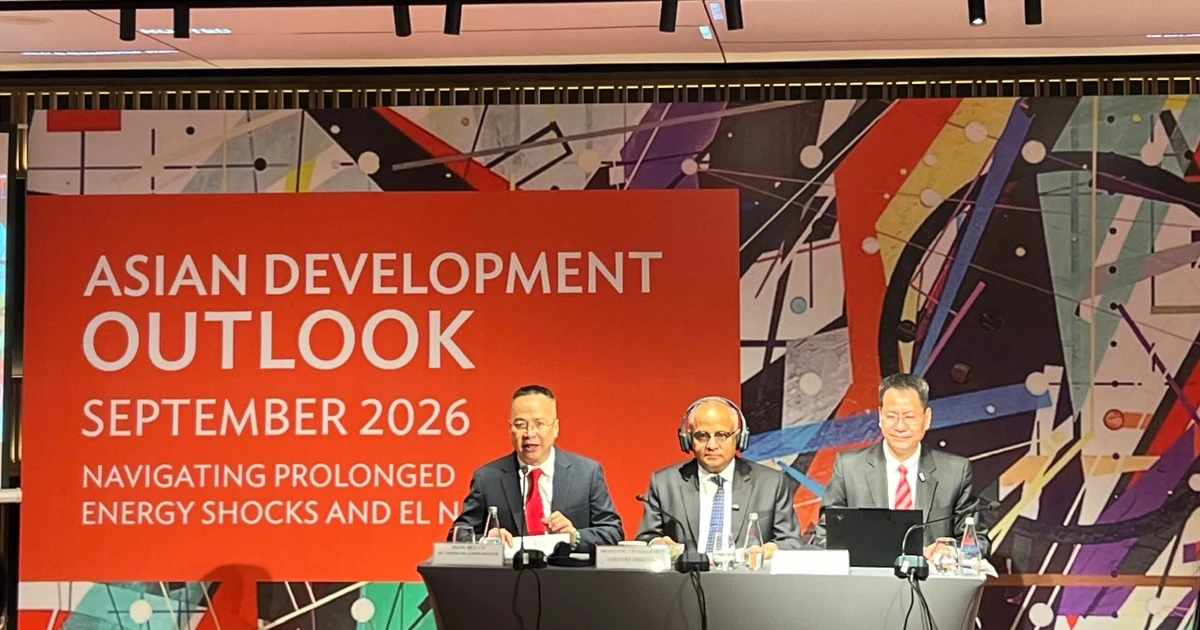
The Asian Development Bank (ADB) has raised its forecast for Vietnam's economic growth to 7.8% in 2026 and 7.6% in 2027, reflecting stronger-than-expected economic performance in the first half of 2026, according to the Asian Development Outlook (ADO) September 2026 released on September 23. According to ADB's assessment, Vietnam's economy maintained strong growth across all sectors in the first half of the year, with gross domestic product (GDP) increasing by 8.2%, higher than the 7.5% recorded in the same period of 2025. The growth drivers include the continued expansion of the processing and manufacturing sector, a strong increase in domestic consumption, and stable foreign direct investment (FDI) inflows. Shantanu Chakraborty, ADB Country Director for Vietnam, stated: "Vietnam's positive economic results in the first half of this year demonstrate the economy's robust resilience and potential to maintain strong growth momentum. To sustain this trend and achieve higher-quality progress, Vietnam needs to continue prudent macroeconomic management to curb inflation, ensure financial stability, accelerate structural reforms, and ensure that economic expansion continues to be driven by investments that improve productivity." ADB revised up its growth forecast for 2026 from 7.2% in the July 2026 ADO, while the forecast for 2027 was also raised from 7.0%. This reflects stronger domestic demand, accelerated investment, and solid growth in the processing and manufacturing sector. Inflation is projected to be 4.3% in 2026 and 4.0% in 2027, amid sustained demand pressures and rising energy and import costs. Although Vietnam's short-term growth outlook remains positive, risks are tilted to the downside. Weakening global demand and rising external uncertainty could put pressure on growth, while higher energy prices and tighter global financial conditions could increase inflationary and exchange rate pressures. Domestically, rapid credit growth could exacerbate financial system risks, while small businesses continue to face difficulties in accessing capital. The ADO September 2026 also emphasized the importance of maintaining macroeconomic stability, improving the efficiency of public investment implementation, broadening the capital market, strengthening the private sector, and enhancing productivity to support Vietnam's transition to a high-income country. Source: Nhan Dan
Original source
Nhan Dan