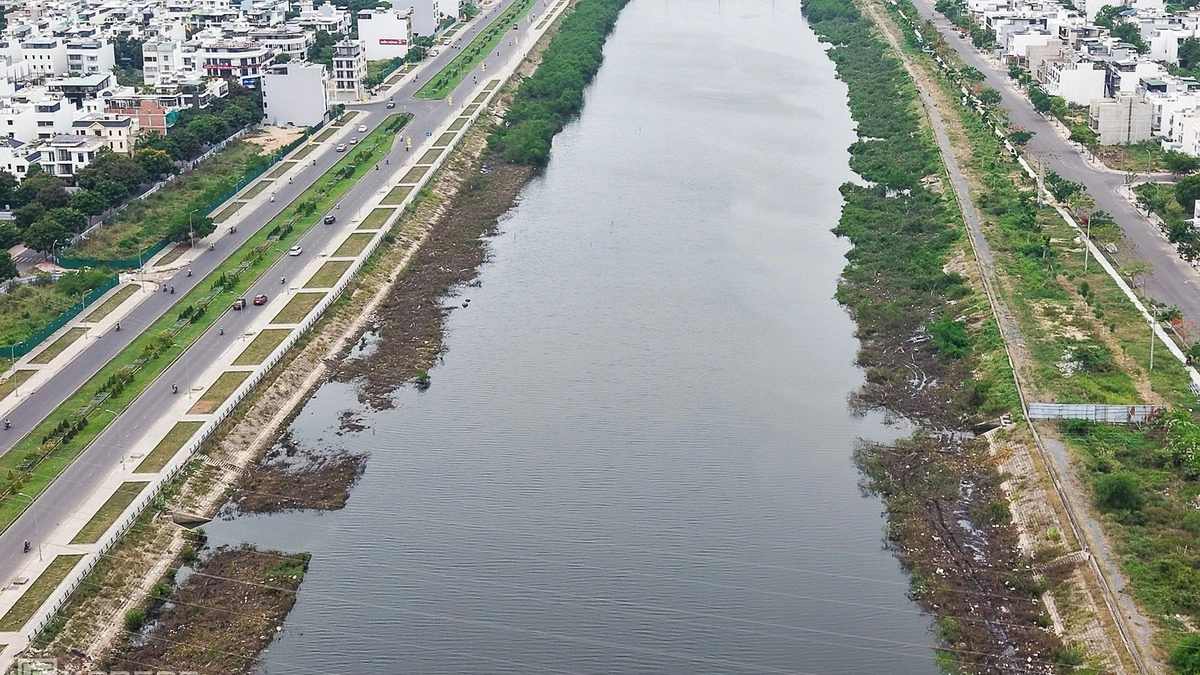
Nha Trang River: $25 Million Embankment Project Advances with Clearing of Natural Mangrove Forest
A $25 million embankment project along the Nha Trang River in Vietnam is proceeding with the clearing of a natural mangrove forest. The mangroves, not part of the original design, were identified as an obstacle to project completion and a potential flood risk. Despite majority resident support for preservation, authorities decided to clear the trees based on expert recommendations.
In Nha Trang City, Khanh Hoa Province, Vietnam, the clearing of a natural mangrove forest is underway for the Tắc River - Quán Trường River downstream improvement project, a large-scale endeavor costing over 590 billion VND (approximately $25 million). The more than one kilometer of natural mangroves lining the Quán Trường River has been felled to facilitate the project's acceptance and ensure flood drainage. In recent days, workers have been using chainsaws to cut down the mangroves along the river. Over a kilometer of trees has been removed, with trunks cut into sections and piled on the bank awaiting further processing. "After the trees are cleared, workers will tidy up to prepare for subsequent steps," a worker stated. The embankment project in Nam Nha Trang ward was approved by the Khanh Hoa Provincial People's Committee in 2003 and assigned to the Management Board of Agricultural and Transportation Construction Investment Projects as the investor. After numerous adjustments, construction began in 2009 and was completed in 2019, but it has yet to be nghiệm thu (inspected and accepted) and handed over. In addition to certain components like the embankment's slopes and crest, and drainage culvert gates that remain unaddressed, two natural mangrove strips along the banks, approximately 4-5 km long and over 2 meters high, became an obstacle as they were not included in the original design. The investor had previously proposed retaining the trees to create scenic beauty and improve the environment. A survey in Nam Nha Trang ward in January showed that 93.5% of households (12,103 households) agreed to preserve the mangroves along the Quán Trường River. However, according to the Department of Agriculture and Rural Development, trees growing close to the structure could affect the embankment's integrity. Their root systems can cause cracks and peeling of the surface, and they also obstruct water flow, reducing flood drainage capacity. Therefore, the specialized agency recommended the complete removal of the trees along the embankment. The investor, along with various departments, local authorities, consultants, and contractors, subsequently agreed on a plan to clear and remove the trees. The estimated cost for felling, loading, and transporting the trees is approximately 572 million VND (about $25,000), excluding the cost of root excavation. The handling of tree roots will be carefully studied to ensure the stability of the embankment and the structure. The removal of the mangrove forest is expected to be completed before the rainy season this year. Source: VnExpress
多角的分析
このプロジェクトは、5900億ドンという巨額の予算が投じられているにもかかわらず、設計上の不備や後付けの課題により、完了検査と引き渡しが遅延している状況を示しています。天然資源(ヒルギ林)の伐採は、環境保全コストを削減する一方で、長期的な生態系サービスや治水能力の低下を招く可能性があります。これは、初期投資の回収と、将来的な環境対策コストの増加という経済的なトレードオフを示唆しています。また、伐採・撤去にかかる追加費用5億7200万ドンは、プロジェクト全体のコスト増加要因となります。
投資者(Ban Quản lý dự án đầu tư xây dựng các công trình Nông nghiệp - Giao thông)は、当初設計になかった天然のヒルギ林の存在により、プロジェクトの進捗遅延と未完了という問題に直面しています。住民の大多数が保全を支持する中、専門機関の提言を受けて伐採という決定を下しましたが、これは、プロジェクトの完了と治水機能の確保を優先した結果と考えられます。しかし、この決定は、将来的な環境への影響や、住民との関係悪化のリスクも伴います。投資者は、未完了部分の修繕と、今回伐採されたヒルギ林の代替となる治水・環境対策の実施を急ぐ必要があります。
この事例では、住民の意思と行政の決定との間に乖離が生じています。ナム区の住民の93.5%がヒルギ林の保全を支持していたにもかかわらず、専門機関の提言に基づき伐採が決定されました。これは、地域住民の生活環境や自然への愛着といった価値観と、治水やインフラ整備という公共の利益との間で、どのようにバランスを取るべきかという課題を浮き彫りにしています。伐採されたヒルギ林は、単なる植物ではなく、地域住民の生活の一部であり、生態系サービスを提供する貴重な存在であったと考えられます。住民の不満や、自然環境への影響に対する懸念が、今後の地域社会の課題となる可能性があります。
住民の大多数が保全を支持していた天然のヒルギ林が、公共事業の進展のために伐採されるという事実は、地域住民にとって大きな失望感をもたらしていると考えられます。特に、12,103世帯もの住民が賛同した意思が、最終的に覆されたことは、行政への不信感や、自分たちの意見が反映されないという無力感につながる可能性があります。伐採されたヒルギ林は、景観の悪化だけでなく、過去に地域住民が享受してきた自然環境や、場合によっては漁業や水産資源への影響も懸念されます。彼らの生活実感としては、インフラ整備は必要でも、地域固有の自然環境が失われることへの抵抗感が強いと考えられます。
背景・歴史的文脈
ベトナムでは、経済成長を最優先する政策の下、インフラ整備が急速に進められています。特に沿岸部や河川沿いの開発は、治水、交通網の整備、都市開発などの観点から重要視されています。しかし、その過程で、開発と環境保全、地域住民の意思との間で葛藤が生じることが少なくありません。本件のニャチャン川護岸プロジェクトは、2003年の計画承認から長期にわたり、設計変更や追加課題を経てきた経緯があり、ベトナムにおける大型インフラプロジェクトが抱えがちな、計画の複雑さや遅延のリスクを示しています。また、住民の意思を反映する仕組みの限界や、専門機関の提言が最終決定に大きく影響する構造も、ベトナムの統治システムの一側面と言えます。
原文ソース
VnExpress