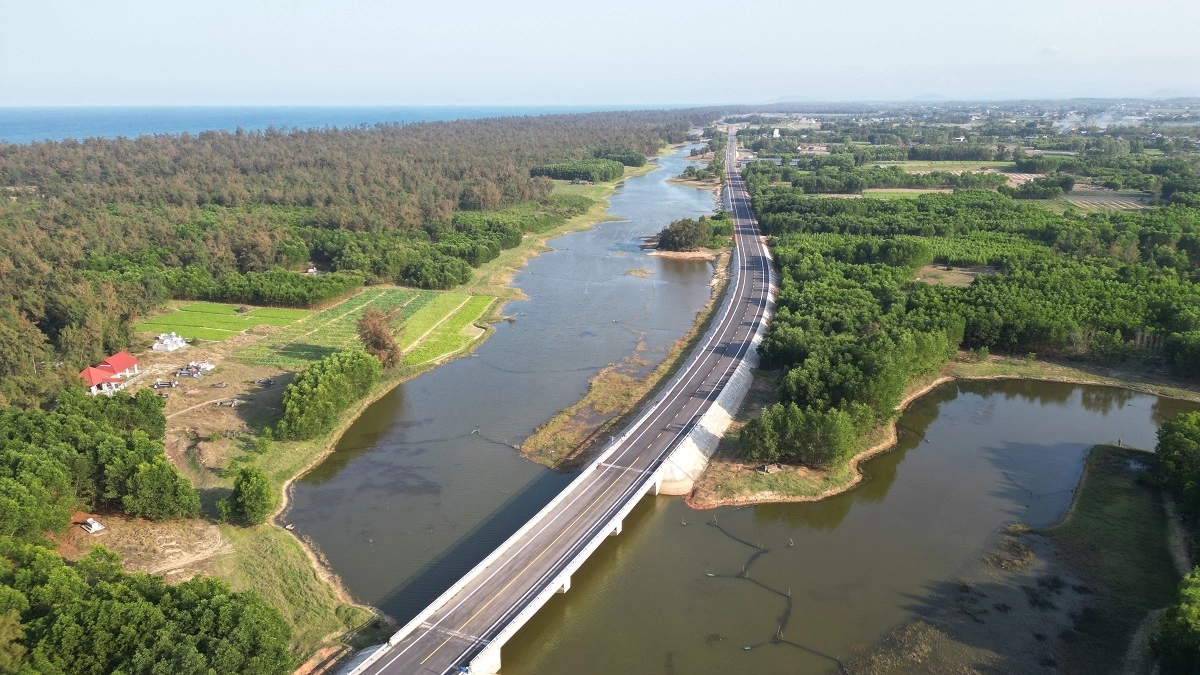
Quang Ngai to Build New Road Connecting Expressway to Coast with VND800 Billion Investment
Quang Ngai province in central Vietnam has approved a VND800 billion (approx. $34 million) project to build a 6.4 km road connecting National Highway 1 to the Dung Quat - Sa Huynh coastal road. The initiative aims to enhance connectivity with the expressway and unlock development potential in the province's eastern region.
Quang Ngai province in central Vietnam has approved the investment policy for a new 6.4 km road project connecting National Highway 1 to the Dung Quat - Sa Huynh coastal road, with a total investment of approximately VND800 billion (around $34 million). The central government will support VND720 billion, with the remainder funded by the provincial budget. This initiative aims to unlock the development potential of the province's eastern region. The new route will start at the intersection of National Highway 1 and the Danang - Quang Ngai Expressway access road and end at the Dung Quat - Sa Huynh coastal road. It is designed for a speed of 80 km/h and will pass through two communes. The road will have a formation width of up to 12 meters and a roadway width of 11 meters in most sections, expanding to 21 meters for a nearly one-kilometer stretch that aligns with the coastal sub-division plan. The project also includes the construction of three bridges, drainage systems, intersections, lighting, and traffic safety infrastructure. According to the Quang Ngai Provincial People's Committee, the southeastern coastal area has lacked horizontal connections with national highways and expressways, hindering effective exploitation of its development potential. The new road is expected to shorten travel time between the expressway and the coast, expand urban space in the east, and facilitate the development of industry, logistics, services, and tourism. Quang Ngai has been investing in the Dung Quat - Sa Huynh coastal road over several phases, connecting Dung Quat, Chu Lai, and Sa Huynh. More than 60 km have been completed or are in operation. The remaining section is expected to be completed this year, aiming to close the entire coastal road network of over 100 km. In parallel with the coastal axis, National Highway 1 and the expressway network, including the Danang - Quang Ngai Expressway (operational since 2018) and the recently inaugurated Quang Ngai - Hoai Nhon Expressway (April), will further enhance the regional transportation network. The project is slated for preparation in 2026 and construction from 2027 to 2030. Source: VnExpress
多角的分析
この新路線建設は、クアンガイ省東部の経済開発を促進するための重要なインフラ投資です。特に、高速道路と沿岸地域間の接続性向上は、物流コストの削減と産業集積の促進に直結します。ベトナム政府は、経済成長の原動力としてインフラ整備に重点を置いており、このプロジェクトもその一環と位置づけられます。中央政府からの巨額の支援は、この地域開発への期待の大きさを物語っています。工業、物流、サービス、観光といった多様な産業の発展を促すことで、地域経済の活性化と雇用創出が期待されます。
このインフラ投資は、クアンガイ省東部における将来的な投資機会の拡大を示唆しています。高速道路と沿岸地域を結ぶことで、新たな工業団地や物流ハブの設置が容易になり、国内外からの投資を呼び込む可能性があります。特に、沿岸部の開発ポテンシャルが向上し、観光産業や水産業関連のビジネスにも恩恵が及ぶと考えられます。投資家は、このインフラ整備がもたらす長期的な経済効果と、それに伴う不動産価値の上昇などを注視する必要があるでしょう。
新路線の建設は、クアンガイ省沿岸地域の住民の生活に直接的な影響を与えます。移動時間の短縮は、通勤や通学、医療機関へのアクセスを改善し、生活の質向上に貢献する可能性があります。また、地域経済の活性化に伴う雇用機会の増加も期待できます。一方で、大規模なインフラ建設は、土地収用や環境への影響といった課題も伴うため、地域住民との丁寧な合意形成と、環境保全への配慮が不可欠です。特に、沿岸部の開発は、既存の漁業コミュニティや伝統的な生活様式への影響も考慮されるべきです。
この新路線建設は、クアンガイ省の東部沿岸地域に住む人々にとって、生活の利便性を大きく向上させる可能性があります。これまで高速道路へのアクセスが悪かった地域から、より迅速に主要な交通網に接続できるようになるため、都市部への通勤や、遠隔地への移動が容易になるでしょう。また、地域経済の活性化は、新たな雇用の創出や、地元産品の販路拡大につながることも期待されます。しかし、建設期間中の騒音や交通渋滞、そして土地の再配置など、住民生活への一時的な影響も無視できません。地域住民は、インフラ整備の恩恵を受けつつも、その過程での課題にも直面することになります。
背景・歴史的文脈
ベトナム政府は、経済成長の持続と地域間の格差是正のため、インフラ投資を国家戦略の柱として位置づけてきました。特に、南北を結ぶ高速道路網の整備は、国内物流の効率化と経済活動の活性化に不可欠です。クアンガイ省は、地理的にベトナム中部に位置し、沿岸部と内陸部を結ぶ交通の要衝となりうるポテンシャルを秘めています。過去には、ズンクアット経済特区の発展や、沿岸道路網の整備など、地域開発に向けた投資が続けられてきました。今回の新路線建設は、これらの既存のインフラ整備と連携し、高速道路と海岸地域を結ぶことで、これまで開発が遅れていた東部地域の潜在能力を最大限に引き出すことを目指すものです。
原文ソース
VnExpress