Flores Timur's Coconut: A Pillar for Local Economy and Women's Empowerment
Society
2026年7月26日
4
Mongabay Indonesia

General articles are free for 24 hours after publish.

Flores Timur's Coconut: A Pillar for Local Economy and Women's Empowerment

Share
AI Summary

In East Flores, East Nusa Tenggara, coconuts are indispensable for the community, serving as a source of food, economy, and energy. Women, in particular, are at the forefront, contributing to green economy and renewable energy initiatives through solar-powered copra production and coconut shell processing.

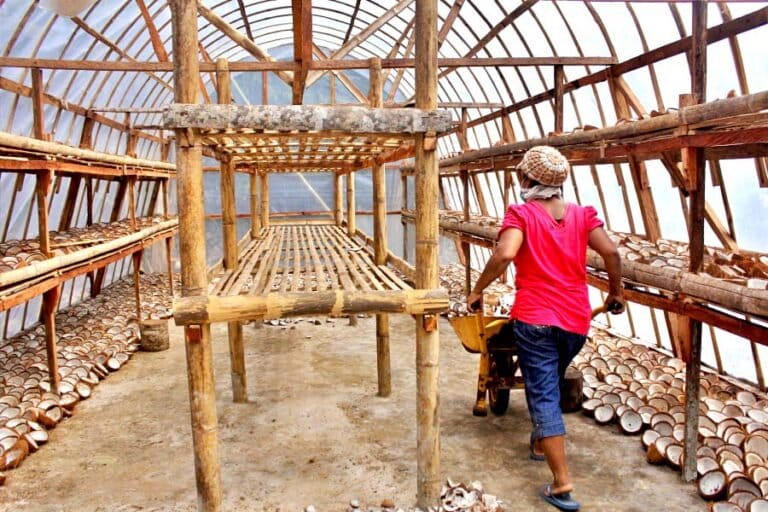
In East Flores, East Nusa Tenggara, vast coconut plantations form the backbone of the local economy. According to data from the NTT Provincial Statistics Agency (BPS NTT), coconut production in the region is projected to reach 18,639.13 tons in 2025, surpassing Sikka Regency's 13,625.34 tons and Ende Regency's 8,969.78 tons. Local residents report that coconuts from Adonara Island are exported out of the province in the form of logs and copra (dried coconut flesh), often through Maumere. Coconuts are deeply integrated into the lives of the people in East Flores, serving as a source of food, economic activity, and energy. The Foundation for Social Research and Development (YPPS) is particularly focused on the significant potential of coconuts for the green economy. The foundation aims to empower women as key actors in green economy and renewable energy development. They provide training and support for initiatives such as producing white copra using solar energy, developing briquettes from coconut shells, and establishing productive businesses based on local resources. Melki Koli Baran, Director of YPPS, stated, "The energy transition not only brings environmental benefits but also creates economic opportunities, strengthens family resilience, and enhances women's leadership at the community level." For instance, in Adobala Village, 16 women from the 'Konten Kaka Rindu' group are engaged in extracting coconut flesh in a solar-powered drying facility. This facility, covered with transparent UV-resistant plastic to absorb sunlight, features a two-story structure with bamboo racks inside for efficient drying. Previously, coconuts were sun-dried on tarpaulins laid on the ground, but the use of this facility has significantly reduced drying time. This initiative is expected to contribute not only to reducing environmental impact but also to revitalizing the local economy and enhancing the socio-economic status of women. Source: Mongabay Indonesia

0

Original source

Mongabay Indonesia

原文を読む