General articles are free for 24 hours after publish.
Vietnam Accelerates Rooftop Solar Power Adoption with New Decree
Vietnam has implemented a new decree to boost rooftop solar power adoption, raising the surplus electricity sale ratio to 50% and decentralizing procedures. Ho Chi Minh City has already seen significant installations, with further growth anticipated.
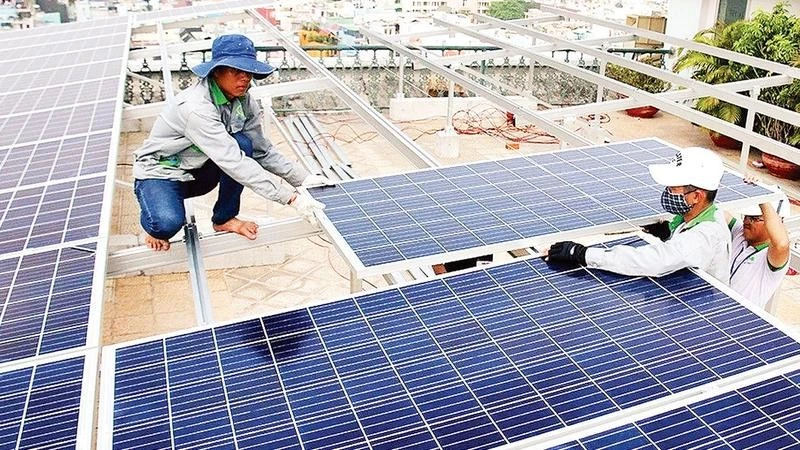
Vietnam is poised to accelerate the adoption of rooftop solar power following the implementation of a new decree aimed at promoting renewable energy development. The "Nghị định số 243/2026/NĐ-CP" not only raises the proportion of surplus electricity that can be sold from 20% to 50% but also decentralizes administrative procedures, both expected to invigorate investment by individuals and businesses. Ho Chi Minh City, located in the southern Southeast region, is identified as an area with significant potential for rooftop solar power. The city has seen the introduction of self-production and self-consumption rooftop solar systems since around 2020. Policy adjustments in recent years have helped establish a legal framework supporting investments in and the use of renewable energy sources. According to the Ho Chi Minh City Department of Industry and Trade, over 22,000 rooftop solar systems are installed in the city, with approximately 6,300 operating on a self-production and self-consumption basis. Notably, in the approximately three months leading up to early September, the number of self-production and self-consumption systems reported to the power sector increased by nearly 3,000, highlighting the rapid pace of adoption. However, this rapid development also necessitates a unified understanding and clear implementation processes regarding procedures, connection voltages, system capacities, and the sale of surplus electricity. A recent conference in Ho Chi Minh City to introduce the new decree focused on these issues. Mr. Nguyen Quang Long from the Electricity Regulatory Authority of Vietnam emphasized the importance of correctly distinguishing between rooftop solar power systems as defined in different decrees (Nghị định 57/2025/NĐ-CP and Nghị định 58/2025/NĐ-CP) to avoid applying incorrect procedures. The new decree, "Nghị định 243/2026/NĐ-CP," is expected to significantly improve investment efficiency by increasing the saleable surplus electricity ratio to 50%. Mr. Bui Trung Kien, Deputy General Director of EVNHCMC (Ho Chi Minh City Power Corporation), noted that the enhanced mechanism for consuming unused electricity provides investors with a stronger basis for calculating the economic returns of their systems. This is particularly crucial given that investment costs, payback periods, and capacity utilization are key considerations for individuals and businesses before installation. The decree also adds power companies owning their own grids to the list of entities permitted to purchase surplus electricity. Furthermore, the decentralization of procedures at the local commune level is expected to streamline the process for residents and businesses. However, for rooftop solar power to develop fully in line with its potential, policies will require further refinement. For instance, specific support mechanisms for households developing self-production and self-consumption systems are still pending. Additionally, the capacity of self-produced and self-consumed power must align with electricity loads and the development conditions of the power grid. More concrete regulations are also needed for the integration of energy storage systems with self-production and self-consumption sources. Ho Chi Minh City and other localities in the Southeast region possess a favorable foundation for expanding local renewable energy sources. Amidst rising electricity demand and the inevitable trend towards green energy transition, addressing bottlenecks to ensure the proper development of rooftop solar power will bring benefits to citizens and businesses, diversify power supply, enhance energy utilization efficiency, and support the sustainable development goals of these localities.
Original source
Nhan Dan