Lao Chili Pepper Sector Eyes International Markets with FAO Support
Economy
2026年7月2日
5
KPL Laos News
Relations
🇱🇦Laos🇻🇳Vietnam🇨🇳China🌐United Nations / ASEAN

Lao Chili Pepper Sector Eyes International Markets with FAO Support

AI サマリー

The Food and Agriculture Organization of the United Nations (FAO) and the Lao PDR government are collaborating to unlock the international market potential of the chili pepper sector. The initiative aims to boost exports and attract sustainable investment.

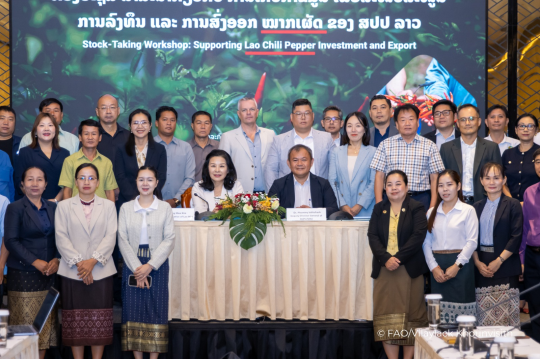
The Food and Agriculture Organization of the United Nations (FAO) and the Lao PDR government are working together to unlock the potential of the country's chili pepper sector for international markets and sustainable investment. This effort is being carried out under FAO's Hand-in-Hand Initiative, aimed at promoting agricultural investment into the country. Chili pepper is recognized as one of several priority commodities under the FAO Global Hand-in-Hand Initiative (HiHI) in the Lao PDR. The initiative seeks to increase smallholder incomes and enhance value addition by strengthening the chili value chain, improving market access, and attracting investment for export-oriented production. Internationally, Lao chili pepper has already attracted concrete interest from buyers and investors, including those from China and the Republic of Korea, at the HiHI Global Investment Forum 2025 in Rome. Dr. Phommy Inthichack, Deputy Director General of Planning and Cooperation at the Ministry of Agriculture and Environment (MAE), stated, “Chili pepper holds significant potential for both domestic and international markets and it has already attracted concrete interest from buyers and investors.” FAO Representative in the Lao PDR, Kyung-Mee Kim, added, “FAO’s role, through the HiH Initiative, is to support the Lao PDR in transforming that potential into reality by providing technical assistance, strengthening analytical capacity, and facilitating linkages with international markets and investors.” A Stock-Taking Workshop brought together approximately 70 participants from central and provincial government agencies, research institutions, producer organizations, and the private sector. The event focused on validating findings from a recent Stock-Taking Survey and Value Chain Analysis conducted in May and June 2026. The FAO’s Hand-in-Hand team presented up-to-date chili production data in main provinces and districts, current production practices, farm gate prices, production costs, the chili pepper value chain linkages, and key stakeholders involved. They also shared market information indicating that both China and the Republic of Korea have structural import demand for chili products, but require different export strategies for Lao PDR. China is a net importer of dried chili and offers 0% tariff access for Lao products, while Korea imports over 70% of its consumption, but high tariffs make frozen or processed chili the most viable entry route. It was recommended that dried and processing-grade chili be targeted for China, and frozen/minced chili for Korea, with a priority on compliance, Sanitary and Phytosanitary (SPS) requirements, traceability, cold-chain infrastructure, and aggregation systems as key factors for converting market opportunities into exports. Stakeholders agreed that Laos’ chili sector has strong potential to transition from a household crop to a commercial value chain, driven by growing domestic demand, export opportunities (especially to China, Korea, and ASEAN markets), and attractive investment returns under a cooperative-based production model. FAO’s analysis also highlights key constraints including dependence on imported inputs, post-harvest losses, climate risks, and SPS compliance requirements. Overcoming export challenges requires priority actions such as compliance with market access requirements (registration, food safety standards, phytosanitary protocols), as well as investment in supply-side readiness (primary processing, cold-chain facilities, aggregation, traceability, and consistent quality control). The main constraint is identified not as demand, but as readiness to supply export-quality products consistently, supported by infrastructure, food safety compliance, and efficient producer organization. Stakeholders at the workshop agreed on a prioritized gap-closing action plan. The validated data will then directly underpin the Lao Chili Pepper Investment Brief, a document that will serve as the evidence base for an upcoming Business Matching Event scheduled for August 2026. This event aims to connect Lao supply-side actors with verified international buyers and investors.

多角的分析

経済的影響

ラオス経済は、輸出収入の増加が喫緊の課題であり、唐辛子のような農産物の輸出ポテンシャルを最大限に引き出すことは、外貨獲得と経済成長に直接貢献する。中国市場への0%関税アクセスは大きな機会であるが、韓国市場への参入には加工・冷凍品への対応が求められるため、国内の加工インフラ整備と品質管理能力の向上が不可欠となる。FAOの支援は、こうした構造的な課題克服に向けた技術的・分析的支援を提供するものであり、ラオス政府の経済多角化戦略の一環として位置づけられる。

投資家心理

ラオス産唐辛子の輸出ポテンシャルは、特に中国と韓国からの関心が高まっていることから、国際的な投資家にとって魅力的な機会となり得る。しかし、投資には、SPS要件への準拠、トレーサビリティの確保、コールドチェーンの構築といったインフラ投資が不可欠である。FAOが開催するビジネス・マッチング・イベントは、潜在的な投資家とラオスの生産者・供給業者を結びつけるプラットフォームとして機能し、投資リスクを低減させ、具体的な投資案件の創出を促進すると期待される。協同組合ベースの生産モデルは、小規模農家への投資リスク分散と効率化に寄与する可能性がある。

社会的影響

唐辛子産業の振興は、ラオスの多くの小規模農家の収入向上に直結する。これにより、地方経済の活性化と農村部からの都市部への人口流出抑制が期待できる。しかし、輸出基準を満たすための生産技術の向上や、品質管理体制の構築は、農家にとって新たな課題となる。また、気候変動によるリスクや、輸入資材への依存といった問題は、農家の生活基盤を不安定にする可能性もはらんでいる。FAOの支援は、こうした課題に対し、技術移転や生産者組織の強化を通じて、農家のレジリエンスを高めることを目指す。

市民の声

この唐辛子輸出促進策は、ラオスの農村部で暮らす多くの市民、特に小規模農家にとって、収入増加の機会をもたらす可能性がある。これまで家庭菜園や地域市場での販売が中心だった唐辛子が、国際市場で価値を持つことで、生活水準の向上が期待できる。しかし、輸出基準を満たすための栽培方法の変更や、品質管理の徹底は、農家にとって学習と適応を必要とする。また、気候変動の影響を受けやすい農作物であるため、安定した収穫と収入の確保は、市民の生活の安定にとって重要な課題となる。

背景・歴史的文脈

ラオスは、経済発展の鈍化と、中国・ベトナムへの経済的依存という構造的な課題を抱えている。特に、一党体制下での経済政策は、外資誘致と国内産業育成を両立させる必要に迫られている。農産物の輸出は、ラオス経済の柱の一つであり、これまでも主要輸出品目として位置づけられてきた。しかし、国際市場の要求に応えるための品質管理、サプライチェーンの構築、SPS要件への対応といった課題は、長年にわたりラオスが直面してきた問題である。FAOの「ハンド・イン・ハンド・イニシアチブ」は、こうしたラオスの農業開発における長年の課題に対し、国際機関の支援を得て、具体的な解決策と投資機会を創出することを目指している。

原文ソース

KPL Laos News

原文を読む