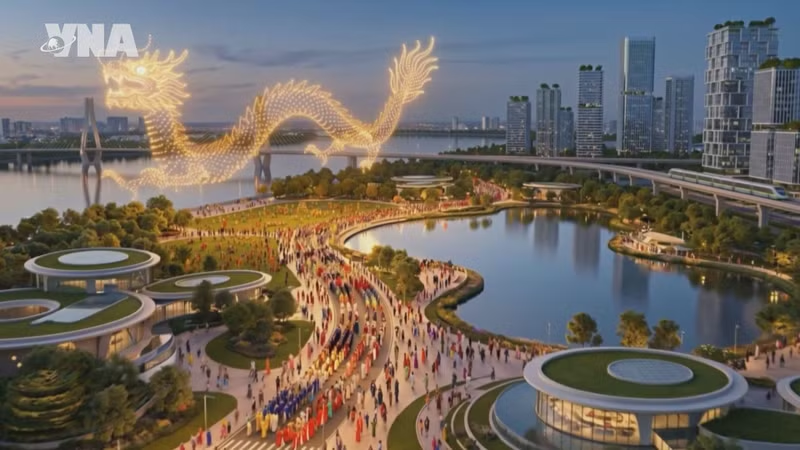
Hanoi Unveils 100-Year Development Vision to Attract Investment
Vietnam's capital, Hanoi, has launched an ambitious 100-year development vision, introducing new policy incentives and hundreds of investment projects. The initiative aims to boost investor confidence in Hanoi's long-term growth and foster a more transparent, competitive, and innovation-driven business environment.
Hanoi, the capital of Vietnam, has taken a significant step towards attracting domestic and international investment by unveiling its ambitious 100-year development vision. This initiative includes the introduction of new policy incentives and the announcement of hundreds of investment projects. The comprehensive drive aims to instill greater confidence in Hanoi's long-term growth strategy among investors and to foster a business environment characterized by transparency, competitiveness, and innovation. Under its one-party system, Vietnam has consistently prioritized economic growth, actively seeking foreign investment. Long-term development plans for key cities like Hanoi are crucial for ensuring the sustainability of economic expansion and enhancing international competitiveness. In Vietnam's pursuit of economic development while navigating complex relations with China, domestic infrastructure development and industrial upgrading are pressing issues. Hanoi's recent move can be seen as part of these broader national strategies. The vision is designed to provide investors with a clearer outlook on Hanoi's future. The emphasis on transparency suggests an effort to streamline administrative procedures, which can sometimes be complex in Vietnam, thereby creating a more predictable business landscape. Furthermore, the focus on competitiveness and innovation reflects Vietnam's ambition to move beyond being solely a manufacturing hub and to develop higher value-added industries and services.
多角的分析
ハノイの100年ビジョンは、ベトナム経済の構造転換と高度化を目指す国家戦略の一環と見られる。特に、透明性、競争力、革新性を重視する点は、単なる労働集約型産業からの脱却を図り、テクノロジーやサービス分野への投資を呼び込む意図を示唆している。これは、中国経済の減速や地政学リスクの高まりを背景に、サプライチェーンの再編が進む中で、ベトナムがより高付加価値な製造拠点およびサービス拠点としての地位を確立しようとする動きと連動している。過去のベトナムは、外国直接投資(FDI)を積極的に誘致してきたが、今後はより質の高い投資、すなわち技術移転や雇用創出に貢献する投資を重視する方向へシフトすると考えられる。
今回のハノイの発表は、長期的な視点を持つ投資家にとって、ベトナム市場へのコミットメントを再評価する機会となるだろう。特に、透明性と予測可能性の向上は、過去にベトナム投資で直面した行政手続きの煩雑さや法規制の不確実性といったリスクを軽減する可能性がある。新たな政策的インセンティブが具体的にどのような内容であるか、そして発表された数百のプロジェクトがどの分野に集中しているかが、投資判断の鍵となる。過去の事例では、インフラ開発や再生可能エネルギー分野への投資がベトナムで注目されており、今回のビジョンがそれらをどう包含しているかが注目される。
ハノイの100年ビジョンは、都市の持続可能な発展と住民の生活の質の向上を目指すものである。しかし、大規模な開発プロジェクトは、土地利用や環境への影響、そして地域住民の移転といった社会的な課題を伴う可能性がある。特に、投資誘致が加速することで、都市部への人口集中が進み、住宅価格の高騰や交通渋滞の悪化といった問題が顕在化する恐れがある。ハノイ市当局は、これらの社会的な摩擦を最小限に抑え、開発の恩恵が広く市民に行き渡るような配慮が求められる。過去の都市開発プロジェクトでは、住民との合意形成が円滑に進まないケースも見られたため、今回は丁寧なプロセスが不可欠となる。
ハノイ市民にとって、100年ビジョンは将来への期待と同時に、生活への影響への懸念も抱かせるだろう。新たな投資プロジェクトは雇用機会の増加や経済活性化をもたらす可能性がある一方、都市開発に伴うインフラ整備や環境変化は、日々の生活に直接的な影響を与える。特に、物価の上昇や住宅問題は、多くの市民が直面する現実的な課題であり、ビジョンがこれらの問題にどう対応するかが問われる。若年層は、新たなテクノロジーやイノベーションへの期待を寄せる一方で、安定した雇用と生活基盤の確保を求めている。
背景・歴史的文脈
ベトナムは1986年のドイモイ(刷新)政策以降、市場経済を導入し、急速な経済成長を遂げてきた。特に、製造業を中心に外国直接投資(FDI)を積極的に誘致し、サプライチェーンの重要な一角を占めるようになった。しかし、一党体制下での経済運営には、透明性や法規制の不確実性といった課題も指摘されてきた。近年、米中対立の激化や世界的なサプライチェーン再編の動きを受け、ベトナムは「中国プラスワン」戦略の受け皿として注目度を高めている。今回のハノイの100年ビジョンは、こうした国内外の環境変化に対応し、持続的な経済成長と国際競争力の強化を目指すベトナムの国家戦略の一環と位置づけられる。
原文ソース
VietnamPlus English