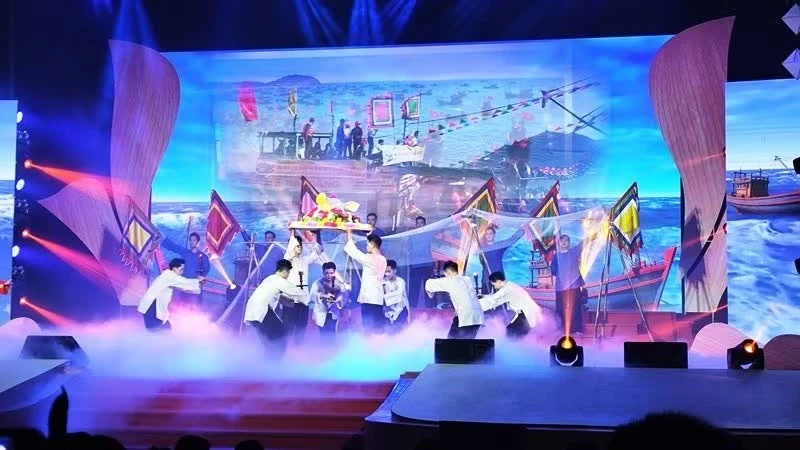
Vietnam Explores Tradition and Modernization at Three-Region Folk Song Festival
Culture
2026年7月7日
5
Nhan Dan

Vietnam Explores Tradition and Modernization at Three-Region Folk Song Festival

AI サマリー

A three-region folk song festival in Hue, Vietnam, brought together 26 provinces and cities, aiming to preserve and promote traditional folk songs and ethnic instruments. The event underscored the importance of utilizing cultural resources in modern society and intergenerational transmission.

The "Three-Region Folk Song Festival 2026," held in Hue City, central Vietnam, from July 4 to 8, served as a significant event aimed at preserving and promoting the rich traditional culture of Vietnam, particularly the folk songs and ethnic musical instruments of various regions. Co-organized by the Department of Local Culture under the Ministry of Culture, Sports and Tourism and the Hue City Department of Culture and Sports, the festival attracted a large number of artists, artisans, and performers from popular art troupes across 26 provinces and cities nationwide. It provided a meaningful highlight within the Festival Hue 2026, opening a space to introduce and promote the artistic values of regional traditions. In the spiritual life of Vietnamese people, the folk songs of the three regions are a priceless cultural source, flowing silently through many generations. Melodies such as Quan Ho, Vi Giam, Hat Xoan, Bai Choi, Hue's Ho, Ly of the South, and Don Ca Tai Tu were born from labor, riverbanks, boats, markets, and village festivals. They convey ethical principles, love for the homeland, family affection, and the community's aspirations for life. Each melody belongs to a specific cultural region, intertwined with customs, beliefs, language, and lifestyle. Thus, they can be considered Vietnam's "spiritual map," where each region creates its unique sound to contribute to the nation's common identity. Ethnic musical instruments also carry an inimitable aesthetic sense and cultural memories. The sound of the Dan Bau evokes origins, the Khen opens up mountainous spaces, the resounding beat of the Gongs symbolizes the connection between humans and the divine, and the Ho songs bring people closer amidst vast waterways. In modern life, as the urban rhythm and digital technology profoundly change how people listen, see, and feel, these sounds become even more precious, serving as a cultural anchor for individuals to reconnect with their roots. The participation of numerous popular art troupes in the Three-Region Folk Song Festival demonstrates that folk music still has a broad social foundation and the ability to resonate when placed in a suitable environment. However, the preservation of folk songs and ethnic instruments, beyond festivals and performances, requires practice in daily life. A folk song needs artisans to transmit it, a younger generation to follow, community spaces for activity, and new forms of expression suitable for today's audiences. Resolution No. 80-NQ/TW on Vietnam's cultural development in 2026 outlines eight groups of tasks and solutions, including "building a cultural ecosystem, promoting innovation, with businesses as the driving force, and people as both subjects and centers; identifying and appropriately responding to cultural resources." The resolution emphasizes fully identifying and effectively exploiting cultural resources, with cultural heritage as the center and digital cultural resources as a strength, aiming for sustainable preservation, promotion, and development of cultural values. For folk songs and ethnic musical instruments, this spirit needs to be materialized through practical actions. First, preservation must be authentic, respecting the cultural space, the practitioners, the aesthetic standards, language, melodies, and performance techniques. Concurrently, heritage must be integrated into contemporary life through high-quality performances, art education programs, experiential spaces in museums, cultural houses, tourist sites, schools, and digital platforms. More importantly, mechanisms must be created for communities to enjoy and benefit from their heritage. The preservation of the three-region folk songs nurtures the depth of national culture in modern life. When the Ho songs, Ly melodies, and the sounds of instruments are performed with love and understanding, they will enrich the community's soul, connect regions within a common stream, and strengthen pride and appreciation for the nation's cultural values. Source: Nhan Dan

多角的分析

経済的影響

ベトナム政府は文化遺産を経済成長の潜在的ドライバーとして認識しており、特に観光業との連携を重視している。民謡祭のようなイベントは、地方の観光資源を活性化し、地域経済への波及効果を狙うものと考えられる。しかし、その経済的影響は、単なるイベント開催に留まらず、文化遺産を基盤とした持続可能な産業(例:伝統工芸品、文化体験ツアー)への発展に依存する。デジタルプラットフォームへの展開は、新たな収益源や国際的な市場へのアクセスを可能にする可能性があるが、その実現にはコンテンツの質とマーケティング戦略が鍵となる。

投資家心理

伝統文化、特に民謡や民族楽器への投資は、短期的な市場の変動に左右されにくい、長期的な文化資本への投資と見なせる。投資家は、文化遺産保護を支援するCSR活動の一環として、あるいは文化ツーリズムや関連コンテンツ開発の潜在的機会として、これらの分野に関心を持つ可能性がある。ただし、収益性の観点からは、政府の支援策や民間企業の参入状況、そして文化遺産を現代の市場ニーズに適合させる能力が評価のポイントとなるだろう。デジタル化への投資は、新たなビジネスモデル構築の可能性を秘めている。

社会的影響

ベトナム社会において、民謡は地域コミュニティのアイデンティティと連帯感を育む重要な役割を担っている。都市化とグローバル化が進む中で、若い世代が伝統文化から離れていく傾向がある中、この祭典は世代間の文化継承の必要性を浮き彫りにしている。特に、フエ市のような歴史的な都市では、伝統文化の継承が地域住民の誇りや生活の一部となっている。一方で、現代のライフスタイルに合わせた新しい表現形式や、文化遺産を享受し、そこから経済的利益も得られるような仕組み作りが、地域社会の持続的な活性化には不可欠である。

市民の声

今回の民謡祭への参加は、多くのベトナム市民、特に地方出身者にとって、自らのルーツや故郷の文化を再認識する機会となっただろう。都市部で生活する人々にとっても、ベトナムの多様な文化に触れることで、国民としてのアイデンティティを強化する契機となる。しかし、祭典が一時的なもので終わらず、日常生活の中で民謡や民族楽器に触れる機会が継続的に提供されることが、市民にとってより重要である。特に、若い世代が伝統文化に興味を持ち、それを次世代に伝えるための教育や体験の場が求められている。

背景・歴史的文脈

ベトナムの民謡は、古くから地域社会の生活や信仰と深く結びついて発展してきた。北部ではクアンホやハット・ソアン、中部ではヴィーザムやフエのホー、南部ではリーやドン・カ・タ・トゥなどが代表的である。これらの音楽は、農業や漁業といった生産活動、祭りや冠婚葬祭などの年中行事の中で歌い継がれてきた。1986年のドイモイ(刷新)政策以降、ベトナムは市場経済化を進め、経済成長を遂げる一方で、伝統文化の保護と現代化のバランスが課題となっている。政府は文化遺産を国家のソフトパワーとして位置づけ、 UNESCO世界遺産への登録なども推進しているが、都市化やグローバル化の影響で、地方の伝統文化が衰退する懸念も指摘されている。

原文ソース

Nhan Dan

原文を読む