Ho Chi Minh City Park Yields 19 More Martyr Remains, Prayers for Return Continue
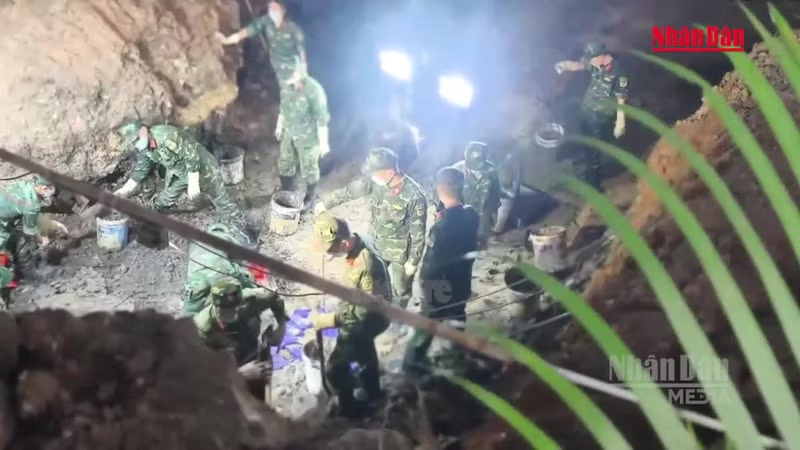
Ho Chi Minh City's Le Thi Rieng Park has yielded 19 more sets of martyr remains and one collective burial, bringing the total collected to 93. Efforts to identify and return the remains to their families are ongoing.
The search and collection of martyr remains at Le Thi Rieng Park in Ho Chi Minh City has seen further progress. Local reports indicate that search teams have discovered an additional 19 sets of martyr remains and one collective burial. This brings the total number of collected remains to 93 individual sets and one collective burial. This effort is part of a broader national initiative to identify and repatriate the remains of soldiers who went missing during the Vietnam War, decades after its conclusion. Vietnam, as a socialist republic under a single-party system, places significant emphasis on national unity and solidarity, which is reflected in its approach to such historical and emotional matters. The discoveries at Le Thi Rieng Park are also linked to the ongoing "500-day and night campaign," which has reportedly collected 1,384 sets of martyr remains over the past four months. Separately, Da Nang City held a memorial and burial ceremony for five sets of martyr remains found in the Hang Da Sap area. These activities underscore the Vietnamese government's commitment to preserving the memory of the war and honoring its historical legacy. While Vietnam continues its rapid economic growth, these efforts to address the remnants of war serve as a symbol of national cohesion and contribute to shaping Vietnam's historical narrative on the international stage. This is particularly relevant in its complex relationship with China, where historical narratives can be a sensitive point, even as economic ties deepen. Domestically, these endeavors provide an opportunity to reaffirm respect for war victims and the aspiration for peace.
多角的分析
ベトナム経済は急速な成長を遂げているが、こうした過去の戦争遺産への取り組みは、国民感情の安定に寄与し、社会全体の調和を保つ上で間接的に経済活動を支える側面がある。また、戦没者遺骨の収集・管理は、地域社会のインフラ整備や雇用創出にも繋がる可能性があり、経済効果は限定的であっても、社会的な安定という形で経済基盤を強化する。
直接的な投資機会ではないが、戦没者遺骨収集のような国家的な取り組みは、ベトナム政府の国民統合と歴史継承への強い意志を示す。これは、国内の安定性を投資家にとってプラスのシグナルと捉えることも可能であり、長期的にはベトナムの政治的安定と社会的一体性が、外国からの投資を呼び込む土壌となる。
レ・ティ・リエン公園での遺骨発見は、多くのベトナム人にとって、戦争の記憶と家族への想いを呼び起こす出来事である。特に、戦没者の遺族にとっては、長年の懸念が解消される可能性を示唆する。一方で、遺骨の特定や身元確認には高度な技術と時間が必要であり、遺族の期待に応えきれない場合も生じうる。これは、市民の感情と国家の対応との間に生じる摩擦となりうる。
ホーチミン市市民、特に戦争経験者やその子孫にとって、公園での遺骨発見は、失われた家族や親族への想いを強くさせる。彼らにとっては、これらの遺骨が故郷に帰り、家族の墓に眠ることができるかどうかが最大の関心事となる。このプロセスは、戦争の傷跡を癒し、世代間の記憶を繋ぐ重要な機会となる。
背景・歴史的文脈
ベトナム戦争(1955年-1975年)は、国土を荒廃させ、多くの人命を奪い、未だに多くの未特定遺骨が残されている。ベトナム政府は、戦争終結以来、組織的に戦没者遺骨の収集・特定・埋葬を進めており、これは国民統合と国家の歴史的記憶の継承という観点から重要視されている。特に、一党体制下では、こうした国家的な感情に訴えかける取り組みは、国民の愛国心を高め、体制への忠誠心を強固にする役割も担っている。レ・ティ・リエン公園での発見は、こうした長年にわたる取り組みの一環であり、戦争の悲劇を風化させないための継続的な努力を示している。
原文ソース
Nhan Dan