General articles are free for 24 hours after publish.
Cambodia Hosts International Conference, Calls for Enhanced Cyber Fraud Countermeasures
High-ranking officials from 10 countries and the ASEAN Secretariat warned of the escalating threat of cyber fraud at an international conference in Phnom Penh. They emphasized that enhanced international cooperation and information sharing are crucial to combat this complex, cross-border crime.
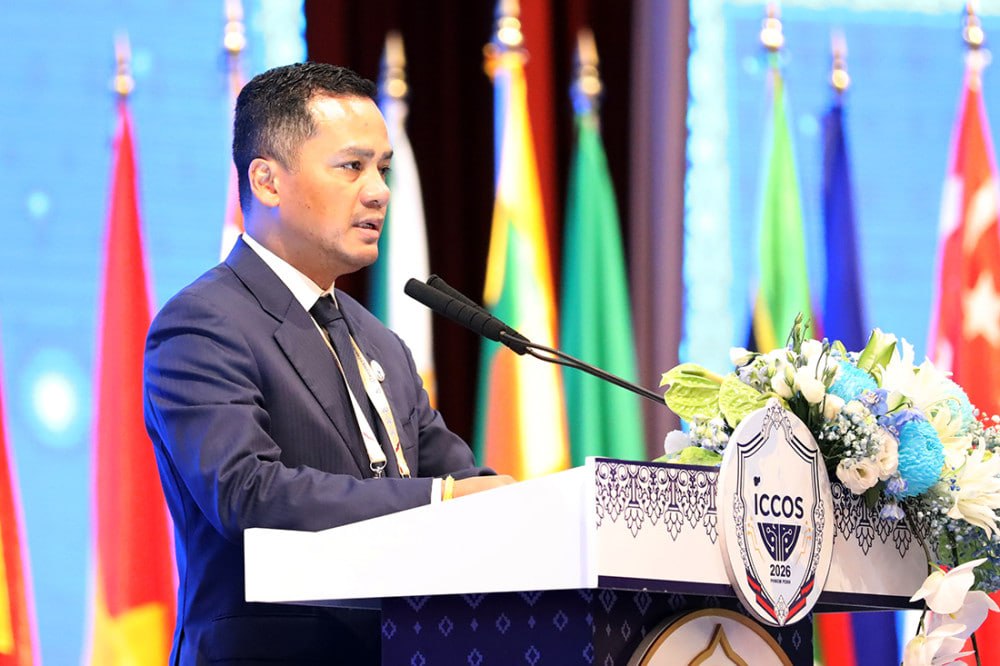
At the international conference on combating cyber fraud held in Phnom Penh, Cambodia, from September 23-24, 2026, high-ranking officials from 10 countries and the ASEAN Secretariat expressed a shared concern over the escalating threat of cyber fraud. The conference, themed "Together Towards Severing the Chain and Ending Cyber Fraud," brought together representatives from Cambodia, Myanmar, Timor-Leste, Indonesia, Laos, the Philippines, Singapore, Uganda, the United Kingdom, and Vietnam, along with officials from the ASEAN Secretariat. Participants unanimously agreed that cyber fraud has evolved into a complex form of cross-border crime, necessitating a coordinated international response. They emphasized the need for stronger legislation, faster international information sharing, joint law enforcement operations, and more effective financial investigations to combat this menace. Speakers highlighted that criminal networks must be addressed at every stage of the supply chain, from recruitment and human trafficking to fraud operations, money transfers, and money laundering. Protecting victims and bringing perpetrators, especially organizers and financiers, to justice were also deemed critical. The international community was urged to recognize that cyber fraud is no longer a solely domestic issue but a transnational crime that exploits differences in national laws, jurisdictions, technologies, and financial systems. It was stressed that no single country can fight cyber fraud alone, as criminals, victims, digital infrastructure, financial transactions, and evidence often span multiple jurisdictions. Therefore, robust international cooperation and information sharing are essential. Furthermore, speakers called for closer cooperation among governments, law enforcement agencies, and international organizations through rapid information exchange, joint investigations, mutual legal assistance, and strengthened collaborative efforts, emphasizing that law enforcement must act faster than criminal networks. Many speakers also raised the need for real-time or near real-time exchange of intelligence and digital evidence, given the speed at which criminals can move operations, funds, and infrastructure across borders. They underscored the necessity of disrupting the financial networks behind cyber fraud. Noting the close links between these crimes and human trafficking, they observed that victims not only suffer financial deception but can also be trafficked, lured by fraudulent job offers and forced into participating in fraud operations. They called for victims to be protected and assisted through victim-centered approaches, including rescue, protection, non-punishment for trafficked individuals for crimes they were forced to commit, safe repatriation, counseling, and other support. Meanwhile, criminal organizers, financiers, and facilitators should be targeted, while governments, the private sector, and technology companies should work together to combat these crimes. Presentations also clarified that the fight against cyber fraud cannot be left to law enforcement agencies alone, highlighting the role of banks, telecommunications operators, technology companies, social media platforms, and other private sector stakeholders in detecting and disrupting fraud infrastructure and financial flows. Moreover, they acknowledged that criminal networks are exploiting digital platforms, digital currencies, artificial intelligence, deepfakes, and other emerging technologies. In response, they called for stronger digital investigations, cybersecurity, digital forensics, and technology-driven cooperation. Speakers stressed the importance of updating national laws, strengthening institutions, and establishing mechanisms that enable authorities to investigate cybercrimes, preserve digital evidence, cooperate internationally, and effectively prosecute offenders. They reiterated, "The response should be based on shared responsibility rather than blaming individual countries. A consistent message is that cyber fraud is driven by transnational criminal networks, and countries should focus on cooperation, mutual trust, shared responsibility, and concrete actions, rather than assigning the problem to any single country to face alone." Cambodia, by hosting this international conference, demonstrated its commitment to leading efforts in strengthening global collaboration to tackle the pervasive issue of cyber fraud, a pressing concern for the nation amidst its ongoing economic development and digitalization.
Original source
AKP Khmer