General articles are free for 24 hours after publish.
Vietnam-Russia Relations Poised for Deeper Local and People-to-People Ties Following High-Level Summit
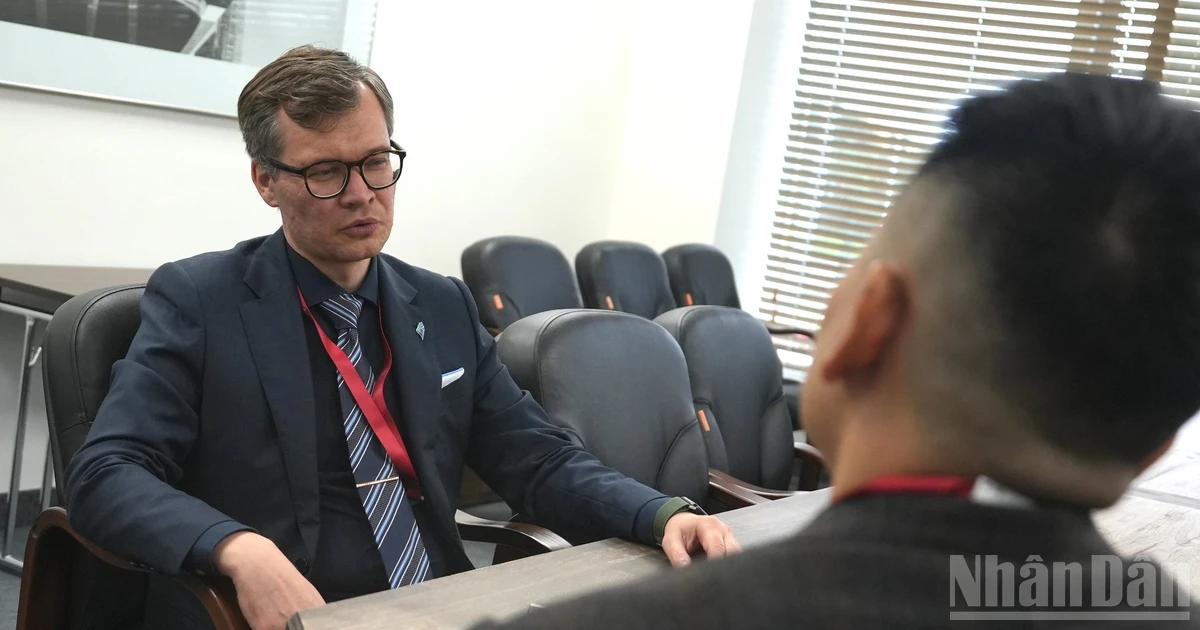
Ahead of Vietnamese President To Lam's state visit to Russia, Evgeny Vlasov, Chairman of the Vietnam Friendship Association in Primorye, assessed the bilateral relationship as being in a very good phase. He expressed expectations that the trust between leaders will boost local exchanges and economic cooperation.
Ahead of the state visit to the Russian Federation by General Secretary and President To Lam from September 7-9, Mr. Evgeny Vlasov, Chairman of the Vietnam Friendship Association in Primorye and Vice-Rector for International Relations at Far Eastern Federal University (FEFU), assessed that Vietnam-Russia relations are in a very good phase. Vlasov emphasized that the comprehensive strategic partnership, meticulously nurtured by both countries over many years, provides a favorable foundation for Vietnam and Russia to continue expanding and deepening cooperation in numerous fields. As Chairman of the Vietnam Friendship Association in Primorye, he noted that the people of Vladivostok hold great interest and warm feelings towards Vietnam. The recent renaming of a bus stop in the Ho Chi Minh President's Flower Garden on Borisenko Street to "Ho Chi Minh President's Flower Garden" was cited as a concrete manifestation of this sentiment. Vlasov also highlighted Vietnam's role as an important pillar in maintaining the principles of multilateral cooperation, equality, and respect for the independence and sovereignty of nations, interacting on an equal footing within the region. He stated that Vietnam's role within the Association of Southeast Asian Nations (ASEAN) is increasingly significant, while its position in the Asia-Pacific Economic Cooperation (APEC) forum has also been considerably strengthened. Looking ahead to the state visit, Vlasov expressed his expectation that the friendly and trusting relationship between the high-level leaders of the two countries will provide additional momentum for the development of relations between their respective localities. He believes that economic growth centers in Vietnam, such as Ho Chi Minh City, Da Nang, and Nha Trang, have ample room to enhance direct cooperation with Russian localities, including the Far East region. He pointed to the sister-city relationships between Vladivostok and Hanoi, and Vladivostok and Ho Chi Minh City, suggesting this model should be expanded with more interactive activities between Vietnamese and Russian localities. Furthermore, Vlasov proposed strengthening coordination between businesses, the state, and universities, advocating for a model where "businesses, the state, and the academic community become a mutually supportive system." He elaborated that businesses possess capital and market demand but may lack human resources, while universities can train personnel and provide intellectual products, with the state playing a regulatory role and creating a safe, stable environment for cooperation. This interaction, he argued, would transform cooperation potential into concrete projects and lay the groundwork for long-term collaboration. For Vietnamese businesses approaching the Russian market, Vlasov recommended seeking reliable local partners rather than operating independently. He explained that a market-savvy partner can help businesses navigate cultural, legal, and business practice differences, thereby reducing obstacles. He also stressed the importance of state support mechanisms, particularly for small and medium-sized enterprises (SMEs), to help them overcome the initial stages and maintain their presence and expand cooperation. Vlasov also underscored the role of the Vietnamese community in fostering Vietnam-Russia relations, emphasizing the need for individuals who deeply understand each other's markets and cultures to act as bridges for cooperation. He also deemed the transportation connectivity system, including maritime, rail, and air routes, as crucial for supporting trade, investment, and people-to-people exchanges. Vlasov concluded by expressing his desire for the political friendship and trust between the leaders of the two nations to strongly permeate all levels of bilateral relations. He stated that while leaders signing new agreements is a starting point, the results of cooperation, trade, and economic growth will be vastly different when friendly relations are built at every level, from implementers to ordinary citizens. Source: Nhan Dan
Original source
Nhan Dan