General articles are free for 24 hours after publish.
Wife's Kidney Saves Husband in Third Transplant, Complex Surgery in Vietnam
A 57-year-old man in Ho Chi Minh City, Vietnam, has successfully undergone a third kidney transplant, receiving an organ from his wife after two previous attempts failed. The complex surgery involved vascular abnormalities.
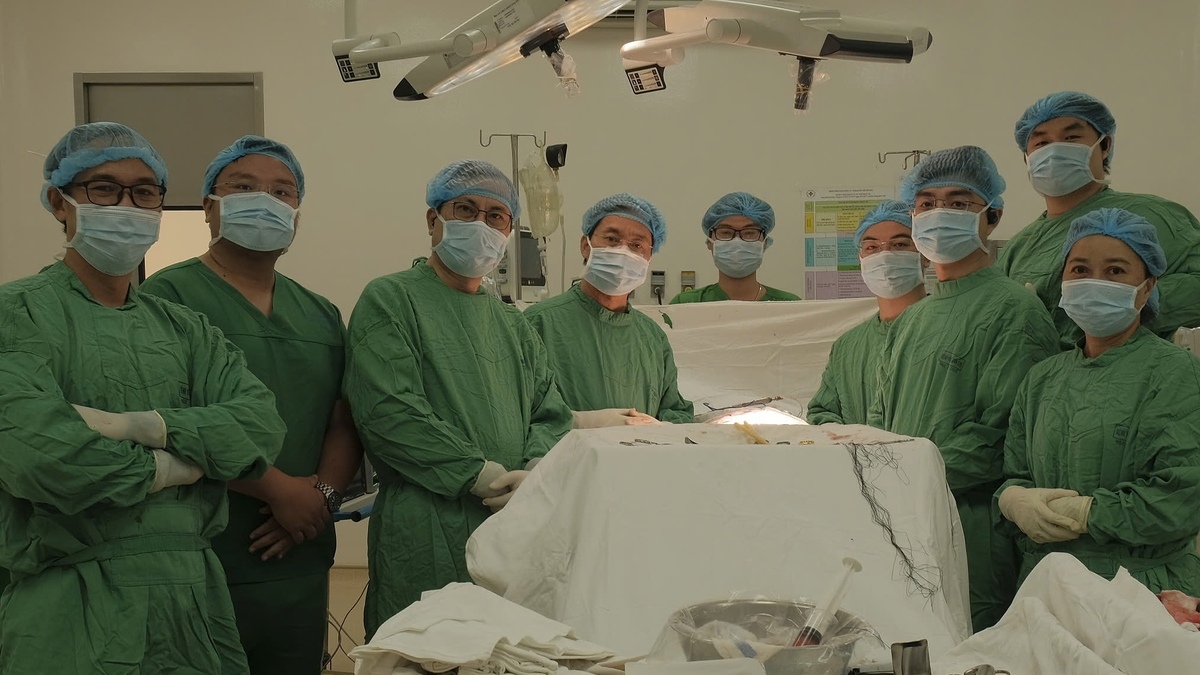
Ho Chi Minh City, Vietnam – A 57-year-old man has successfully undergone his third kidney transplant in Ho Chi Minh City, receiving an organ from his wife after two previous transplants failed and complicated vascular issues presented significant challenges. This marks a notable achievement in high-difficulty organ transplantation in Vietnam. The patient's medical journey began ten years ago with a first kidney transplant in his right iliac fossa, which was later removed due to rejection. His second transplant, performed in the left iliac fossa, resulted in kidney dysfunction two years ago, forcing him back onto hemodialysis. As the primary breadwinner, his condition prevented him from working normally, and his wife had to dedicate herself to his care. Upon learning she was eligible to donate, she made the decision to give one of her kidneys to save her husband's life. However, this transplant was exceptionally complex. Due to the previous transplants, the patient had developed numerous antibodies against transplanted tissue, increasing the risk of rejection. He also had a history of abdominal trauma and two previous transplant surgeries, leading to extensive adhesions in his abdominal cavity. Furthermore, CT scans revealed severe calcification in his thoracic, abdominal, and iliac aorta, making the selection of a suitable site for vascular anastomosis for the new kidney extremely difficult. To mitigate the risk of rejection, the patient underwent four sessions of plasmapheresis before the surgery and was administered potent immunosuppressive drugs. The surgical team harvested the wife's left kidney laparoscopically and transplanted it into the patient's right iliac fossa, after removing the previous transplanted kidney to create space. They chose a segment of the common iliac artery with the least calcification for the anastomosis, with artificial blood vessels prepared as a backup. According to Associate Professor, Dr. Truong Hoang Minh, Head of the Urology-Andrology Center at People's Hospital 115, the surgery encountered numerous difficulties, from exposing blood vessels to accessing the bladder, due to adhesions from multiple prior operations. Despite these challenges, the surgery was successful. Immediately after unclamping the blood vessels, the transplanted kidney began producing urine, and by the first day post-operation, kidney function had significantly improved, with the patient alert and eating normally. Dr. Minh explained that third kidney transplants are inherently more complex due to higher immunological risks, extensive scarring from previous surgeries, and potential atherosclerosis or prior use of blood vessels. In this specific case, the calcification of the abdominal aorta necessitated the selection of the common iliac artery near the aortic bifurcation, identified as the least calcified area on imaging. While the success rate of third kidney transplants is typically lower than first transplants, studies indicate that patient survival remains higher compared to continued hemodialysis. Medical literature suggests a one-year survival rate of approximately 75-85% and a five-year survival rate of 55-70% for third transplants. Kidney transplantation is considered the most effective treatment for end-stage renal disease. However, the shortage of donor kidneys remains a significant hurdle. It is estimated that 40,000-50,000 people in Vietnam require kidney replacement therapy annually, yet only about 1,000-1,500 transplants are performed each year. People's Hospital 115 began living donor kidney transplants in 2004 and plans to commence deceased donor transplants in 2025. The first recorded third kidney transplant in Vietnam was performed in January 2017 at Vinmec Times City Hospital on a 71-year-old Japanese patient. Source: VnExpress
Original source
VnExpress