General articles are free for 24 hours after publish.
Vietnam's Durian Gains Official Access to Indian Market, Diversifying Export Channels
Vietnam's fresh durian has officially been granted access to the Indian market, opening up a consumer base of 1.4 billion people. This move allows Vietnamese agricultural exporters to diversify their sales channels and reduce reliance on traditional markets.
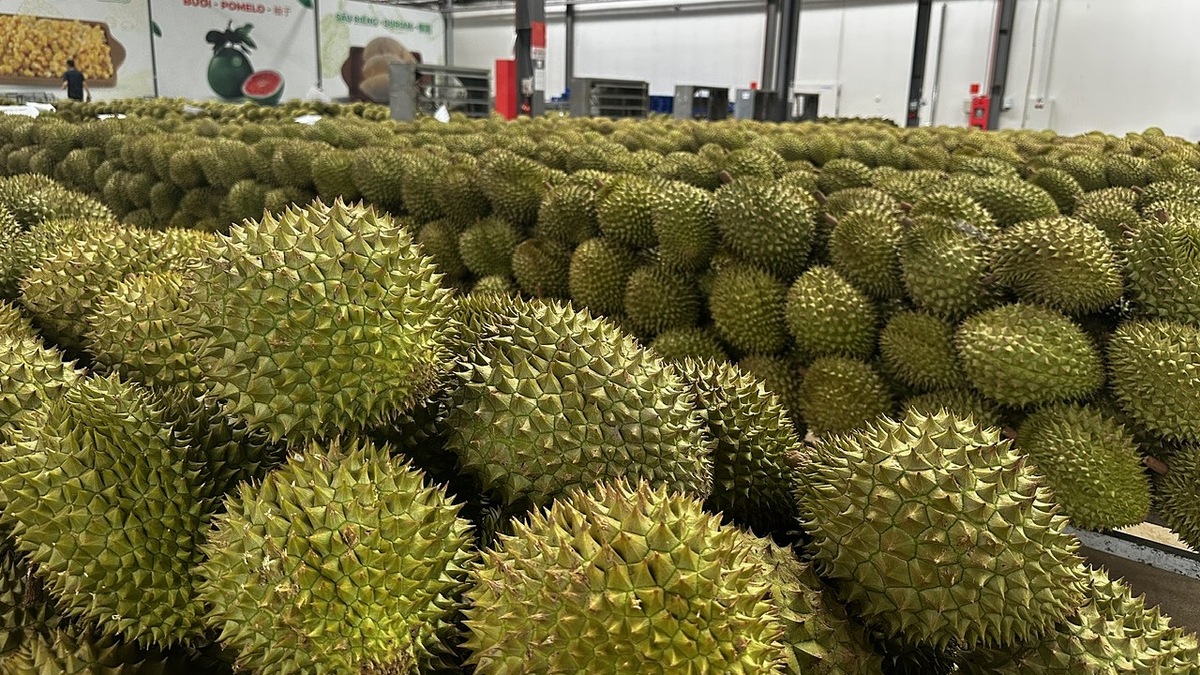
Vietnam's fresh durian has officially been granted access to the Indian market, opening up a consumer base of 1.4 billion people. This move allows Vietnamese agricultural exporters to diversify their sales channels and reduce reliance on traditional markets. On July 30, the Department of Horticulture and Plant Protection (under the Ministry of Agriculture and Rural Development) announced that India had added Vietnam to its list of countries permitted to export fresh durian to the market. The decision took effect in mid-July. India has not imposed any special import conditions or requested additional quarantine declarations for Vietnamese durian. According to the Department of Horticulture and Plant Protection, the opening of the 1.4 billion-person market is the result of technical exchanges between the two countries. This will help Vietnamese agricultural exporters diversify their outlets and reduce dependence on a few traditional markets. However, the management agency noted that this is still a new market. In the initial phase, products may be consumed primarily in large urban centers through high-end retail systems, restaurants, hotels, and e-commerce channels. Therefore, businesses need to conduct thorough research into consumer preferences, product specifications, transportation, and distribution systems to develop appropriate market penetration strategies. The opening of the Indian market by India comes at a time when Vietnam's durian industry is seeking to diversify its export outlets after a period of facing many difficulties. Earlier this year, exports to China, the largest consuming market, decreased sharply as China tightened quality controls, increased checks on chemical residues, and enhanced traceability. Many shipments to this market experienced prolonged customs clearance times, and domestic purchase prices plummeted. Domestically, the supply of durian continues to increase as the planted area enters the harvesting phase. According to statistics from the Ministry of Agriculture and Rural Development, in the first half of this year, the national durian output reached 603,300 tons. This figure is a 12.7% increase compared to the same period in 2025, marking the highest output among major fruit crops. Information Source: VnExpress
Original source
VnExpress