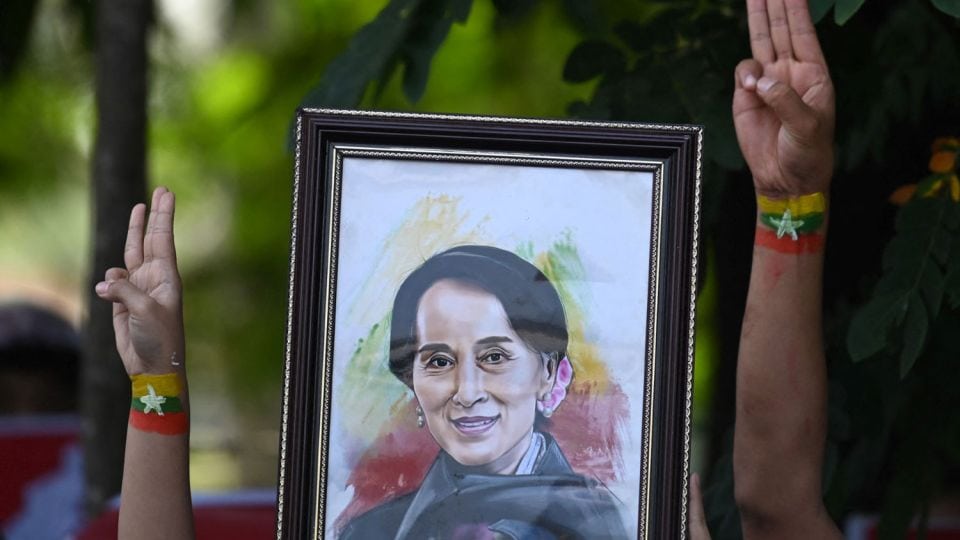
Myanmar Junta Signals ASEAN 'Toothlessness' by Denying Access to Aung San Suu Kyi
Myanmar's military regime is continuing to reject requests to meet with Aung San Suu Kyi, signaling to ASEAN that it views the bloc as "somewhat toothless." Analysts suggest this stance reflects the junta's belief that it can ignore ASEAN pressure and maintain its political leverage.
Analysts suggest that Myanmar's military regime's continued refusal to grant access to Aung San Suu Kyi signals its belief that ASEAN (Association of Southeast Asian Nations) is "somewhat toothless." This stance indicates the junta's intent to disregard pressure from ASEAN and maintain its political leverage. Recent calls for the release or meeting of Aung San Suu Kyi, who recently turned 81, have been ignored or turned down, including the latest request from ASEAN member states. A regime spokesperson stated that Suu Kyi is being prosecuted under the law and serving sentences, thus not permitted to meet international representatives. This marks the second time ASEAN chair, the Philippines' Foreign Secretary, has been unable to meet the deposed leader. Analysts interpret this as the junta signaling that "they are in control of the situation and dictate who can visit Aung San Suu Kyi and when." The fact that only former Thai Foreign Minister Don Pramudwinai and Chinese Foreign Minister Wang Yi have secured visits indicates the junta's trusted foreign partners. Restricting her visitors is seen as the regime's method of retaining its political leverage. Suu Kyi is currently serving a remaining sentence of approximately 18 years, following various reductions from an initial 33 years. The charges against her, including violating the official secrets act and corruption, are widely considered by many to be politically motivated and false. By keeping Suu Kyi imprisoned, junta leader Min Aung Hlaing has also managed to orchestrate a tightly controlled election, widely labeled a sham. He has largely ignored ASEAN's Five-Point Consensus peace plan, which calls for an end to violence and humanitarian aid access. Suu Kyi's son expressed disappointment but not surprise at the rejection of ASEAN's request, stating, "They continue to isolate my mother from the world, raising serious questions about what they are trying to hide." While the regime claims Suu Kyi is in "good health," her son has not been allowed to visit or speak with her for five years. ASEAN has maintained its ban on Min Aung Hlaing attending leaders' summits, demanding fulfillment of the peace plan conditions. However, from Naypyitaw's perspective, there is resentment that ASEAN intervenes in Myanmar's internal affairs while not intervening in disputes between other member states, such as the Thailand-Cambodia territorial disagreement. The regime seeks ASEAN recognition but not scrutiny. Despite Suu Kyi not being directly involved in the current resistance, history shows her ability to galvanize citizens and achieve electoral victories. The regime wishes to avoid a repeat of the 2010 election results following her release. They recognize that her voice, even diminished, remains potentially disruptive. She continues to serve as a symbolic asset, a political hostage, and a potential scapegoat in the regime's dealings with ASEAN and the international community. While some believe denying access to Suu Kyi will further alienate the junta from ASEAN, analysts suggest otherwise. The regime is not overly concerned about marginalization within ASEAN, calculating that ASEAN's contribution to resolving the Myanmar conflict is limited, while more influential countries are actively engaging. Information Source: Phnom Penh Post
多角的分析
ミャンマー国軍がASEANとの対話を拒否し、国際社会からの孤立を深める姿勢は、経済的な影響を無視できない。国際的な信頼の低下は、直接的な投資の減少や、既存の経済支援の縮小につながる可能性がある。特に、ASEANが提供する経済協力や市場アクセスは、ミャンマー経済の回復にとって重要であり、その機会を自ら放棄している形となる。国軍は、自国の経済的自立を優先しているか、あるいは外部からの経済的圧力が政策決定に影響を与えないと判断していると考えられる。
投資家にとって、ミャンマー情勢の不確実性は最大の懸念事項である。スー・チー氏のような主要な政治的アクターへのアクセスを制限し、ASEANとの対話を拒否する姿勢は、政権の安定性や将来的な政策変更の予測を困難にする。これは、新規投資だけでなく、既存投資の撤退リスクを高める。特に、人権や民主主義といったESG(環境・社会・ガバナンス)要因を重視する投資家は、ミャンマーへの関与を避ける傾向が強まるだろう。国軍が特定の大国(中国など)との関係を優先する一方で、地域全体の安定を損なう行動は、長期的には経済的利益を損なう可能性がある。
アウン・サン・スー・チー氏へのアクセス拒否は、ミャンマー国内の市民社会や民主化を求める人々にとって、希望の喪失に直結する。彼女は依然として多くの国民にとって抵抗の象徴であり、その声が届かない状況は、社会的な分断や不満をさらに深める可能性がある。また、国軍が「健康状態は良好」と主張しても、第三者による確認ができない事実は、国民の政府に対する不信感を増幅させる。これは、SNSなどを通じた情報流通の制限とも相まって、社会的な不安を煽る要因となりうる。
カンボジア市民の視点から見ると、ミャンマーの状況は、地域内の不安定要因として懸念される。カンボジア自身もASEANの一員であり、ミャンマーのASEAN内での孤立は、ASEAN全体の結束力や地域協力の有効性に対する疑問を投げかける。また、ミャンマーで発生している人道的危機や経済的停滞は、近隣諸国への影響も無視できない。特に、カンボジアは観光業や投資においてASEAN諸国との連携が深いため、地域全体の安定が損なわれることは、カンボジア経済にも間接的な影響を与える可能性がある。市民は、ASEANがより効果的な役割を果たせるようになることを期待しているだろう。
背景・歴史的文脈
ミャンマーにおける政治的混乱は、2021年2月の軍事クーデターに端を発する。軍はアウン・サン・スー・チー氏率いる国民民主連盟(NLD)政権を覆し、非常事態宣言を発令。これに対しASEANは、暴力の即時停止、関係者間の対話、特使の派遣、人道支援の受け入れ、スー・チー氏ら政治囚の解放などを柱とする「5点合意」を提示した。しかし、ミャンマー国軍はこれをほとんど履行せず、ASEAN首脳会議へのミン・アウン・フライン最高司令官の参加を禁止されるなど、ASEANとの関係は悪化の一途をたどっている。スー・チー氏へのアクセス拒否は、この対立の最新の現れであり、国軍がASEANの仲介努力を完全に退けていることを示している。
原文ソース
Phnom Penh Post