General articles are free for 24 hours after publish.
Prabowo's Public Satisfaction Dips Amidst Economic, Political, and Law Enforcement Concerns
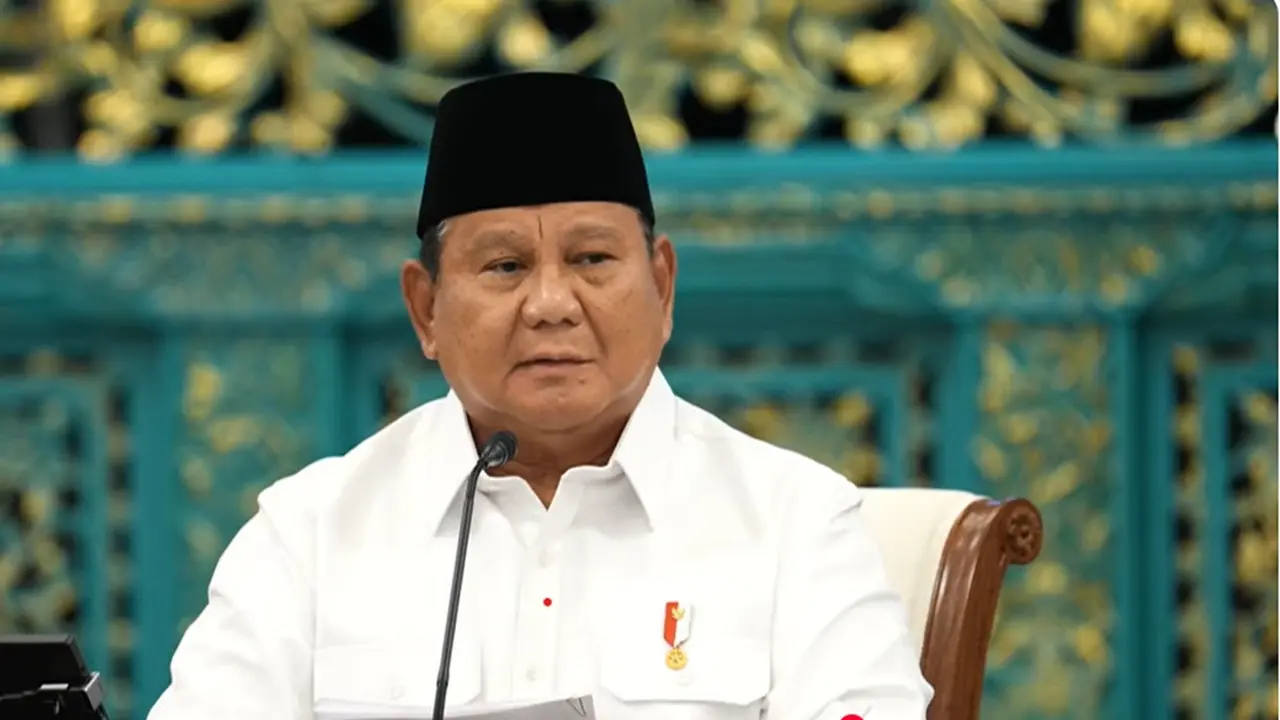
A recent Indonesian survey reveals a significant drop in public satisfaction with President Prabowo Subianto's performance, falling by approximately 30% from 81.2% to 51.1% over his nine-month tenure. Declining public sentiment towards the economy, politics, and law enforcement are cited as primary drivers.
A recent survey conducted by Indonesian pollster Saiful Research and Consulting (SMRC) between July 5-19, 2026, reveals a significant decline in public satisfaction with President Prabowo Subianto's performance over the past nine months. The satisfaction rate has dropped by approximately 30%, from 81.2% in November 2025 to 51.1% in July 2026. Deni Irvani, Executive Director of SMRC, stated during the presentation of the study titled 'Economic Political Conditions and Presidential Approval Rating' on SMRC TV on Sunday (26/7/2026), that the current public satisfaction level with President Prabowo Subianto's performance in July 2026 stands at 51.1%. This figure comprises 46.3% who are 'somewhat satisfied' and 4.8% who are 'very satisfied.' "Meanwhile, those who feel somewhat or very dissatisfied are at 46.9%, and 2.1% do not know," said Deni. Deni added that this figure represents a sharp decline over the past nine months. "It can be said to be a fairly sharp decrease, 30.1% in nine months," he stated. In March, the satisfaction level was found to be 66%, and it continued to fall. "The rest are dissatisfied, rising from 16% (in the November 2025 survey) to 46.9%. Meanwhile, those who did not answer remained stable. This is interesting," Deni added. Furthermore, Deni asserted that this decline in public satisfaction is closely linked to negative public evaluations of the economic, political, and law enforcement conditions. “The decrease in public satisfaction is closely related to the slump in positive sentiment towards economic, political, and law enforcement conditions,” Deni explained. The survey's population comprised all Indonesian citizens of voting age. A total of 749 respondents were randomly selected. Those with telephones were interviewed via phone (83.8%), while those without telephones were interviewed face-to-face (16.2%). This proportion aligns with the population of cellphone users and non-users. The survey's margin of error is +/- 3.7%. For a significant difference to be observed, it must be at least twice the margin of error (7.4%).
Original source
Liputan6