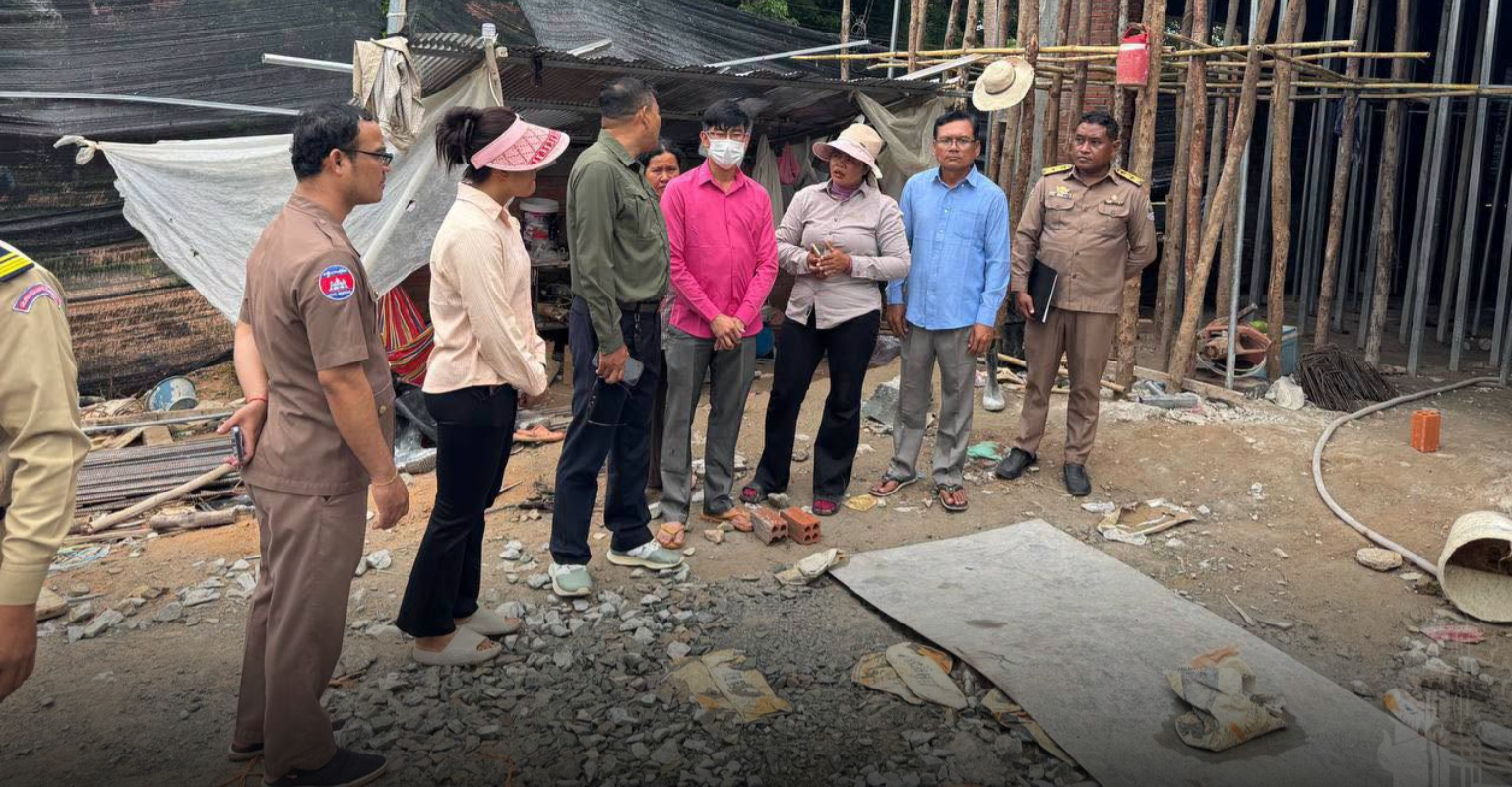
Siem Reap Authorities Halt Illegal Construction Near Angkor Heritage Site
Siem Reap provincial authorities, in collaboration with the Apsara National Authority, have temporarily halted the construction of a house built without proper permits. The move aims to ensure adherence to legal procedures and prevent future structural issues.
Authorities in Siem Reap province have temporarily halted the construction of a house in Roulos commune, Prasat Bakong district, after discovering it was built without the necessary permits. The joint operation, conducted on July 7, 2026, involved provincial and district officials working in cooperation with the Apsara National Authority (ANA), the body responsible for managing and preserving the Angkor heritage site. During an inspection, the task force found that the construction site lacked official permission from the relevant authorities. Consequently, the mixed team immediately ordered a stop to the building work. In conjunction with the suspension, the provincial team and the ANA advised the property owner to obtain the required construction permits and follow the proper legal procedures before proceeding. Officials emphasized that building without authorization could lead to technical issues and negatively impact the structure's safety and the surrounding environment in the future. This incident highlights the increasing efforts to enforce building regulations in areas surrounding the Angkor World Heritage Site, underscoring the importance of legal compliance. Cambodia is experiencing rapid economic development, leading to concerns about unregulated construction, particularly in tourist hubs like Siem Reap. The ANA has been strengthening its building codes to protect the heritage site's landscape and cultural artifacts, and this action is seen as part of those ongoing efforts. It is anticipated that crackdowns on similar unauthorized constructions will continue.
多角的分析
シェムリアップにおける無許可建築の一時停止は、短期的な建設活動の停滞をもたらす可能性がある。しかし、長期的には、法規制の遵守を促し、不健全な開発を防ぐことで、観光資源である世界遺産の保全に貢献し、持続可能な経済発展の基盤を強化する効果が期待できる。これは、観光収入への依存度が高いカンボジア経済にとって、資産価値の維持という観点から重要である。
この種の取り締まりは、投資家にとって短期的な不確実性をもたらす可能性がある。しかし、法規制の遵守が徹底されることは、長期的な投資環境の安定化に寄与する。特に、世界遺産周辺での開発においては、遺跡保護という国際的な要請に応えることが、企業のレピュテーションリスク管理の観点からも不可欠であり、コンプライアンスを重視する投資家にとってはむしろ歓迎される動きとなりうる。
無許可建築の取り締まりは、地域住民の生活環境の保全に繋がる。特に、世界遺産アンコール遺跡群周辺では、開発による景観への影響や、不適切な建築によるインフラへの負荷が懸念されている。法的手続きを経ない建築は、近隣住民との紛争の原因ともなりうるため、今回の措置は、より秩序ある都市開発と、住民の安全・安心な生活を守るための重要な一歩と言える。
今回の無許可建築の一時停止は、シェムリアップ市民、特に当該地域に居住する人々にとっては、開発の無秩序化による生活環境の悪化を防ぐための重要な措置である。無許可建築は、しばしばインフラへの過負荷や、景観の悪化、さらには将来的な安全性の問題を引き起こす。当局が法規制の遵守を求めることは、市民の生活の質を維持し、将来世代のためにも良好な環境を残すという公共の課題への取り組みを示すものである。
背景・歴史的文脈
カンボジア、特にシェムリアップ州は、ユネスコ世界遺産に登録されているアンコール遺跡群を擁し、観光が主要産業の一つである。遺跡群の保全と周辺地域開発の調和は、長年の課題となっている。2000年代以降、経済成長に伴い不動産開発が活発化する中で、無許可建築や、遺跡景観を損なうような開発が問題視されてきた。これに対し、アプサラ国家機構(ANA)は、建築規制の強化や監督体制の整備を進めており、今回の措置はその一環として、法遵守の徹底を図る動きである。
原文ソース
Koh Santepheap Khmer