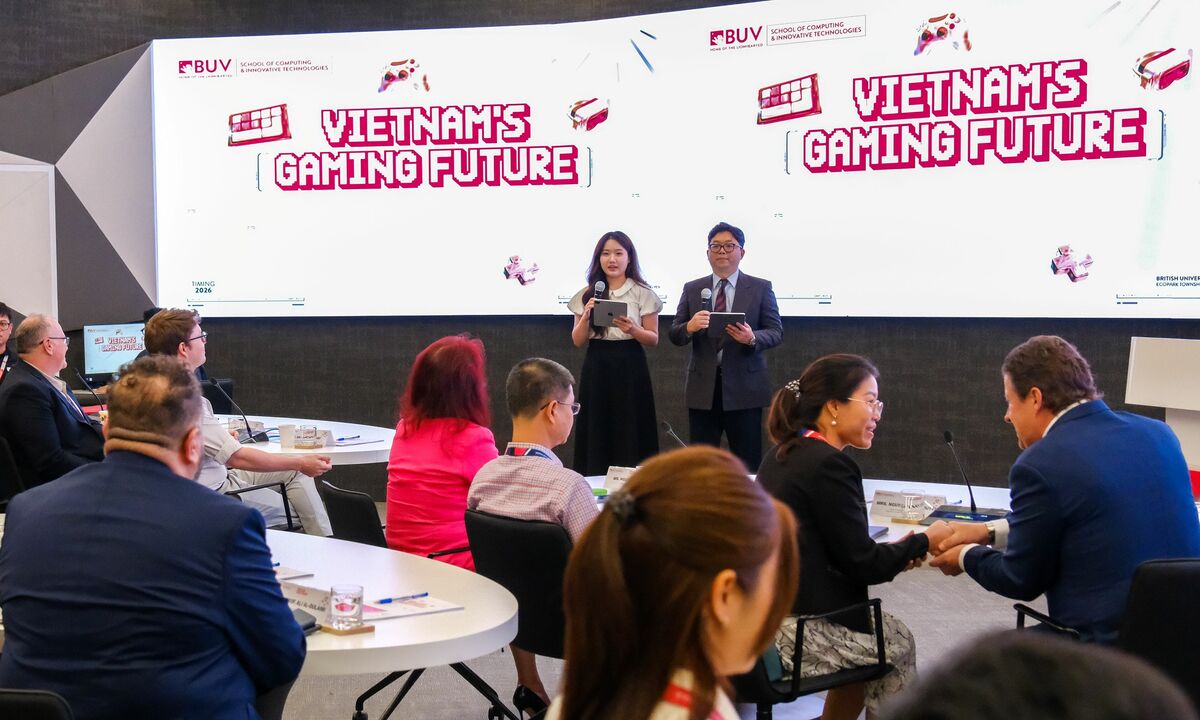
Vietnam's Gaming Industry Calls for Stronger Academia-Industry Partnerships
A forum in Vietnam focused on the development of the gaming industry, bringing together representatives from the Ministry of Education and Training, the National Innovation Center, game studios, and technology companies. Key discussions centered on enhancing the capacity for developing internationally competitive games and nurturing talent to meet industry demands.
A forum titled "Vietnam's Gaming Future: Industry, Education, and Innovation in Partnership" was held to bolster the Vietnamese gaming industry's international competitiveness through talent development and innovation. The event brought together representatives from the Ministry of Education and Training, the National Innovation Center (NIC), game studios, and technology companies to discuss workforce development and innovation. Participants emphasized the necessity of stronger partnerships between the government, universities, and businesses to bridge the gap between academic training and industry requirements. This is particularly crucial as gaming has been identified as one of Vietnam's six priority cultural industries for 2025-2030. To Hong Nam, Deputy Director General of the Department of Science, Technology and Innovation under the Ministry of Education and Training, highlighted that developing skilled talent is essential for Vietnam to produce games that can compete internationally. He noted that with the industry expected to require around 30,000 additional professionals in the next two to three years, the government is committed to improving the regulatory framework and encouraging public-private collaboration for long-term workforce development. "Building a sustainable gaming industry requires close collaboration between government, universities, and businesses," Nam said. "The Ministry of Education and Training is committed to supporting these partnership models and encourages institutions and industry partners to develop programmes that respond to the sector's evolving needs." Speakers also pointed out the need for game education to evolve as Vietnam's gaming industry shifts from outsourcing towards developing original intellectual property (IP) while incorporating artificial intelligence (AI) and more advanced production models. Employers are increasingly seeking graduates with technical expertise, alongside skills in creativity, product design, and project management. BUV (British University Vietnam) introduced its Bachelor of Computer Science (Game Innovation) program, designed to equip students with technical, creative, and commercial skills for careers in game development. Professor Rick Bennett, Deputy Vice-Chancellor and Vice-President of BUV, stated that the program was developed in consultation with the industry and aims to prepare students with capabilities employers will seek in the next five to 10 years. "The programme was built around one simple question: What does the gaming industry need? Our ambition is to equip students with the capabilities employers will be looking for over the next five to 10 years," Bennett added. The curriculum covers game design, programming, and game art, alongside AI, esports, studio management, and business models. Students will work with platforms such as Unity and Unreal Engine 5, participate in industry projects, and complete internships through the university's corporate partner network. Vietnam's gaming market continues to expand, with projections indicating a market size of approximately $1.66 billion in 2025 and an annual growth rate of 9.77%, surpassing the global average. Industry representatives stressed that sustaining this growth requires a larger pool of professionals capable of developing globally competitive games. Nguyen Thi Le Quyen, Head of Enterprise Support at the National Innovation Center, believes that closer links between education and industry will help prepare graduates, support the creation of Vietnamese-made games, and strengthen the country's position in the global gaming industry. Source: VnExpress International
多角的分析
ベトナムのゲーム産業は、国内市場の成長と輸出による外貨獲得の両面で経済成長に貢献する潜在力を持つ。国際市場で通用するオリジナルIPの開発は、高付加価値化と収益性の向上に直結する。産学連携による質の高い人材育成は、このポテンシャルを最大限に引き出すための経済的投資と言える。特に、AIや最新技術の導入は、生産性向上と新たなビジネスモデル創出の機会をもたらすだろう。政府の優先産業としての位置づけは、 R&D 投資や税制優遇などの経済的インセンティブにつながる可能性を示唆している。
ベトナムのゲーム産業への投資は、高い成長ポテンシャルを持つ一方で、人材不足というリスクも抱えている。今回の産学連携強化の動きは、長期的な人材供給の安定化と、より高度なゲーム開発能力の向上につながるため、投資家にとってポジティブなシグナルとなる。特に、オリジナルIP開発に注力する企業や、国際的なプラットフォームでの成功を目指すスタートアップは、将来的な収益性の向上が期待できる。政府の支援策や、大学のカリキュラム改革といった具体的な取り組みは、投資判断における重要な要素となるだろう。
ベトナムの若年層にとって、ゲーム開発は魅力的なキャリアパスとなり得る。国際的に通用するゲームを自国で開発することは、国家的な誇りにもつながる。しかし、教育システムが産業界の急速な変化に追いついていない現状は、卒業生の就職難や、期待と現実のギャップを生む可能性がある。今回の産学連携強化は、こうしたミスマッチを解消し、若者がより良いキャリアを築ける機会を提供するものだ。同時に、ゲーム開発における創造性や倫理観の育成も、健全な産業発展のために重要となる。
ゲーム産業の成長は、新たな雇用機会の創出と、ベトナムの文化コンテンツ輸出の拡大につながる。政府がゲームを優先文化産業と位置づけ、産学連携を強化する動きは、国民、特に若者にとって、将来への希望となる。しかし、産業界のニーズに合致した質の高い教育が提供されなければ、期待通りの雇用創出にはつながらない。また、ゲーム開発における倫理的な側面や、過度な労働問題への懸念も、社会全体で議論されるべき課題である。国民は、自国のゲーム産業が、経済的利益だけでなく、文化的影響力や社会的な責任も果たしていくことを期待している。
背景・歴史的文脈
ベトナムは、2018年頃からゲーム産業の潜在力に着目し始め、政府はデジタル経済の推進策の一環として、ゲームを重要な分野と位置づけてきた。しかし、国内の教育機関が産業界の急速な進化に追いつかず、特に高度な専門知識や創造性を要する分野での人材不足が課題となっていた。2025-2030年の優先文化産業としての指定は、この課題解決に向けた政府の強い意志を示すものであり、産学連携強化はその具体的な施策の一つである。過去には、主に海外からの受託開発に依存する傾向があったが、近年は自社IP開発へのシフトが模索されており、今回のフォーラムはその流れを加速させる狙いがある。
原文ソース
VnExpress International