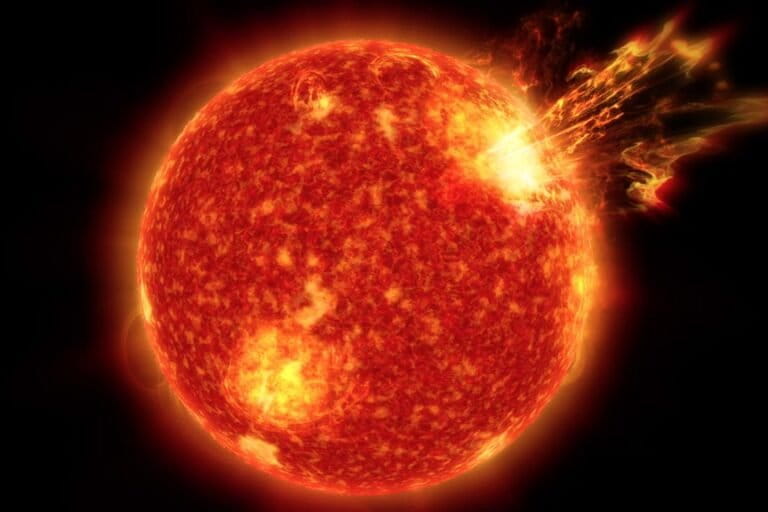
Solar Storms Could Be Twice as Severe as Predicted, NASA Study Warns
Technology
2026年8月8日
5
Mongabay Indonesia

General articles are free for 24 hours after publish.

Solar Storms Could Be Twice as Severe as Predicted, NASA Study Warns

Share
AI Summary

A NASA study suggests Earth's magnetic field's supposed "saturation limit" against solar storms might be a statistical illusion. If true, impacts on power grids and satellites could be twice as severe as previously estimated.

A NASA-led study suggests that the perceived limit of Earth's magnetic field's response to solar storms may not exist, potentially doubling the impact of extreme events on power grids and satellites beyond previous predictions. For decades, scientists and satellite operators have assumed a natural limit to how Earth's magnetic field responds to solar storms, capping potential damage to power grids and satellites. However, a new study, led by Dr. Nithin Sivadas of NASA's Goddard Space Flight Center and published in the journal Nature on July 15, 2026, challenges this long-held assumption. The research re-examines historical data used to model space weather, concluding that the widely accepted concept of geomagnetic saturation is likely a statistical illusion. This notion of a saturation limit has led to at least ten different theories, ranging from physical limits on magnetic field reconnection to plasma pressure, attempting to explain why Earth's magnetosphere appears to cease responding even as solar winds intensify. The latest study indicates these complex explanations may be unnecessary because the limit may never have truly existed. Space weather data has largely relied on satellites located at the L1 Lagrange point, about 1.5 million kilometers from Earth towards the Sun. While L1 offers an advantage in detecting solar winds early, the study suggests that measurement errors stemming from this great distance might have created the illusion of a saturation limit. This new understanding significantly raises the potential risk to Earth's infrastructure, particularly its power grids and the satellite constellations that support communication and navigation systems. For nations like Indonesia, with its extensive electricity networks and reliance on communication infrastructure across its vast archipelago, this risk is particularly salient. Unexpectedly severe solar storm impacts could lead to widespread economic disruption and societal disruption.

0

Original source

Mongabay Indonesia

原文を読む