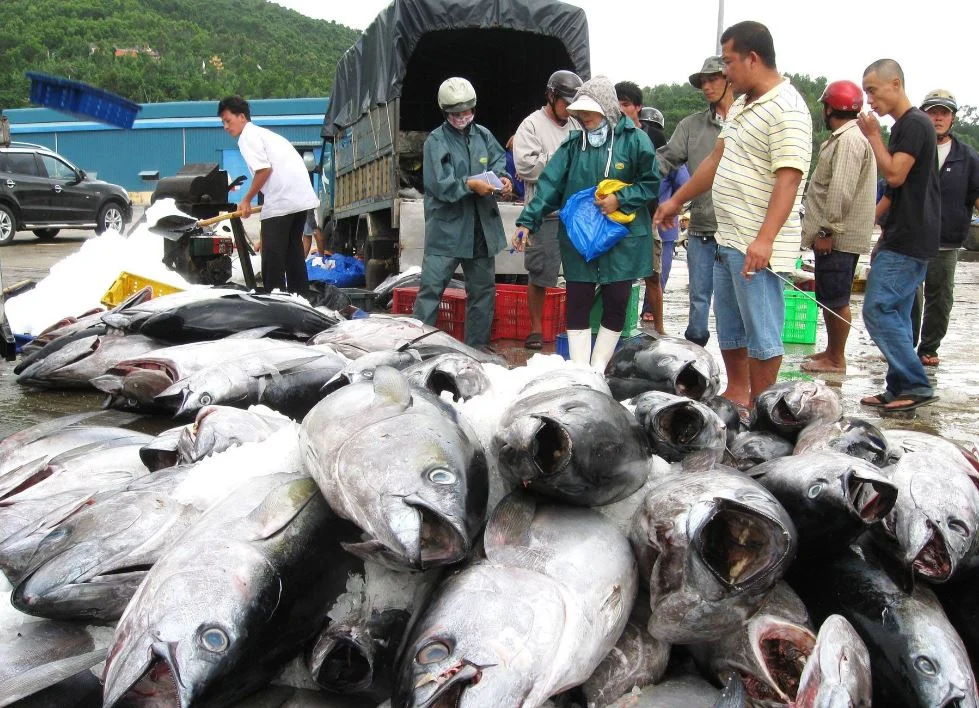
Vietnam's High-Protein Tuna, a 'Superfood,' Exceeds $500 Million in US Exports
Economy
2026年8月8日
5
Vietnam Insider
Relations
🇻🇳Vietnam🇯🇵Japan🇺🇸United States

General articles are free for 24 hours after publish.

Vietnam's High-Protein Tuna, a 'Superfood,' Exceeds $500 Million in US Exports

Share
AI Summary

Vietnamese tuna exports are showing robust growth, particularly in the U.S. market, recognized as a 'superfood' for its high nutritional value, meeting consumer demand for high-protein, low-fat options. In July 2026 alone, exports reached $69 million, with the U.S. remaining the largest market.

Vietnam's tuna exports are demonstrating remarkable growth, particularly in the U.S. market, where the fish is gaining recognition as a 'superfood' due to its high nutritional value. This aligns perfectly with modern consumer demand for high-protein, low-fat options, making tuna a significant pillar of Vietnam's seafood exports. According to data from the Vietnam Association of Seafood Exporters and Producers (VASEP), tuna exports in July 2026 reached over $69 million. While this represents a slight year-on-year decrease of 0.1%, cumulative exports for the first seven months of the year have hit nearly $524 million, underscoring the critical importance of the U.S. market for Vietnam's tuna trade. The U.S. accounts for approximately 39% of Vietnam's total tuna export turnover. Market dynamics have shown some volatility. After a sluggish start to 2026, exports surged by nearly 100% in June, largely attributed to importers rushing for early shipments to hedge against policy risks. However, the market stabilized somewhat in July. Meanwhile, Canada is emerging as a promising market for Vietnamese tuna. Among Comprehensive and Progressive Agreement for Trans-Pacific Partnership (CPTPP) participating countries, Vietnam's tuna exports to Canada reached nearly $20 million, a 5% increase year-on-year. This stands out as a significant growth area amid the volatility experienced in the U.S. and EU markets. Changes are also evident in the product structure. While exports of fresh, frozen, and dried tuna (HS03 group) saw a decline, processed and canned tuna (HS16 group) experienced a substantial 42% increase. This indicates a growing shift towards higher value-added processed products. Tuna boasts a high protein content of approximately 24–30 grams per 100 grams of flesh, offering nutritional value equivalent to or higher than salmon, with less fat. Furthermore, it is rich in omega-3 fatty acids, vitamin D, vitamin B12, selenium, and other essential nutrients that contribute to cardiovascular, brain, and immune system health. These nutritional properties and convenience factors are increasingly positioning tuna as a vital player in global seafood trade, especially in markets such as the U.S., EU, and Japan. Source: Vietnam Insider

0

Original source

Vietnam Insider

原文を読む