General articles are free for 24 hours after publish.
Cambodia Grapples with Long-Term War Chemical Impact: High Concentrations Found in Breast Milk
Cambodia Mine Action Centre (CMAC) Director General Heng Ratana announced that 58 Cambodian women's breast milk samples showed chemical contaminants from past wars at 2-3 times the normal levels. This highlights the enduring impact of conflicts over 50 years ago, prompting potential requests for international investigation.
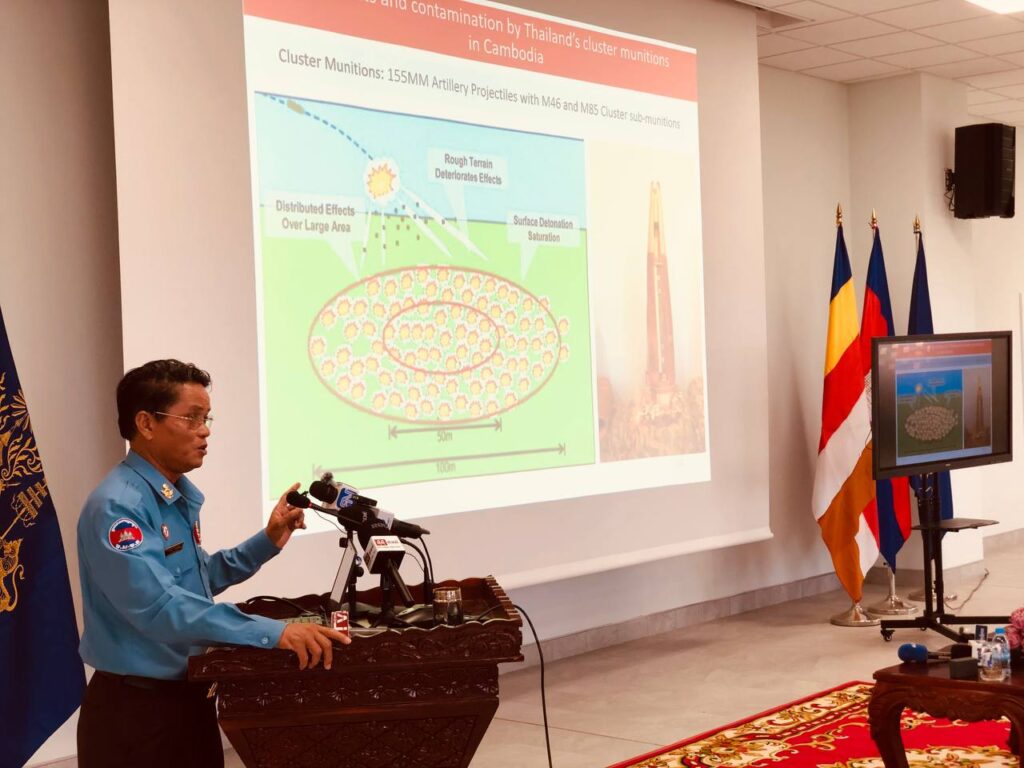
Heng Ratana, Director General of the Cambodian Mine Action Centre (CMAC), has highlighted a concerning issue regarding the long-term impact of war-related chemical substances in Cambodia. He announced that tests conducted on 58 Cambodian women revealed high concentrations of these contaminants in their breast milk, indicating that the effects of conflicts from over 50 years ago may still be impacting public health. During a press conference held at the Techo Peace Museum in Siem Reap province, Ratana stated that the residual chemical pollutants from past wars continue to be a worrying problem, with the potential to affect the health of subsequent generations. He cited a specific case where breast milk samples from 58 Cambodian women, all mothers of their first children, were sent for detailed analysis in Canada to detect toxic substances left over from the use of chemical agents during wartime. The results indicated that the women's breast milk contained chemical contaminants at levels approximately 2 to 3 times higher than those generally found. Ratana interpreted these findings as a signal of the long-term impact of chemical residues from past conflicts. In relation to the alleged use of chemical substances by the Thai military during an invasion conflict that occupied Cambodian territory in 1925 (Note: The year provided in the original Khmer text is '2025', which is highly likely a typo for a historical conflict period, and has been interpreted as such for contextual accuracy), Ratana confirmed that Cambodia is preparing to submit a petition to the Organisation for the Prohibition of Chemical Weapons (OPCW). The petition aims to request an examination and investigation into the use of chemical substances and weapons that could pose a risk to civilians. He asserted that the use of weapons and chemical substances in civilian areas is a matter that warrants investigation and scrutiny under international law, particularly within the framework of the 1993 Chemical Weapons Convention, to which both Cambodia and Thailand are state parties. Reports from the Ministry of Health indicate that during the invasion war where Thailand allegedly employed chemical weapons in contravention of international law, a total of 399 Cambodian citizens and military personnel suffered harm due to the use of these chemical agents, including individuals with severe injuries, minor injuries, and some fatalities.
Original source
Kampuchea Thmey Local