General articles are free for 24 hours after publish.
Vietnam Finalizes Maritime and Inland Waterway Code to Foster Maritime Nation Status
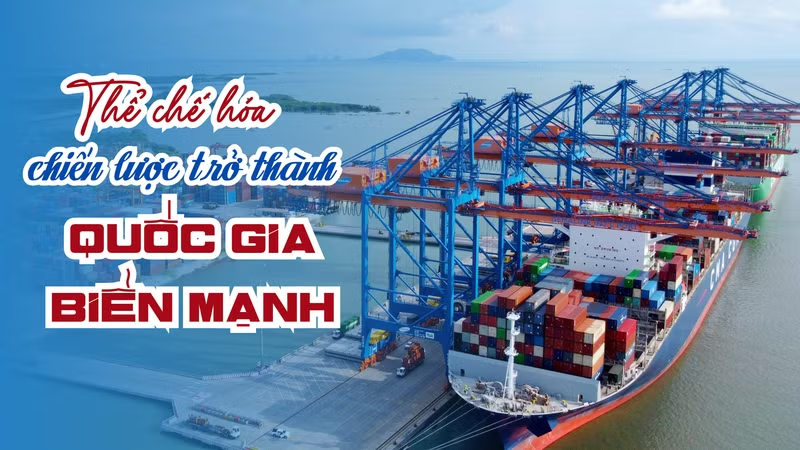
Vietnam is advancing the development of a new legal framework integrating maritime and inland waterway transport. This code is expected to be a crucial step towards achieving the goal of becoming a 'maritime nation,' promoting the development of the country's marine resources and boosting economic growth.
Vietnam is in the final stages of refining a draft maritime and inland waterway code, aiming to establish a unified legal framework for the nation's water transport sector. The proposed "Vietnam Maritime and Inland Waterway Code" is undergoing thorough review before being submitted to the National Assembly. The legislation is designed to create a cohesive legal foundation that governs and promotes the development of the country's entire water transport network, from rivers to the sea. Vietnam has long sought to leverage its extensive coastline and vast river systems to become a strong 'maritime nation.' The government views the enhancement of its legal infrastructure as a critical component in realizing this national ambition. The development of this code is expected to unlock the full potential of the country's maritime and inland waterway resources, thereby strengthening the policy basis for accelerating economic growth. Efforts are also underway to solidify the legal framework for quality control of maritime industrial products, which is anticipated to boost international competitiveness. The Communist Party of Vietnam places significant emphasis on operationalizing its national maritime strategy, and this code is considered a vital instrument for its implementation. Upon enactment, the law is expected to attract domestic and foreign investment, improve logistical efficiency, and foster the creation of new industries. Source: Nhan Dan
Original source
Nhan Dan