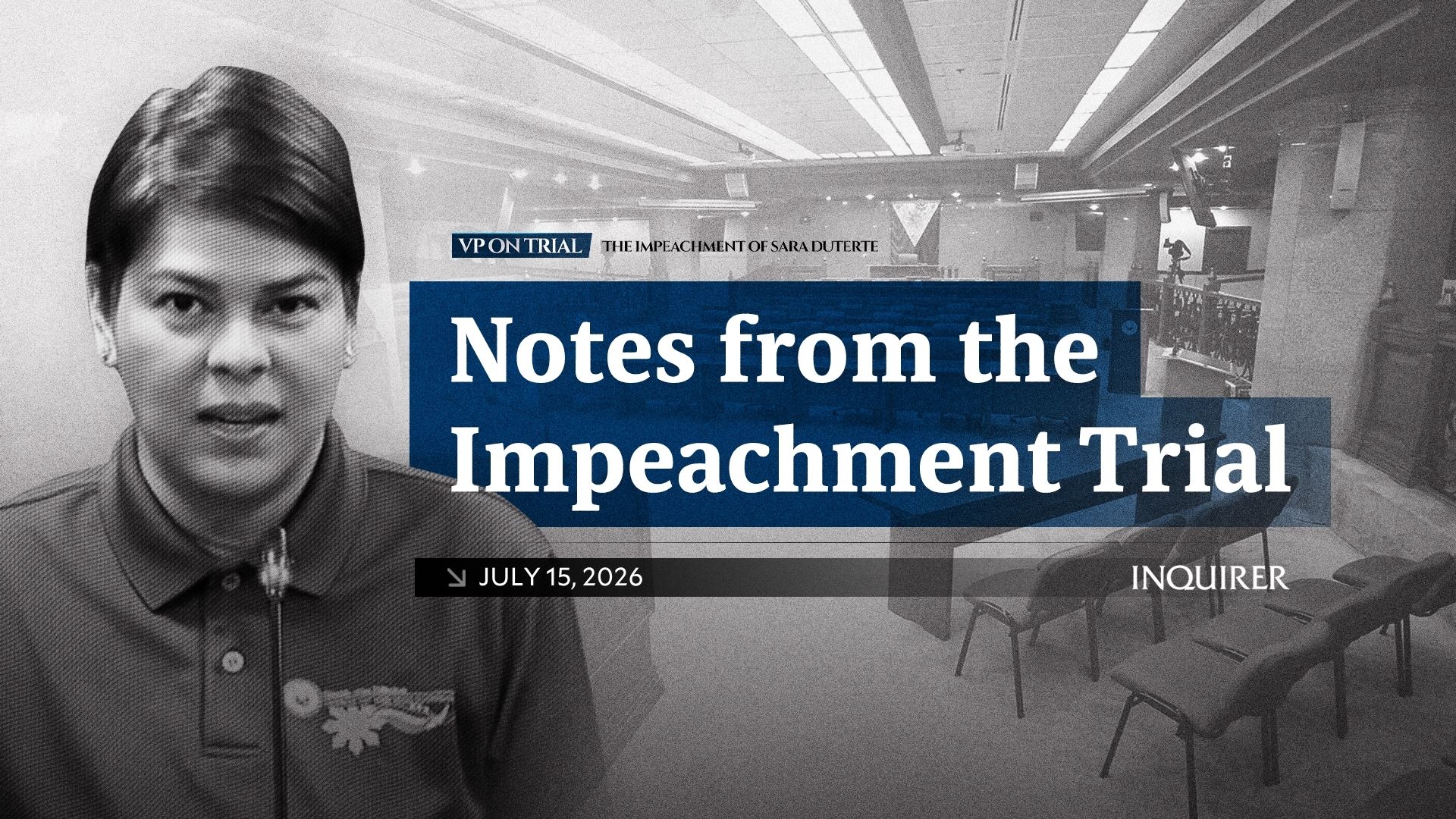
Sara Duterte Impeachment Trial: Senate Divided Over Subpoenaing Financial Records
Politics
2026年7月16日
5
Inquirer NewsInfo

Sara Duterte Impeachment Trial: Senate Divided Over Subpoenaing Financial Records

AI サマリー

The impeachment trial of Philippine Vice President Sara Duterte saw heated arguments on Wednesday over whether to subpoena her financial records, with prosecutors seeking bank statements and tax returns related to alleged unexplained wealth. Senator-judges are set to vote on the matter next Monday.

MANILA, Philippines – The sixth day of Vice President Sara Duterte’s impeachment trial on Wednesday centered on oral arguments over whether the Senate impeachment court should subpoena her bank records, tax returns, and Anti-Money Laundering Council (AMLC) documents in connection with Article II of the impeachment complaint, which alleges unexplained wealth and undeclared assets. No witnesses took the stand, with both sides given 15 minutes each for arguments and 10 minutes for rebuttal. Senator and presiding officer Francis Escudero said senator-judges agreed in caucus to decide on the matter on Monday, July 20. The prosecution argued that Duterte’s financial activity surged significantly starting in 2007, citing an AMLC report submitted to the House committee on justice. House prosecutor Rep. Chel Diokno said transaction values reached P208.15 million that year, with financial movements intensifying between 2009 and 2013. Diokno also pointed to the Corona impeachment trial as precedent, noting the Senate then subpoenaed and admitted tax records of then-Chief Justice Renato Corona as evidence. Prosecution spokesman Jay Tolosa said obtaining the documents early in the proceedings would help avoid delays when Article II is eventually tackled. Meanwhile, the defense pushed back, with counsel Michael Poa warning that the subpoena request risked becoming a fishing expedition. Poa argued that impeachment is not a basis for disregarding due process or compelling production of documents beyond what the law allows. Poa said that when a subpoena becomes oppressive and is issued merely in the hope that something incriminating will surface, it ceases to be an instrument of justice. Prosecution panel member San Juan Rep. Ysabel Maria Zamora countered that the panel has enough evidence to support its unexplained wealth allegation even if the subpoena is denied. Impeachment court spokesperson Regie Tongol clarified that a simple majority of senator-judges present on July 20 is sufficient to grant or deny the subpoena request, with the winning threshold set at 50 percent plus one. Tongol also said it would be unfair to treat the subpoena vote as a preview of the senator-judges’ eventual conviction vote, saying the only issue before them is a citizen’s right in private matters. On the grave threats article, the prosecution withdrew six more witnesses for Article IV, including PNP Firearms and Explosives office representatives, Reuters reporter Mikhail Flores, Rappler reporter Bonz Magsambol, former sheriff Abe Andres, a family member of a victim of threats, and a psychiatrist. House prosecutor Rep. Lorenz Defensor said the panel has established its case and any additional witnesses could be counterproductive, likening excess to spoiling a dish with too many ingredients. NBI Director Melvin Matibag was confirmed as the lone remaining witness for Article IV, scheduled to testify on July 21. Meanwhile, the prosecution announced its first three witnesses for Article I on the alleged misuse of confidential funds: House legislative archives chief Marivic Pareja and two former Landbank branch managers, Violeta Constantino and Nenita Camposano. A sideshow briefly disrupted proceedings when Sen. Pia Cayetano accused NBI Director Matibag of trying to intimidate senator-judges by publicly raising a planned investigation into alleged funding irregularities involving the 2019 Southeast Asian Games sports complex, a project linked to her brother Sen. Alan Peter Cayetano. Matibag, however, maintained that the probe is incidental and has nothing to do with Sen. Alan Peter Cayetano. The impeachment court, for its part, ordered both parties to stop explaining their reasons for withdrawing witnesses, after the defense complained that the prosecution’s explanations contained conclusions that only the court can determine.

多角的分析

経済的影響

副大統領の金融記録提出を巡る攻防は、フィリピン経済における透明性と説明責任への関心の高まりを反映している。過去の汚職事件では、公職者の隠し資産が経済成長の阻害要因として指摘されてきた。もし未説明の富が認定されれば、それは単なる個人の問題に留まらず、公的資金の運用や税収への影響、ひいては投資環境への信頼性低下につながる可能性がある。特に、国際社会からの投資を呼び込む上で、透明性の欠如は大きなリスク要因となり得る。

投資家心理

投資家にとって、副大統領の弾劾裁判における金融記録提出の是非は、フィリピンにおける法治と透明性への信頼を測る重要な指標となる。過去、汚職や不正が投資判断を鈍らせた事例は少なくない。もし証拠提出が認められ、疑惑が事実であれば、それはフィリピンの政治リスクを一層高めることになる。逆に、適正な手続きを経て潔白が証明されるか、あるいは疑惑が解消されれば、投資家心理の安定に寄与するだろう。しかし、現時点では不透明感が払拭されず、慎重な姿勢が継続すると考えられる。

社会的影響

副大統領の弾劾裁判における金融記録提出を巡る議論は、フィリピン社会における公職者の資産公開と説明責任への強い要求を浮き彫りにしている。特に、国民が生活必需品の価格高騰や貧困に直面する中で、公職者の富の源泉に対する疑問は増幅しやすい。もし証拠提出が拒否されれば、国民の一部からは「隠蔽体質」との批判が高まる可能性がある。一方、提出が認められ、疑惑が晴らされれば、国民の信頼回復につながるだろう。また、裁判の過程で、メディア関係者の証人撤回など、報道の自由や司法手続きの公正さに関する懸念も生じている。

市民の声

国民の視点からは、副大統領の弾劾裁判における金融記録提出の是非は、自分たちの税金がどのように使われ、公職者がどのように資産を築いているのかという根本的な疑問に直結している。特に、物価上昇や雇用不安に苦しむ人々にとって、公職者の「未説明の富」は許しがたい不正と映る可能性がある。証拠提出が認められ、真実が明らかになることを期待する声がある一方で、裁判の長期化や政治的な駆け引きへの懸念も存在する。また、メディア関係者の証人撤回は、情報へのアクセスや言論の自由に対する不安を掻いさせる。

背景・歴史的文脈

フィリピンでは、過去に多くの公職者汚職事件が発生し、国民の政治不信の根源となっている。特に、弾劾裁判は、高位公職者の不正を問うための重要な司法手続きであり、過去にはジョセフ・エストラーダ大統領やレナト・コロナ最高裁判事などが弾劾訴追された。これらの裁判では、証拠収集のあり方や、政治的影響力が司法判断に及ぼす影響が常に議論されてきた。副大統領サラ・ドゥテルテ氏の弾劾訴追は、現政権下での権力闘争や、過去の政権との関係性も背景にあると見られている。

原文ソース

Inquirer NewsInfo

原文を読む